How to treat tennis elbow at home
Peer reviewed by Dr Colin Tidy, MRCGPLast updated by Josh AldermanLast updated 8 May 2026
Meets Patient’s editorial guidelines
- DownloadDownload
- Share
- Language
- Discussion
- Audio Version
- Add to preferred sources on Google
Tennis elbow treatment aims to reduce pain, protect the tendon, and help the arm recover.
Most cases improve on their own with simple home measures, but severe cases may require physiotherapy, steroid injections, or surgery.
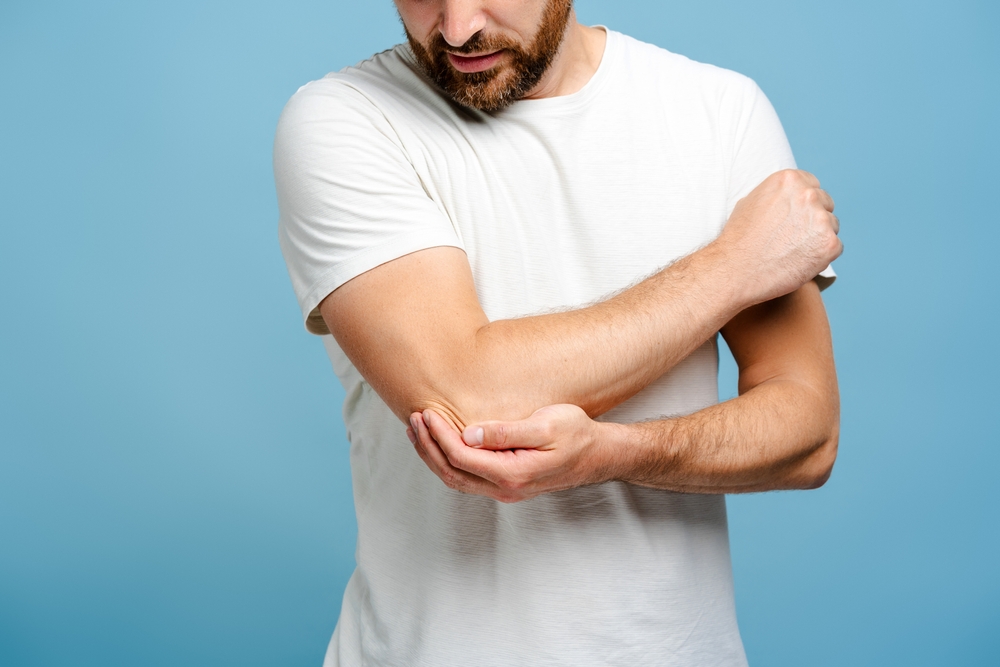
Tennis elbow causes pain on the outside of the elbow and is usually linked to repeated gripping, lifting, or twisting movements. Although it can be uncomfortable, most people improve without surgery.
How to treat tennis elbow at home
For most people, the best way to treat tennis elbow is to combine self-care with changes to daily activities.
The main treatments for tennis elbow include:
Rest and activity changes.
Ice and pain relief.
Support straps.
Exercises to strengthen the tendon.
Resting the arm from painful activities
Giving your arm a break from activities that make the pain worse gives the tendon time to settle and start healing.
Tip: Try to keep using your arm for gentle everyday tasks, but avoid repetitive gripping or heavy lifting where possible.
Using an ice pack
Using an ice pack for around 10 minutes at a time helps ease pain and reduce swelling, especially after activity.
Tip: Wrap the ice pack in a towel to protect your skin, and wait at least 30 minutes before applying it again.
Taking pain relief
If the pain is bothering you, you can take pain relief such as paracetamol. Anti-inflammatory gels, such as ibuprofen, can also be gently rubbed into the area to help with pain and inflammation.
Tip: Always follow the instructions on the packet and avoid using more than the recommended dose.
Wearing a support strap
Wearing a forearm support strap can help take some of the strain off the tendon and make everyday movements more comfortable.
Reducing the strain on the tendon often gives it time to heal naturally.
Tip: The strap should feel snug but not tight. If you notice tingling or numbness, loosen it slightly.
Gentle exercises
Gentle exercises, such as a wrist extension or wrist stretch, can help strengthen the forearm muscles and support the tendon as it heals.
Tip: You might find that starting slowly and building up over time helps avoid making the pain worse.
Exercises for tennis elbow
Wrist extension exercise
Rest your forearm on a table with your hand hanging over the edge, palm facing down. Slowly lift your hand upwards, then lower it back down again.
Start with a light weight, such as a small water bottle or tin. Repeat this 8 to 12 times, and aim to do 2 to 3 sets.
Tip: You should feel some effort, but not sharp pain. If it feels too uncomfortable, reduce the weight or stop.
Wrist stretch
Hold your arm out straight in front of you with your palm facing down. Use your other hand to gently bend your wrist downwards until you feel a stretch along the top of your forearm.
Hold for 15 to 30 seconds, then relax. Repeat 2 to 3 times.
Tip: Keep the stretch gentle, avoid forcing your wrist into a painful position.
As your symptoms improve, you can slowly increase the number of repetitions or the weight you are using.
When further tennis elbow treatment may be needed
If symptoms continue, your doctor may discuss other treatments with you. These may include:
Physiotherapy
A physiotherapist can teach stretching and strengthening exercises that help the tendon recover.
Some people also benefit from massages or ultrasound treatment.
Steroid injections
A steroid injection may reduce pain for a short time. However, symptoms can sometimes return later, so injections are not always the first choice.
Surgery
Surgery is rarely needed. It is usually only considered if symptoms have lasted more than 6 to 12 months despite other treatment.
Will tennis elbow heal on its own?
Yes, tennis elbow often improves without specialist treatment. Many people find symptoms settle when they avoid movements that trigger pain. In mild cases, simple treatment at home may be enough.
Because tendons heal slowly, improvement can take time. Rest alone may help, but gentle rehabilitation can sometimes speed recovery.
How long does it take for tennis elbow to heal?
Recovery time varies. Some people improve within 6 to 12 weeks. Others may have symptoms for 6 months or longer. A small number of people continue to have discomfort for up to a year.
Healing may take longer if the elbow keeps being strained by work or repeated activity.
What not to do with tennis elbow
Certain actions can make tennis elbow worse. Try not to:
Keep repeating painful movements.
Lift heavy objects with the palm facing down.
Grip tightly for long periods.
Return to sport too quickly.
Ignore symptoms that are getting worse.
Completely avoiding movement is not usually advised. Gentle use of the arm can help prevent stiffness while the tendon heals.
Summary
Most people recover with simple tennis elbow treatment and time. Protecting the tendon early and avoiding repeated strain can help symptoms settle sooner.
If pain is not improving, seeing a doctor or physiotherapist can help you find the most suitable treatment.
Patient picks for Sports injuries

Bones, joints and muscles
Joint pain - is it bursitis?
Bursitis is a common cause of painful, swollen, and tender joints. It's sometimes caused by repeated movements that place pressure on your joints - like kneeling or elbow-leaning - and can affect different parts of your body.
by Dr Sarah Jarvis

Bones, joints and muscles
Best exercises for your joints
You may have concerns about the impact exercise has on your joints, especially if you already have joint pain or stiffness. However, regular physical activity can be helpful in protecting healthy joints and even for relieving joint pain in some cases. The key is to choose exercises that are low-impact, improve flexibility, and build up the muscles around the joints. Here we chat to fitness expert, Laura Williams, about what the best exercises are for your joints.
by Heather Ainsworth
Frequently asked questions
What is tennis elbow?
Tennis elbow causes pain on the outside of the elbow and is usually linked to repeated gripping, lifting, or twisting movements.
Can I prevent tennis elbow from coming back after it heals?
Protecting the tendon early and avoiding repeated strain on the elbow can help prevent symptoms from returning sooner.
How will I know if my tennis elbow needs treatment beyond home care?
If your symptoms continue despite home care, your doctor may suggest other treatments such as physiotherapy, steroid injections, or, rarely, surgery.
About the authorView full bio

Dr Sarah Jarvis
Clinical Consultant
MA (Cantab), BM, BCh (Oxon), DRCOG, FRCGP, MBE
After training in medicine at Cambridge and Oxford, Dr Sarah Jarvis MBE became a GP.
About the reviewerView full bio

Dr Colin Tidy, MRCGP
General Practitioner, Medical Author
MBBS, MRCGP, MRCP (Paediatrics), DCH
Dr Colin Tidy is an NHS Doctor, based in Oxfordshire.
Article history
The information on this page is peer reviewed by qualified clinicians.
Article also available in English, German, Spanish, French, Italian, Portuguese, Hindi, Hebrew, Arabic, and Swedish.
Next review due: 7 May 2029
8 May 2026 | Latest version
26 Jun 2018 | Originally published
Authored by:
Dr Sarah Jarvis
Join the conversation
Share your thoughts or experiences with others in our patient communities.

Ask, share, connect.
Browse discussions, ask questions, and share experiences across hundreds of health topics.

Feeling unwell?
Assess your symptoms online for free
Sign up to the Patient newsletter
Your weekly dose of clear, trustworthy health advice - written to help you feel informed, confident and in control.
By subscribing you accept our Privacy Policy. You can unsubscribe at any time. We never sell your data.
More in bones, joints and muscles
- Beyond the burn: decoding the HYROX hype
- How can you prevent osteoporosis during the menopause?
- How much protein do you need to build muscle?
- How obesity affects joint health - and what you can do about it
- How to build muscle mass after weight loss treatment
- How to protect your bones as you get older
- How to protect your joints as you get older
- Knee pain and exercises videos
- Video: Back pain exercises
- What are the best exercises for osteoporosis?
- What can you do to help prevent arthritis?
- What foods are good for arthritis?
- What is hypermobility syndrome?
- When is it safe to return to sport after an injury?
- When should you worry about neck pain?
- When to start worrying about your bones and osteoporosis
- When to worry about back pain
- Why head injuries in sport need to be taken more seriously
- Why is fibromyalgia so misunderstood?
- Why the menopause may cause osteoporosis