How to reduce your risk of DIY injuries during coronavirus lockdown
Peer reviewed by Dr Sarah JarvisAuthored by Gillian HarveyOriginally published 1 May 2020
Meets Patient’s editorial guidelines
- DownloadDownload
- Share
- Language
- Discussion
- Audio Version
- Add to preferred sources on Google
If you're stuck indoors or furloughed from your job because of the coronavirus pandemic, it can be difficult to know how to fill your day. For some, enforced time at home may provide the opportunity for long-neglected DIY jobs. But the last thing you need is to end up at A&E. We look at how to avoid accidents during COVID-19 lockdown.
Use Patient's coronavirus checker tool if you have any symptoms of fever or a new cough. Until you have used the tool and been advised what action to take, please stay at home and avoid contact with other people.
To reduce your risk of injuries as much as possible, you should avoid DIY that carries any risk of injury, dangerous sports or extreme exercise as much as possible during the lockdown. If something is going to increase your risk of hurting yourself and isn't essential, it's not worth ending up in hospital for. Landing yourself in A&E will increase your chances of catching coronavirus and put further strain on the NHS.
That being said, there are occasionally things which need to be done or fixed urgently - but there are ways to make them safer.
Carry out a risk assessment
When a professional is called in to do a job, one of the first things they will do is undertake a risk assessment. This doesn't necessarily mean filling in a complex form, but taking a moment to look at the job, the tools required and the working area is an invaluable way of identifying and eliminating potential risk.
"The problem with DIY is that people may just decide they want to get on with it," agrees health and safety consultant Natasha Wales-Dixon from SHE Advises. "This keenness to get things done is one of the reason there are so many accidents in the home."
Make sure equipment is in good working order
"Don't assume everything is going to be in good order," advises Wales-Dixon. "Check that cables haven't been nicked, that handles are fixed on. And if you don't have the right equipment and safety protection, don't attempt the job."
Check the work environment
It's important to check the area in which you're working and identify any hazards, whether this is uneven ground or the fact that another person may disrupt our work. "At work you tend to have time and space," says Wales-Dixon. "But at home you have other things that distract you or get in the way. It's easy to leave something plugged in, for example, when you're not using it."
Get someone to supervise
If you have others in the house, it's worth asking someone to keep an eye on the work area and watch out for any hazards. "If you’re focused on standing on a ladder, drilling a hole, it's good to have someone keeping an eye out around you," advises Wales-Dixon.
If in doubt, don't do it!
The particular pressures of lockdown may mean that you're tempted to take a job you wouldn't ordinarily attempt, due to a combination of having the time, the inability to employ a tradesperson to carry out the work and the financial worry of having to pay someone to do it eventually.
"You have to ask yourself whether it's a task you're used to doing," explains Wales-Dixon. "For example, you may be clearing gutters lower down on your property and be tempted to do the top stuff. But there are a lot of factors to consider - weather conditions, ground stability and the content you might find in your gutters, for example."
Risk awareness
Every DIY task carries its own risk. Here are just some of the things to think about before you start attempting DIY in your own home.
Painting/putting up wallpaper
According to advisor and civil engineer Susan Francombe from The Business of Building, the first thing you should check when painting is ensuring you have adequate ventilation. You should also ensure you have a face-mask if you're carrying out any sanding, as inhaling dust and particles "can cause damage to the lungs and make you more susceptible to illness."
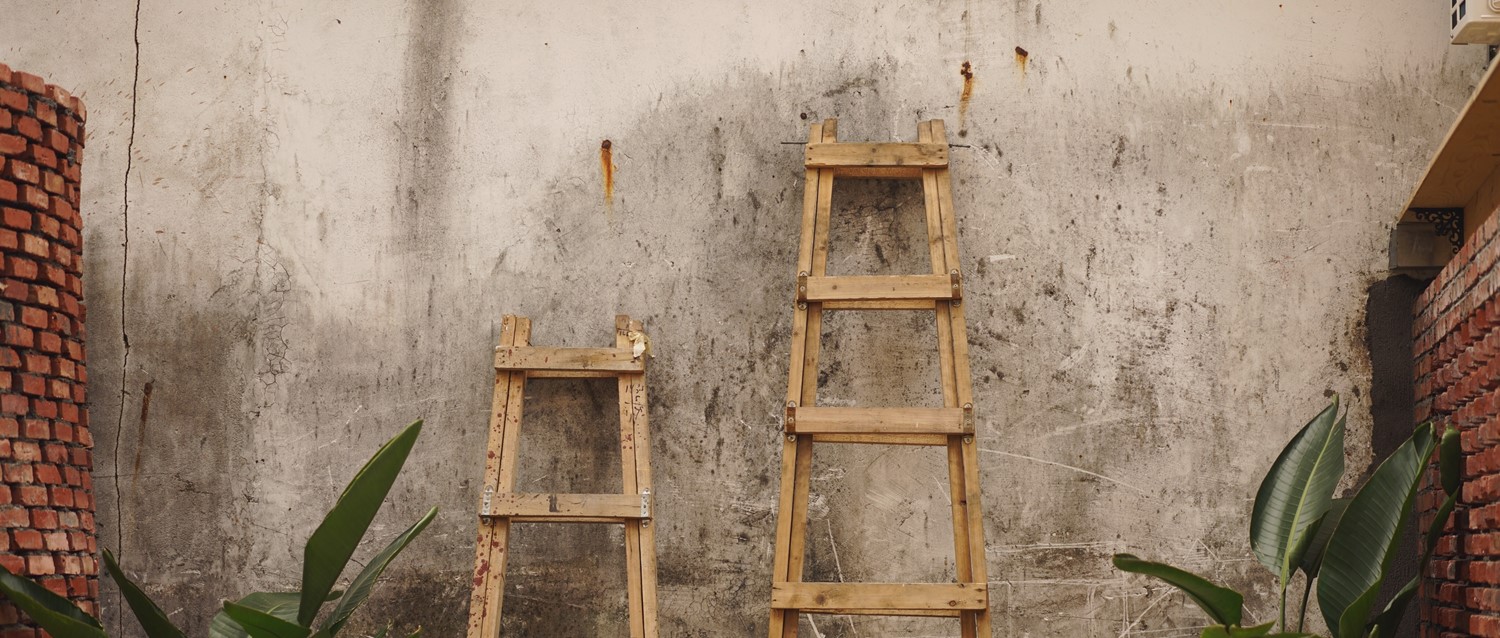
Using a ladder
Even if you're just stretching to the top of a wall, using a ladder can be dangerous. "Step-ladders are safest," explains Francombe. "But make sure they are close to where you are working. If you are tempted to lean - don’t! Move the ladder closer."
It's also important to "lock the safety spreader" on the ladder and ensure that the ladder is on "even ground". Finally, Francombe advises that you stay at least two rungs from the top of a stepladder and ensure you avoid working in doorways or other places where you might be knocked into.
Putting up shelves
Drilling into a wall blind is a complete no-no. "First, check you're not going to hit pipes or electrical cables," advises Francombe. "Invest in a cable detector that will find these before you start work." Francombe also advises that you ensure you have the right fixtures and fittings so that the shelf is adequately fixed and fit for purpose.
Laying flooring
"Whatever type of flooring you have, it will require cutting," explains Francombe. "If using laminate flooring you will be cutting using a saw. Make sure the piece you are cutting is held securely - invest in a sawhorse. Again, beware of dust and use a face mask and safety glasses. If using vinyl flooring you will be cutting with a craft knife - make sure that you are cutting away from yourself."
Electrics
It's essential that any electrical work is carried out by a trained professional. When in lockdown, it may be tempting to have a go yourself - but if you don't have the required skill and training, it's important you avoid this kind of work. "I wouldn't recommend doing your electrics at home unless you are competent with good electrical knowledge," agrees electrician Cathy Cockin from Little Miss Electrical. "I have seen work done by non-electricians that is really dangerous. I've also seen a full re-wire that was of a high standard done by a non-electrician - it's all based on your level of competence and understanding."
Hiring a professional
While it's not business as usual, if you do need to engage a tradesperson to carry out essential work, they are still able to come to your house as long as they meet certain criteria. According to government guidelines, work can be carried out "provided that the tradesperson is well and has no symptoms" and Public Health England guidelines are maintained.
If you are isolating or shielded, a tradesperson can only attend for emergency works, under advice of Public Health England.
It's tempting to want to finish the DIY, or tackle a job that seems simple. But make sure you keep within your skill set and stick to safety guidance to ensure that you don't end up in A&E at this busy time.
Patient picks for Pandemic articles

COVID-19
What to do if you have a dental emergency during the lockdown
As the coronavirus outbreak continues, many services which require face-to-face appointments remain on hold. Whilst some, like hairdressing, are sorely missed, we can cope without them for a while. But what about essential health services such as dentists?
by Andrea Downey
COVID-19
Lockdown easing: what is the plan and is it realistic?
After a whole year in and out of lockdown and our lives turned upside down, it's a relief to many to hear the government announce its plans to ease COVID-19 restrictions over the next few months. But are they realistic?
by Milly Evans
About the authorView full bio

Gillian Harvey
Freelance Writer
BA (Hons) English
Gillian is a freelance writer and columnist for a variety of national newspapers and magazines.
About the reviewerView full bio

Dr Sarah Jarvis
Clinical Consultant
MA (Cantab), BM, BCh (Oxon), DRCOG, FRCGP, MBE
After training in medicine at Cambridge and Oxford, Dr Sarah Jarvis MBE became a GP.
Article history
Article also available in English, German, Spanish, French, Italian, Portuguese, Hindi, Hebrew, Arabic, and Swedish.
1 May 2020 | Originally published
Authored by:
Gillian HarveyPeer reviewed by
Dr Sarah Jarvis
Join the conversation
Share your thoughts or experiences with others in our patient communities.

Ask, share, connect.
Browse discussions, ask questions, and share experiences across hundreds of health topics.

Feeling unwell?
Assess your symptoms online for free
Sign up to the Patient newsletter
Your weekly dose of clear, trustworthy health advice - written to help you feel informed, confident and in control.
By subscribing you accept our Privacy Policy. You can unsubscribe at any time. We never sell your data.
More in cOVID-19
- A year on: what we now know about COVID-19
- COVID-19 - coping with loneliness this Christmas
- COVID-19: Should you cancel your Christmas plans because of Omicron?
- Has the pandemic had an impact on child obesity?
- How does the new 90-minute COVID-19 test work?
- How has the COVID-19 pandemic affected access to contraception?
- How to hang on to a lockdown lifestyle
- The future of COVID-19 vaccinations
- What are the benefits of mixing and matching COVID-19 booster vaccines?
- What you need to know about the COVID-19 vaccine