Votre alimentation pourrait-elle être votre meilleur secret anti-âge ?
Revu par Dr Colin Tidy, MRCGPDernière mise à jour par Victoria RawDernière mise à jour 21 Jul 2026
Respecte les directives éditoriales
- TéléchargerTélécharger
- Partager
- Language
- Discussion
- Ask Patient
- Version audio
- Ajouter aux sources préférées sur Google
Lorsque nous pensons au vieillissement, notre attention se porte souvent sur les signes extérieurs - moins de rides, une silhouette plus mince et des cheveux moins grisonnants. Cependant, en donnant la priorité à ce qui se passe à l'intérieur de notre corps, nous pouvons vivre une vie plus longue et plus saine, tant à l'intérieur qu'à l'extérieur.
Inscrivez-vous à notre cours gratuit de 10 semaines sur le vieillissement en bonne santé
Faites le premier pas pour vous sentir au mieux de votre forme en vieillissant. Chaque semaine, nous nous concentrerons sur différents domaines pour vous aider à bien vieillir et à maintenir un corps et un esprit sains, y compris l'exercice, l'alimentation, les compléments anti-âge, le vieillissement cérébral sain, ainsi que la santé des os et des articulations.
En vous abonnant, vous acceptez notre Politique de confidentialité. Vous pouvez vous désabonner à tout moment. Nous ne vendons jamais vos données.
Sélections vidéo pour Régime alimentaireBibliothèque vidéo
The quest for eternal youth is as old as time. From magic potions and mythical vampires to skincare, cosmetics, and plastic surgery, we often chase extraordinary solutions to ageing. However, one of the most powerful anti-ageing secrets may be found simply in what we eat.
Which nutrients are best for anti-ageing?
Eating a nutrient-rich, alimentation équilibrée benefits our health in countless ways. Certain nutrients play a key role in supporting specific functions within your body. As we age, some become especially valuable in helping us stay healthy over time.
Dr Gail Clifford is a Wall Street Journal international best-selling author based in Greater Orlando, USA. She explains that these nutrients help keep your body working well for longer.
"They protect your cells, réduire l'inflammation, and lower your chance developing of long-term diseases - such as heart disease, cognitive decline, and even some cancers," she says. "When your body has what it needs to repair damage, manage stress, and stay balanced, you are more likely to feel better and stay active as you age."
She emphasises that your focus should not be on reversing ageing, but rather on ageing well - maintaining energy, sharpening your mind, and keeping your body strong for as long as possible.
Which foods might support a longer, healthier life?
Some foods are naturally richer in these nutrients than others. While a balanced diet that includes a variety of nutrients is key to staying in top shape, the foods that promote a longer, healthier life tend to be good for our overall wellbeing too.
"Whole, plant-forward foods are where it is at," says Clifford. "Eating a variety from the following food groups gives your body a strong nutritional foundation to thrive as you age."
Age-fighting foods to add to your shopping list
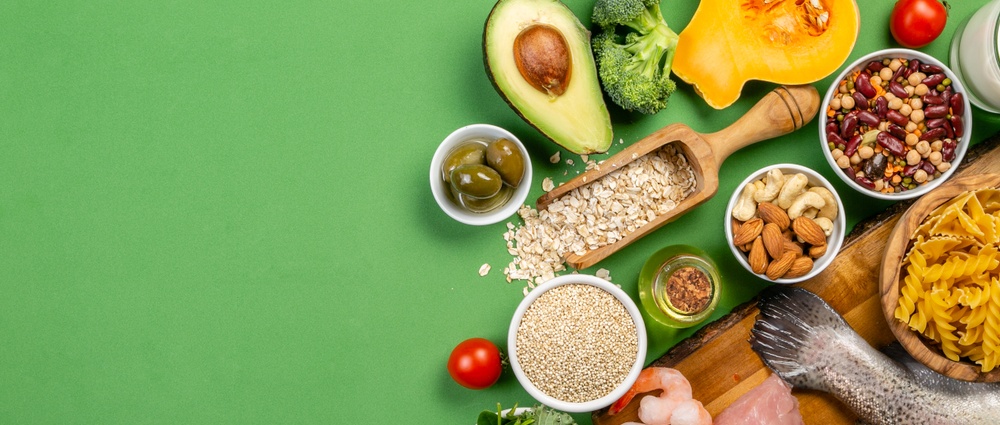
Fruits et légumes - such as leafy greens, colourful veggies, and berries are packed with antioxidants, fibre, and vitamins.
Fatty fish - for example, salmon and sardines are rich in omega-3s, vitamin D, and selenium.
Noix et graines - give you healthy fats and minerals, such as magnesium, and vitamin E.
Wholegrains - offer vitamins and fibre.
Legumes - including beans and lentils contain fibre, protein, magnesium, and polyphenols.
Fermented foods - such as yoghurt, kefir, sauerkraut, and kimchi boost your gut health, which supports better digestion and a stronger immune system.
Huile d'olive extra vierge - is high in polyphenols.
Which diets might help slow ageing?
Certain diets and eating patterns can help promote longevity and support healthy ageing.
Clifford explains that le régime méditerranéen is the best-known - and most widely studied - of these approaches.
"It is full of fruits, vegetables, olive oil, whole grains, fish, and legumes, and it has been linked to lower rates of heart disease and cognitive decline," she says.
"The DASH diet, which was initially designed to help lower blood pressure, is also excellent for healthy ageing."
Elena Rolt is a registered nutritional therapist from health.miro, UK. She explains that intermittent fasting can also offer health benefits, including potential effects in slowing the ageing process.
"Clinically, jeûne intermittent supports metabolic and brain health, lowers inflammation, and improves gut integrity," she says. "It also helps to regulate your hormones related to hunger, satiety, and reproductive function."
Elle ajoute que calorie restriction and a fasting-mimicking diet can enhance nutrient-dense foods by boosting their benefits to improve metabolism, reduce inflammation, and support cell renewal.
In short, being mindful of the foods we include in our diet is a key step towards staying healthier, and living longer. It works hand in hand with other building blocks of longevity - such as regular exercise, managing stress, and avoir suffisamment de sommeil. While diet isn’t the only factor that supports a long, healthy life, it plays a significant role in a lifestyle that benefits both our inner and outward health.
Sélections des patients pour Régime alimentaire
Régime et nutrition
Moyens simples de suivre un régime méditerranéen
Un régime méditerranéen évoque une image de poisson frais et de salades colorées arrosées d'huile d'olive, accompagnées d'un verre de vin rouge - le tout en étant assis au soleil bien sûr. Bien que nous n'ayons pas de soleil fiable au Royaume-Uni, nous pouvons certainement profiter des nombreux bienfaits pour la santé offerts par le régime méditerranéen.
par Lynn Stephen

Hormones
La 'seconde puberté' : pourquoi vous pourriez avoir des éruptions cutanées dans la trentaine
Si vous êtes dans la fin de la trentaine, vous avez peut-être remarqué une éruption soudaine de boutons - quelque chose qui ressemble beaucoup à de l'acné, même si vous pensiez avoir laissé votre peau d'adolescent derrière vous. Certaines personnes l'appellent même une « deuxième puberté ». Mais selon la dermatologue Dr Shamsa Kanwal, c'est en fait un changement hormonal qui modifie le comportement de votre peau à l'approche de la quarantaine.
par Victoria Raw
À propos de l'auteurVoir la biographie complète
Mis à jour par

Victoria Raw
Auteur de chroniques
Licence (Hons), Littérature anglaise
Victoria est rédactrice de contenu chez Patient, avec des intérêts particuliers couvrant le bien-être mental, les tendances sociétales et l'impact de la technologie sur notre santé.
Rédigé par
Victoria Raw
Auteur de chroniques
Licence (Hons), Littérature anglaise
Victoria est rédactrice de contenu chez Patient, avec des intérêts particuliers couvrant le bien-être mental, les tendances sociétales et l'impact de la technologie sur notre santé.
À propos du critiqueVoir la biographie complète

Dr Colin Tidy, MRCGP
Médecin généraliste, Auteur médical
MBBS, MRCGP, MRCP (Paediatrics), DCH
Le Dr Colin Tidy est un médecin du NHS, basé dans l'Oxfordshire.
Historique de l'article
Article également disponible en Anglais, Allemand, Espagnol, Français, Italien, Portugais, Hindi, Hébreu, Arabe, and Suédois.
Next review due: 21 Jul 2029
21 Jul 2026 | Dernière version
13 mai 2025 | Publié à l'origine
Écrit par :
Victoria Raw
Partagez vos pensées ou expériences avec les autres dans notre communautés de patients.
Inscrivez-vous à la newsletter Patient
Votre dose hebdomadaire de conseils de santé clairs et fiables - rédigés pour vous aider à vous sentir informé, confiant et maître de la situation.
En vous abonnant, vous acceptez notre Politique de confidentialité. Vous pouvez vous désabonner à tout moment. Nous ne vendons jamais vos données.