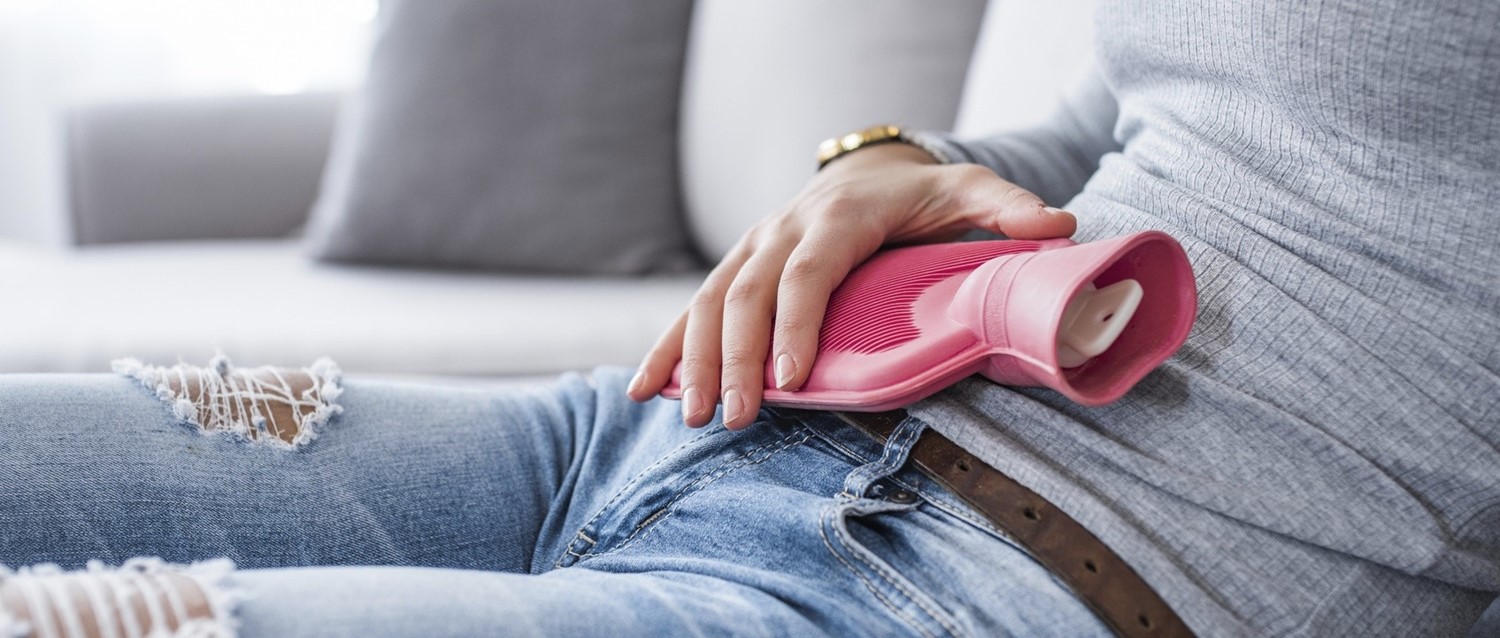
Les règles douloureuses coûtent aux femmes neuf jours de productivité chaque année
Revu par Natalie HealeyRédigé par Milly EvansPublié à l'origine 28 juin 2019
Respecte les directives éditoriales
- TéléchargerTélécharger
- Partager
- Language
- Discussion
- Version audio
- Ajouter aux sources préférées sur Google
Près de neuf jours de productivité sont perdus chaque année en raison des symptômes menstruels, selon une nouvelle étude.
Find relief from period pain
Get expert healthcare advice from the comfort of home. Complete a quick online consultation, available 24/7, with your request reviewed by a UK-registered clinician. Next day delivery available on eligible treatments.

Research published in online journal BMJ Open shows that menstrual symptoms like pain and heavy flow are causing women to lose around nine days of productivity at work each year.
The study was the largest of its kind, surveying 32,748 Dutch women aged between 15 and 45 years. The participants were asked to fill in a comprehensive questionnaire about their menstrual cycle and the severity of their associated symptoms, evaluating them with a validated pain score. They were also asked if and how often these symptoms had caused them to miss work or school and whether it had affected their productivity whilst working or studying.
Nearly a third (31%) of the women had been to their doctor about their menstrual symptoms and one in seven had been to see a gynaecologist. Just under 14% of respondents said that they had taken time off from work or school during their period. Nearly 3.5% said that this occurred during every, or almost every, cycle. This averaged at one day of absence every year. Women under the age of 21 years were far more likely than older women to say that they had taken time off.
Results of the study suggest that stigma, or perhaps a fear that symptoms would not be taken seriously, still exists. Only one in five participants told their employer or school the real reason for their absence.
The majority of women (around 81%) reported presenteeism - going to work or school whilst dealing with these symptoms - and said they were less productive as a result. Researchers calculated that women were less productive for around a third of the time because of menstrual symptoms. Overall, total lost productivity amounted to nine days off as productivity was substandard on 23 days a year. Translated into worldwide statistics, this amounts to a massive amount of lost time and highlights a need for more understanding of menstrual symptoms.
Theodoor Nieboer, a co-author of the report and a gynaecologist in the Netherlands, explained in a comment for CNN that reasons women may have been less productive during their period included that they needed "to go to the toilet every hour or they had a headache and couldn't concentrate". He stressed that there were also "plenty of reasons why men might be unproductive in the workplace".
Offering more flexible work or study hours during a period was viewed as a popular solution by around two thirds of participants. Some countries in Asia already offer women menstrual leave from work when they have unpleasant symptoms, but some women do not take it, especially in male-dominated environments.
The researchers found that women attending work or school and being less productive due to symptoms may actually be having a bigger impact on productivity than taking time off.
"Menstruation-related symptoms cause a great deal of lost productivity, and presenteeism is a bigger contributor to this than absenteeism. Taking all the symptoms into account, it seems likely that the real impact of [menstruation-related symptoms] is underestimated in the general population. Despite being almost two decades into the 21st century, discussions about [symptoms] may still be rather taboo," they concluded.
La recherche a été publiée dans BMJ Open.
Find relief from period pain
Get expert healthcare advice from the comfort of home. Complete a quick online consultation, available 24/7, with your request reviewed by a UK-registered clinician. Next day delivery available on eligible treatments.
Sélections des patients pour Règles et problèmes menstruels

Santé des femmes
L'adénomyose est-elle la cause de vos règles abondantes et douloureuses ?
BBC newsreader Naga Munchetty has recently shared her adenomyosis diagnosis after 35 years of not knowing the cause for her severely painful, heavy periods and vomiting. Menstrual cramps are something many of us handle with painkillers, warm baths and a hot water bottle. For some women, though, extremely painful, heavy periods are caused by a lesser-known condition which can have a serious impact on their lives. Adenomyosis is where the tissue that grows on the lining of the uterus - the endometrium - is also present on the inside muscular wall of the uterus. Nobody knows exactly how many are affected, but the NHS estimates it is one in 10 women in the UK.
par Lydia Smith

Santé des femmes
Tableau des pertes sanguines menstruelles
Using a period blood loss chart helps your doctor to get an idea as to how heavy your period is.
par Danny Chadburn
À propos de l'auteurVoir la biographie complète
Rédigé par

Milly Evans
Rédactrice
Milly écrit sur une gamme de sujets liés à la santé, avec un intérêt particulier pour les inégalités en santé et la santé sexuelle.
À propos du critiqueVoir la biographie complète

Natalie Healey
Journaliste indépendante
Licence (Hons) en Sciences Biomédicales
Elle est une journaliste de santé basée à Londres qui écrit sur la science et la médecine depuis plusieurs années. Elle est l'ancienne responsable éditoriale chez Patient.
Historique de l'article
Article également disponible en Anglais, Allemand, Espagnol, Français, Italien, Portugais, Hindi, Hébreu, Arabe, and Suédois.
28 juin 2019 | Publié à l'origine
Écrit par :
Milly EvansRevu par
Natalie Healey
Participez à la conversation
Partagez vos pensées ou expériences avec les autres dans notre communautés de patients.

Demandez, partagez, connectez-vous.
Parcourez les discussions, posez des questions et partagez vos expériences sur des centaines de sujets de santé.

Vous ne vous sentez pas bien ?
Évaluez vos symptômes en ligne gratuitement
Inscrivez-vous à la newsletter Patient
Votre dose hebdomadaire de conseils de santé clairs et fiables - rédigés pour vous aider à vous sentir informé, confiant et maître de la situation.
En vous abonnant, vous acceptez notre Politique de confidentialité. Vous pouvez vous désabonner à tout moment. Nous ne vendons jamais vos données.