
HIIT for weight loss: how does it compare to traditional cardio?
Peer reviewed by Dr Sarah JarvisLast updated by Gemma GrangeLast updated 20 Mar 2019
Meets Patient’s editorial guidelines
- DownloadDownload
- Share
- Language
- Discussion
- Audio Version
- Add to preferred sources on Google
For a lot of people, the main priority of going to the gym is to lose weight. But the thought of spending hours upon hours plodding away on a treadmill can often be off-putting. If only there was a way to get the same kind of results in short, sharp bursts. If this is something you find yourself asking, then trying HIIT for weight loss may be the answer. But how does it compare to more traditional cardio exercise?

What does HIIT stand for?
HIIT stands for high-intensity interval training, which (is a form of exercise where someone exerts themselves for short periods of time. For it to truly count as HIIT, you need to get your heart rate to at least 80% of your maximum heart rate (MHR) during the intense exercises.
A very rough and ready way of calculating your heart rate is 220 minus your age in years. However, a more accurate way of calculating your maximum heart rate is 208 minus (0.7 x your age in years).
Workouts are made up of 'work' and 'recovery' phases and can last between 10 and 60 minutes depending on the programme. HIIT can be done anywhere - in the gym, at home, in the park etc. One of the main appeals of HIIT is that it's so accessible and doesn't necessarily require an expensive gym membership or equipment.
What does a typical HIIT workout for weight loss look like?
HIIT exercises can vary, but here's an example of a typical workout:
HIIT Workout
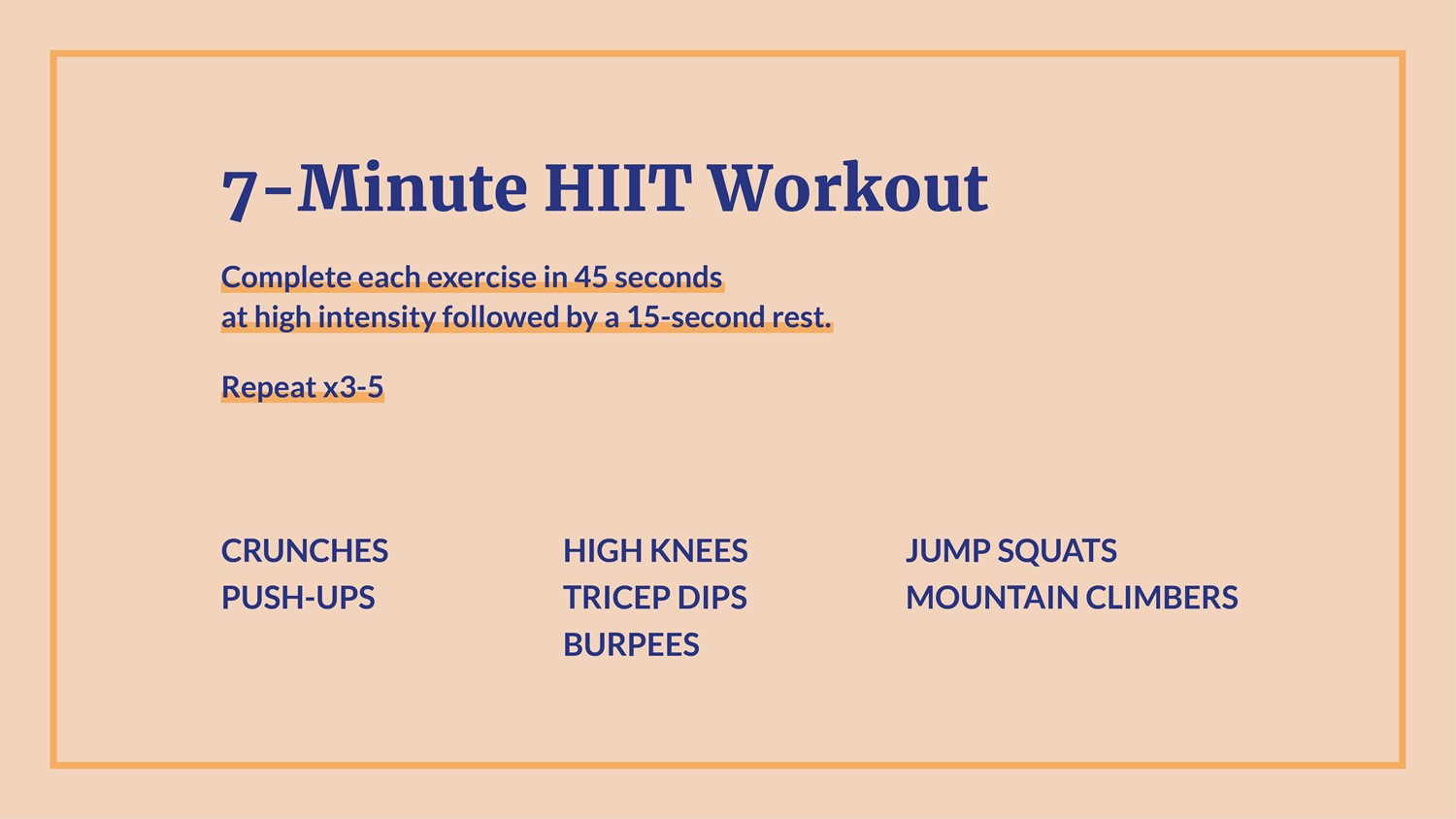
Some of the benefits of HIIT workouts include:
Increased stamina
Improved strength
Fat burning
Increased natural metabolic rate after exercise, meaning you continue to burn calories after you've stopped exercising
Stress relief
Helping to regulate blood sugar
Each HIIT workout is different but aims to achieve the same results: quick and effective fat loss.
"HIIT has been around for years, but has had an upsurge in popularity as people who have less time available but want the same results have been looking for something without the time commitment and hard slog of going out for a long run/bike ride," explains Nuffield Health fitness manager, Dave Mercer.
It's important to know what you're letting yourself in for though. These types of exercises are not suitable for pregnant women, those suffering from a heart condition or those who struggle to recover quickly. It's also not a good idea to jump straight into a HIIT routine if you don't know how to do the basic exercises in the first place.
If exercising is new to you, consulting a personal trainer or doing some research online will help. There are plenty of videos on YouTube that will teach you proper form when performing these exercises in order to help prevent injury. Simply search for 'HIIT for beginners' and you'll be met with a wide range of resources.
Variety is the spice of life
When considering HIIT for weight loss, all those numbers around MHR and timings may seem daunting, especially when the exercises may be different each time. But keeping your exercise routine varied could be the solution to keeping you more engaged with your workouts.
"Varied workouts keep the body guessing," says Mercer. "We want to try and adapt our workouts as we get stronger and fitter otherwise we will never hit our targets."
"Four areas to look at adjusting as you exercise are frequency, intensity, time, and type. By adjusting these every 4-6 weeks, your workout will move in the right direction. If this isn’t modified then your body will reach a plateau."
Low-intensity interval training (LIIT) is also a viable option, particularly for those days where your body may need to take it a little easier or for those just starting out. LIIT workouts consist of periods of exercise and periods of rest, but the impact during exercises is significantly reduced. In essence, it's HIIT but with no jumping or running.
In fact, if done correctly, LIIT can be just as effective as HIIT for weight loss.
Whatever the intensity, there's no point charging into a bunch of different workouts that you've never tried before, only to end up discouraged or injured. Try out some different things and see what works best for you.
"The most important thing is to stay within your limits. If you are not sure how far to push yourself, make sure you seek professional advice," says Mercer.
Cardio for weight loss
Celebrity fitness trainer Jillian Michaels described cardio as the least efficient form of exercise for weight loss "because it is not metabolic, meaning it doesn't cause the body to continue to burn calories post workout". Research also suggests High-intensity interval training (HIIT) will result in a greater reduction of body fat, compared to traditional exercise.
Cardio is defined as a steady-state exercise where your heart rate is raised above 50% of your MHR for an extended period of time. Examples of this could be running, jogging, cycling or jumping rope.
With the popularity of HIIT for weight loss on the rise, steady-state cardio may have seen a drop in recent years.
But that doesn't mean it isn't important to our health. Cardio has been proven to greatly help reduce cardiovascular diseases by aiding weight loss and lowering blood pressure.
Some other benefits include:
Improved heart health.
Increased fitness and maximum oxygen intake.
Calorie burning.
A reduced risk of metabolic diseases.
As with any exercise, it's important to find something that you like. Killing yourself on a spinning bike each week may burn lots of calories but won't do you any good if you hate every second of it. Why not try something you've never done before, like running? Setting a realistic goal such as doing a 10k in a few months time will bring some purpose to your cardio workouts. Apps like Public Health England's Couch to 5k can help to eventually achieve this.
The final result
So it seems both methods of exercise have their benefits to improve our overall health. It's primarily based on what your preferences are and what goals you want to achieve. Looking to burn lots of calories in one go and improve your stamina? Try cardio. Short on time and need some variety? Try HIIT.
"While I train in both ways, HIIT gives me greater opportunity to make variations and to include some strength movements. If I am short on time I would always go with a HIIT workout to get the highest possible post workout endorphins," Mercer concludes.
Patient picks for Exercise and physical activity

Healthy living
What is the 6-6-6 walking challenge?
It might sound like something the devil himself invented, but the 6-6-6 walking challenge has origins that are far less sinister. It’s a recent fitness trend designed to encourage consistent, low-impact exercise. The concept promotes a structured walking routine that helps you stay active every day while improving your overall health in a sustainable way. Let’s take a closer look at what it involves - and whether it’s the right fit for you.
by Victoria Raw

Healthy living
Exercise snacking - how small bursts of movement can boost your mindset
As schedules expand and attention spans decrease, it’s no wonder fitting a 60‑minute workout into your day feels increasingly unrealistic and outdated. Enter exercise snacking - a way of exercising that breaks movement into short, manageable bursts. We speak to a psychotherapist about how taking the pressure off could help you make movement a regular part of your day.
by Claire Kenny
Frequently asked questions
What is the key difference between HIIT and steady-state cardio for burning fat?
HIIT is considered more effective for fat loss because it creates a metabolic effect, meaning your body continues to burn calories even after the workout is finished. Steady-state cardio, while burning calories during the exercise, is described as less metabolic in this regard.
Can I do HIIT if I am new to exercise?
It's generally not recommended to jump straight into a HIIT routine if you are new to exercise and don't know how to perform basic movements correctly. Consulting a personal trainer or researching online for beginner-friendly resources, such as 'HIIT for beginners' videos, can help you learn proper form and prevent injury.
How can I prevent my body from getting used to my workout routine and reaching a plateau?
To prevent your body from reaching a plateau and to ensure continuous progress, you should adjust four key areas every 4-6 weeks: frequency, intensity, time, and type of workout. This keeps your body challenged and adapting.
What specifically is LIIT and when might it be a better option than HIIT?
LIIT, or low-intensity interval training, is similar to HIIT but involves significantly reduced impact during the exercise periods. It consists of work and rest phases, but without jumping or running. LIIT can be a good option on days when you need a less strenuous workout or if you are just starting out with interval training. If done correctly, it can be as effective as HIIT for weight loss.
Why is cardio still important if HIIT is more efficient for fat burning?
Even though HIIT may be more efficient for fat burning, cardio is still very important for overall health. It has been proven to significantly reduce cardiovascular diseases by helping with weight loss and lowering blood pressure. Cardio also improves heart health, increases fitness and maximum oxygen intake, and reduces the risk of metabolic diseases.
About the authorView full bio

Gemma Grange
BA (Hons), MA
Gemma joined Patient in 2017 as their Content Producer and now works for blood cancer charity Anthony Nolan.
About the reviewerView full bio

Dr Sarah Jarvis
Clinical Consultant
MA (Cantab), BM, BCh (Oxon), DRCOG, FRCGP, MBE
After training in medicine at Cambridge and Oxford, Dr Sarah Jarvis MBE became a GP.
Article history
The information on this page is peer reviewed by qualified clinicians.
Article also available in English, German, Spanish, French, Italian, Portuguese, Hindi, Hebrew, Arabic, and Swedish.
20 Mar 2019 | Latest version
Join the conversation
Share your thoughts or experiences with others in our patient communities.

Ask, share, connect.
Browse discussions, ask questions, and share experiences across hundreds of health topics.

Feeling unwell?
Assess your symptoms online for free
Sign up to the Patient newsletter
Your weekly dose of clear, trustworthy health advice - written to help you feel informed, confident and in control.
By subscribing you accept our Privacy Policy. You can unsubscribe at any time. We never sell your data.
More in healthy living
- 5 benefits of reading
- New8-Week Healthy Baby Course
- Can spending time in nature benefit your mental health?
- Can you trust AI with your health?
- Could cold exposure boost your health and wellbeing?
- NewGaynor Faye on Hot Flash, menopause - and why midlife women deserve to be seen
- How obesity affects joint health - and what you can do about it
- How to be happy: 12 everyday tips
- How to control your drinking at a work Christmas party
- How to improve your self-esteem and be kinder to yourself
- Is brain rot real - here's what brain health experts say
- Is intermittent fasting a healthy way to lose weight?
- Japanese walking: simple steps to a healthier you?
- Natural protein verses protein powder: which is better for strength training?
- Switch off TV in the bedroom to avoid weight gain
- What are the risks of alcohol as you get older?
- What is 'good mental health'?
- What your dreams can reveal about your health
- Why can't I sleep? 12 common causes and what to do
- Why losing weight can cause hair loss - and what to do about it