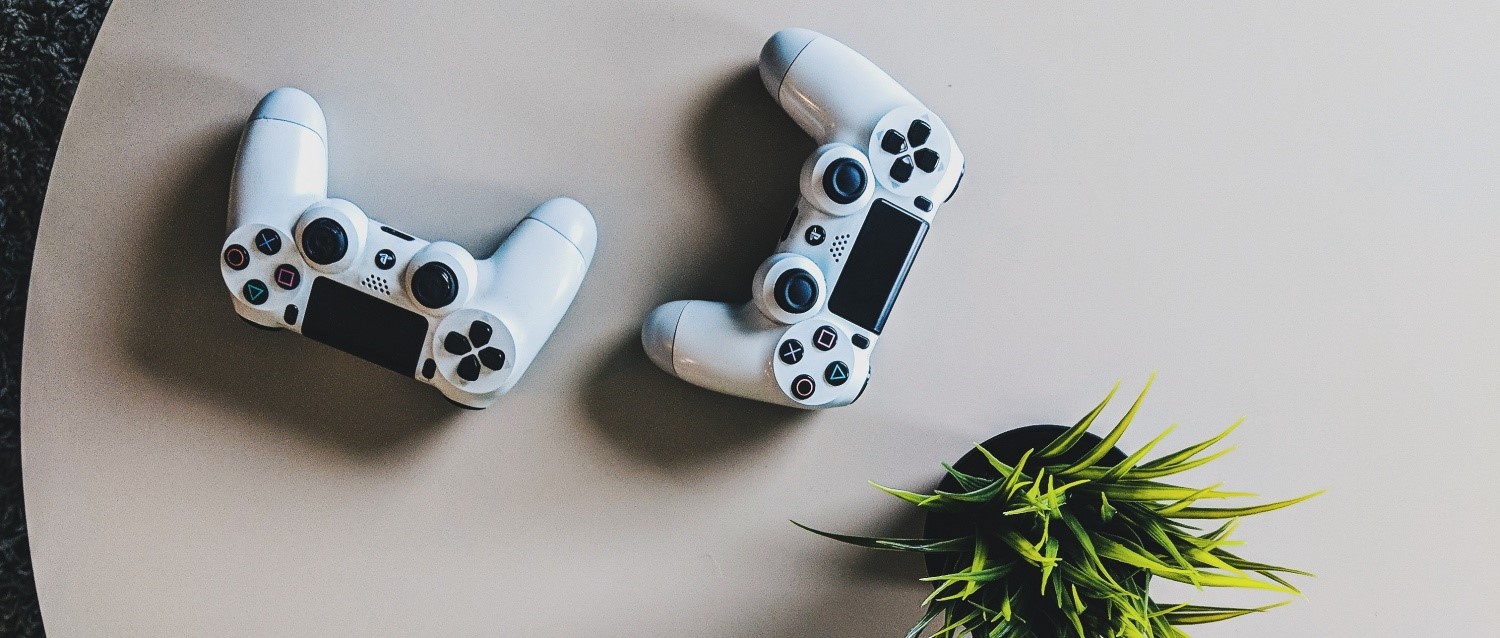
Can playing video games help your mental health?
Peer reviewed by Dr Sarah JarvisAuthored by Gemma GrangeOriginally published 5 Feb 2019
Meets Patient’s editorial guidelines
- DownloadDownload
- Share
- Language
- Discussion
- Audio Version
- Add to preferred sources on Google
Video games are often criticised for being too violent, too loud or antisocial. But a new era of gaming is upon us, with several new titles focusing on creating a stress-free environment. Could playing games, contrary to popular belief, actually improve your mental health?
Mental health support for adults and children
Online CBT and psychological therapy for adults and children aged 8–17. Onebright’s accredited clinicians support people experiencing anxiety, depression and other emotional challenges.
When we think of video games, our minds are often drawn to loud shooters with bloody imagery and fast action. A siege on the senses. Whilst these types of games still make up a large part of the industry and fanbase, they're no longer the only option.
The World Health Organization now recognises gaming disorder as a mental health condition. Clearly, for some people, video games can trigger unhelpful symptoms. But it's not all bad news. Certain types of games have recently been shown to assist in learning and developing skills such as communication, resourcefulness and adaptability.
"There is also a large body of research utilising gaming theory and structure to help improve willpower and decision-making in a range of mental health conditions," says psychotherapist Noel McDermott. "Games are intrinsically motivating and piggybacking that for serious purposes often demonstrates great results."
Plug in, wind down
Some people believe that gaming could also play a role in stress management.
Consider games like farming simulator Stardew Valley, launched by ConcernedApe in 2016. Your character escapes the monotony of corporate life and moves to a farm to live and work. The aim of the game is longevity: to make friends, fall in love, go on adventures and grow your farm.
There is little to no action and there are no direct threats, meaning that this game is an overall relaxing experience for the player.
Dr Matthew Barr, from the University of Glasgow, says: "Choosing a game for relaxation is very much dependent on the person. But something like Stardew Valley, where you're engaged in what you might call 'busywork,' can be quite soothing."
What works for one person may not work for another, however, Barr acknowledges.
"I find strategy games quite relaxing, probably because the pace is dictated by me, the player. Others find that the cathartic qualities of faster-paced, sometimes more confrontational games offer a satisfying means of winding down."
Many people are now looking to digital solutions to help them de-stress. For example, mental health apps are more popular than ever. So can video games help us too? Potentially, if the games allow us to practise similar relaxation techniques.
And besides stress management, video games could be an overlooked tool in tackling loneliness. For instance, Stardew Valley recently introduced a co-op mode, allowing players from across the world to connect with one another anywhere at any time.
"The social side of games is often entirely overlooked," says Barr. "They are not solitary endeavours - now, more than ever, people play together, online. This provides an opportunity for folks who maybe aren't the most socially outgoing, to connect with a community of like-minded individuals and avoid feeling lonely."
Find your own rhythm
There is no doubt that some games can be incredibly immersive, especially when you're playing something that you enjoy. The ability to interact and possibly create our own narratives draws us into the activity, acting as a form of escapism for many people.
"Many players experience what is known as 'flow' when they play games. This is a psychological state, identified by psychologist Mihály Csíkszentmihályi, where you are entirely focused on - and energised by - the task at hand. You're totally 'in the zone' and everything just clicks," explains Barr.
"Games are designed to induce a flow state - which is, after all, intensely pleasurable; they are also believed to cause dopamine to be released in the brain."
McDermott agrees: "There is evidence that gaming can improve mental health. One of the most well-known is how Tetris can stop the formation of flashbacks - for example, reducing PTSD in war veterans; in fact, even stopping it from happening."
In theory, this idea of the 'flow' can be beneficial to our mental health.
Games like 2012's Journey (thatgamecompany) are designed to be played in a single sitting in order to envelop the player fully, helping them to achieve this state. As an artistic game, Journey leaves a lot to the imagination.
"In order to enter a flow state, you must be challenged just enough not to get bored, while never feeling that the challenge is insurmountable," Barr concludes.
Better representation
The stigma surrounding some mental health issues is thankfully starting to disappear. And many forms of media appear to be making an effort to represent conditions such as depression and anxiety in a more accurate and empathetic way than in the past. Some recent video games seem to be following this trend too.
For instance, Celeste (Matt Thorson, 2018) is a platforming game following the journey of a young woman attempting to climb a mountain in order to get over her constant panic attacks and depression. In the end, however, she realises that in order to finish her quest, she needs to accept and be at peace with her emotions rather than fight them.
Another example is Hellblade: Senua's Sacrifice (Ninja Theory, 2017), which focuses on a protagonist suffering from psychosis. The developers even got to know people suffering from this illness in order to make the representation as accurate as possible.
"That's where the potential lies: in the experiential and interactive nature of games," says Barr. "You can learn a lot by being forced to experience the (game-based) world from the perspective of another person - to be in their shoes."
Video games may have tremendous potential but for now, they won't replace professional help. If you're struggling, make sure to speak with your GP or explore NHS mental health services in your area.
Patient picks for Stress management
Mental health
5 healthy ways to handle money problems in your relationship
Money problems are often a common trigger for relationship issues. As the cost of living crisis looms over more households, experts share their tips to help couples stay united in the face of financial stress.
by Amberley Davis

Mental health
How to avoid stress over Christmas and the New Year
Many of us see the festive period as a time for celebrating, but it can easily feel overwhelming. From spending money on presents to non-stop social obligations and extended time with family, Christmas can easily become exhausting and stressful.
by Lynn Stephen
About the authorView full bio
Authored by

Gemma Grange
BA (Hons), MA
Gemma joined Patient in 2017 as their Content Producer and now works for blood cancer charity Anthony Nolan.
About the reviewerView full bio

Dr Sarah Jarvis
Clinical Consultant
MA (Cantab), BM, BCh (Oxon), DRCOG, FRCGP, MBE
After training in medicine at Cambridge and Oxford, Dr Sarah Jarvis MBE became a GP.
Article history
Article also available in English, German, Spanish, French, Italian, Portuguese, Hindi, Hebrew, Arabic, and Swedish.
5 Feb 2019 | Originally published
Authored by:
Gemma GrangePeer reviewed by
Dr Sarah Jarvis
Join the conversation
Share your thoughts or experiences with others in our patient communities.

Ask, share, connect.
Browse discussions, ask questions, and share experiences across hundreds of health topics.

Feeling unwell?
Assess your symptoms online for free
Sign up to the Patient newsletter
Your weekly dose of clear, trustworthy health advice - written to help you feel informed, confident and in control.
By subscribing you accept our Privacy Policy. You can unsubscribe at any time. We never sell your data.