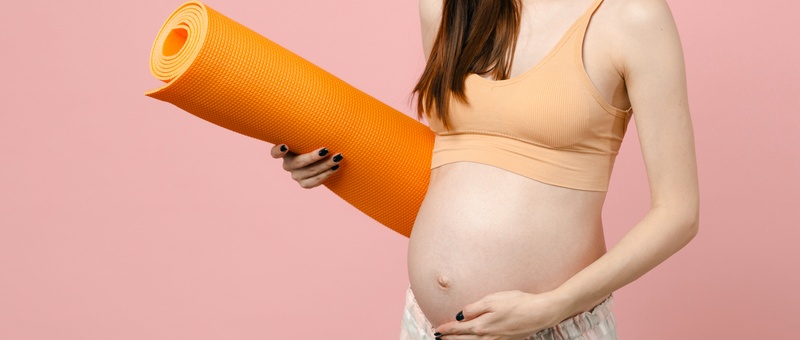
Can Pilates help strengthen your pelvic floor during pregnancy?
Peer reviewed by Dr Colin Tidy, MRCGPLast updated by Lawrence HigginsLast updated 8 Apr 2026
Meets Patient’s editorial guidelines
- DownloadDownload
- Share
- Language
- Discussion
- Audio Version
- Add to preferred sources on Google
Pregnant women hear a lot about the importance of strengthening their pelvic floor muscles, particularly when it comes to labour and recovery post-birth. However, it can be tricky to know where these muscles are, what they do and how to make them stronger.
Some studies suggest prenatal Pilates can be a good way to work out your pelvic floor. Here we look at why and what you can do.
Sign up for our free 8-week Healthy Pregnancy course!
Each week we’ll share useful information and essential tips on topics such as nutrition, exercise, mental health, symptoms to look out for, and preparing for childbirth, to help you navigate your pregnancy journey whatever stage you are at.
By subscribing you accept our Privacy Policy. You can unsubscribe at any time. We never sell your data.
What are pelvic floor muscles?
Both men and women have a pelvic floor. It's made up of layers of muscles and connective tissues which support your bladder, bowel, (in women) womb, and (in men) prostate gland. These muscles attach to your pubic bone at the front and the tail bone at the back, as well as the base of the pelvis. They act as a 'sling' or 'hammock' to support the pelvic organs.
You can find your pelvic floor muscles and how you control them by going to the toilet. When peeing, try to stop the flow for a second. The muscles you use to do this are your pelvic floor muscles. However, it's important not to do this repeatedly because stopping the flow regularly can lead to urinary tract infections.
Why is strengthening your pelvic floor muscles important during pregnancy?
Pregnancy and childbirth put a strain on your pelvic floor muscles. During pregnancy, the pelvic floor muscles loosen due to hormonal changes. For example, the hormone relaxin relaxes the ligaments in the pelvic floor, softening and widening the cervix in preparation for birth.
Also, your baby presses on your bladder as it grows, placing pressure on the pelvic floor and stretching these muscles. This can cause you to leak urine when you cough, laugh, exercise or sneeze. Constipation, which is a common problem during pregnancy, can also put a strain on the pelvic floor muscles.
"There is higher demand on your pelvic floor during pregnancy due to the growing baby. This additional loading can lead to the weakening and lengthening of the pelvic floor muscles," says Beth Davies, a personal trainer and coach specialising in pelvic health at Beth Davies Coaching.
"In addition to maintaining or building strength, it's also important to allow the pelvic floor muscles to relax too, especially at the later stages of pregnancy."
Benefits of strengthening the pelvic floor muscles
Exercising your pelvic floor muscles when pregnant can help your body cope with the increasing weight of the baby and with labour and birth. It can also help to heal the perineum - the area between the vagina and anus - after vaginal birth.
Strengthening your pelvic floor can also help to protect you from peeing (urine) incontinence while pregnant and after your baby is born. In the long-term, it can also help to prevent a prolapse, which happens when your womb, bowel, or bladder sag down and push against the walls of your vagina.
Can prenatal Pilates help to strengthen your pelvic floor muscles?
Pilates is a popular form of exercise which concentrates on strengthening the body with an emphasis on core strength. The aim of prenatal Pilates is to strengthen the muscles and improve posture, balance and flexibility.
Pilates is also a good way to relax as it focuses on breathing exercises. Because it is a low-intensity form of exercise, it can be suitable for pregnant women.
Research suggests prenatal Pilates can help to prepare you for labour and birth by promoting relaxation, lowering blood pressure, increasing flexibility, and easing back pain. Physical exercise in pregnancy - tailored to the abilities and needs of the pregnant women - can help to decrease the recovery time after birth. Prenatal Pilates may help to reduce the likelihood of perineal trauma during birth, such as tearing.
Strengthening the core and pelvic floor
"Pilates can be a useful and gentle form of exercise to help pregnant women strengthen their pelvic floor muscles and core to maintain good posture and mobility," says Davies.
"During pregnancy, the body's core - the team of muscles including the diaphragm, transverse abdominals, pelvic floor and multifidus - the muscles either side of the spinal column - can be challenged. This happens because of a changing centre of gravity, changes in posture, and weight of the growing baby."
Pilates promotes a gentle engagement of the pelvic floor, so it is useful for pelvic floor awareness, improving tone and control, Davies says.
"Combined with strengthening movements, it can also maintain body strength," she adds. "As with any form of pregnancy exercise, moves that create lots of intra-abdominal pressure - such as planks and abdominal crunches - may be less appropriate as pregnancy progresses."
If you're a beginner, it can be a good idea to go to Pilates classes so an instructor can ensure you are doing the exercises correctly to avoid injury. Beginners and pregnant women can start with basic exercises that are tailored to their abilities.
How else can you exercise your pelvic floor muscles?
"Women may also benefit from isolated pelvic floor exercises called Kegels," says Davies. Once you've located your pelvic floor muscles, you can exercise them at any time by tightening and lifting the muscles. To do this, imagine squeezing as if to stop the flow of urine or as if to stop a poo.
Squeeze these muscles around ten times in a row, but make sure you have a rest afterwards. When you are used to doing the exercises, you can try holding the squeeze for a few seconds at a time every day. You can do pelvic floor exercises anywhere such as while you're waiting for the kettle to boil.
Patient picks for Diet and lifestyle

Pregnancy
How to snack healthily when you're pregnant
Navigating food aversions, cravings and sickness when you are pregnant can be a nightmare. Sometimes, all you want to eat is junk food - and even the thought of eating greens is enough to make you feel ill. However, it is important to eat well when you’re expecting and snacking can help ease nausea.
by Lydia Smith

Pregnancy
Can you drink coffee when you are pregnant?
Finding out you're pregnant can lead to a range of emotions, from excitement and joy to anxiety and fear. There is a lot to get your head around, including changes to your diet. Although most foods and drinks are safe to have during pregnancy, there are certain things to avoid or not have too much of - like overdoing it on caffeine. Read on to find out how much is enough of your daily brew.
by Lawrence Higgins
About the authorView full bio

Lydia Smith
Feature writer
BA, MA, MSc
Lydia Smith is an award-winning journalist and feature writer who has written extensively on women's health and mental health. She is currently studying for an MSc in psychology.
About the reviewerView full bio

Dr Colin Tidy, MRCGP
General Practitioner, Medical Author
MBBS, MRCGP, MRCP (Paediatrics), DCH
Dr Colin Tidy is an NHS Doctor, based in Oxfordshire.
Article history
Article also available in English, German, Spanish, French, Italian, Portuguese, Hindi, Hebrew, Arabic, and Swedish.
Next review due: 8 Apr 2029
8 Apr 2026 | Latest version
8 Feb 2022 | Originally published
Authored by:
Lydia Smith
Join the conversation
Share your thoughts or experiences with others in our patient communities.

Ask, share, connect.
Browse discussions, ask questions, and share experiences across hundreds of health topics.

Feeling unwell?
Assess your symptoms online for free
Sign up to the Patient newsletter
Your weekly dose of clear, trustworthy health advice - written to help you feel informed, confident and in control.
By subscribing you accept our Privacy Policy. You can unsubscribe at any time. We never sell your data.
More in pregnancy
- Black women more likely to experience stillbirth than white women
- Do anabolic steroids cause infertility?
- Does testicular cancer affect your fertility?
- Experts dispute new study linking C-section births to autism
- How an underactive thyroid affects fertility
- How does miscarriage affect partners?
- How to create a birth plan
- How to manage pregnancy when you have an eating disorder
- Junk food diet linked to low sperm count
- Looking after your mental health when returning to work after maternity leave
- Pregnancy acne: why it happens and how to treat it
- Quiz: Am I pregnant?
- Should you avoid the pill if you get migraines?
- Should you worry about pelvic pain in pregnancy?
- The truth about getting pregnant after 40
- Video: Can stress cause a miscarriage?
- Video: How do you calculate a due date?
- Video: When are you most likely to get pregnant?
- What do you learn in antenatal classes and what are the benefits?
- What not to say to someone experiencing infertility