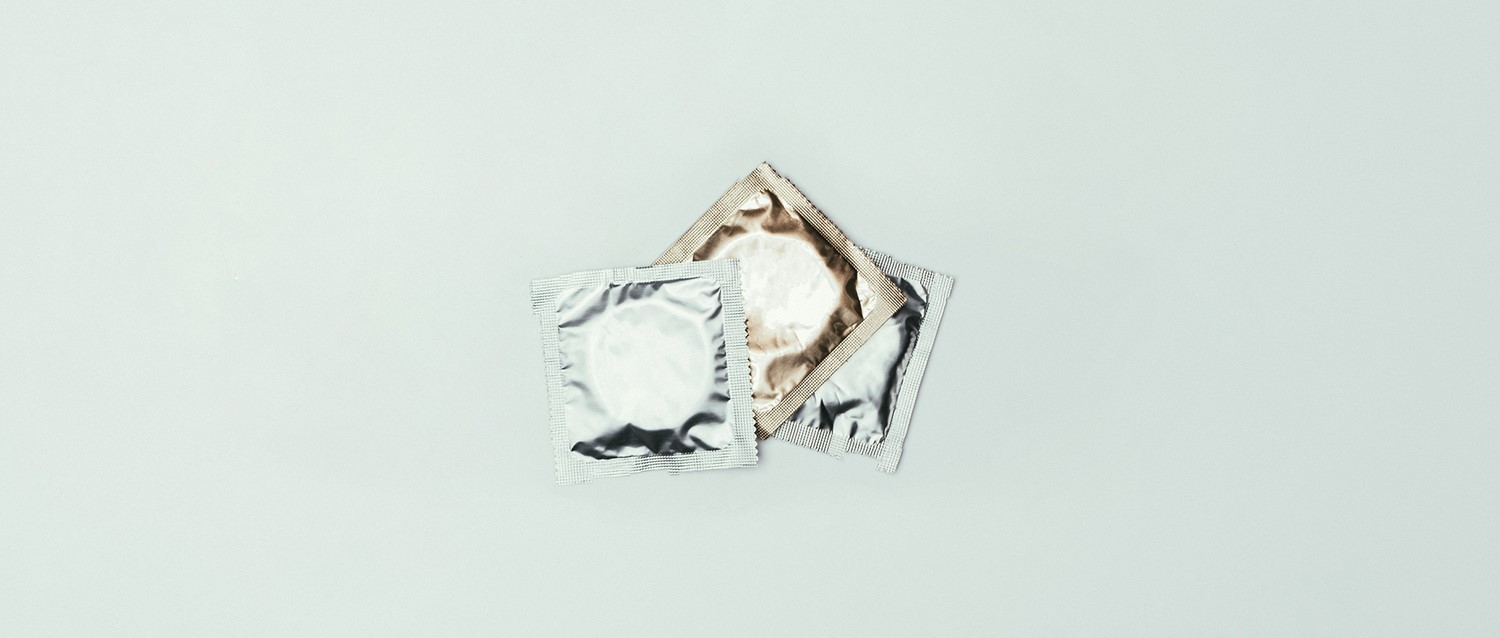
Do condoms really cause erection problems?
Peer reviewed by Dr Sarah JarvisLast updated by Abi MillarLast updated 10 May 2019
Meets Patient’s editorial guidelines
- DownloadDownload
- Share
- Language
- Discussion
- Audio Version
- Add to preferred sources on Google
When it comes to safe sex, condoms are often the best option. Protecting against pregnancies (where applicable) and the transmission of many sexually transmitted infections (STIs), they are especially useful in new relationships or casual encounters. Unfortunately, they come with a couple of well-documented downsides. For many guys, using a condom means losing sensation. And when things are heating up in the bedroom, finding a condom and putting it on can interrupt the flow of sex.

While for many couples, these are simply an inconvenience, for others the problems run deeper. In one 2015 study, involving 479 men aged 18-24, the majority had some kind of condom-associated erection problems (CAEPs). Around 14% said they tended to lose their erection while putting the condom on, and 16% had problems during intercourse itself. Nearly a third had erection problems in both these scenarios.
"Condom-associated erection problems (CAEPs) are an underestimated factor related to inconsistent or incomplete male condom use," said the study authors.
Finding the right fit
According to Dr Anatole Menon-Johansson, clinical director of Brook, condom issues are common among Brook's clients. The charity provides sexual well-being support for people under 25.
"The problem with a condom is that, just like safety belts in cars and helmets for bicycles, they're not necessarily comfortable," he says. "It can take away the sensation associated with penetrative sex and it also gets in the way of the moment."
He points out that, while most guys can still have sex with a condom on, it may take a bit of experimentation to find one that suits.
"For young men who are trying condoms for the first time, it's good to try a range and see which ones feel comfortable, as some are tighter than others," he says. "At Brook we often give out a selection to our clients, just so they can work out which ones are best for them. Then we find that they come back asking for specific brands, shapes, and sizes."
It's also a good idea to incorporate the condom into foreplay (maybe getting your partner to roll it on for you), as this should allow you both to stay in the moment. You could also apply some lubricant inside the condom, although don't go too crazy here or the condom may slip off. And never use oil-based lubricants, which can damage the latex and cause it to break.
Managing anxiety
In many instances, what's causing the problem isn't so much the condom itself, as anxiety relating to condom use.
"Men may be anxious about making sure the condom is properly fitted, and if there are erection problems to start with this can significantly increase levels of anxiety," says Peter Saddington, a counsellor and sex therapist at Relate. "It can become a self-fulfilling prophecy where you think 'I will lose my erection' and then you do."
In other cases, putting a condom on can remind you about what you're trying to avoid - namely pregnancy and STIs. Once your mind has taken this detour, it can be harder to stay aroused.
"Anxiety is interpreted by the brain as a threat and this triggers the fight or flight reaction," says Saddington. "The body's chemical response means that arousal is diminished - it becomes more about defence and survival, as opposed to sex."
One possible solution is to practise putting the condom on by yourself, away from the pressure of sexual intercourse.
"You'll become quicker and more confident, which should, in turn, reduce some of the anxiety," says Saddington. "Once you feel confident doing this on your own, you may want to try it when your partner is present - again without the pressure of trying to have sex at the same time."
Talking to your partner
If this is a recurring problem for you, it's important to put any embarrassment aside and have an honest conversation with your partner. While this may feel awkward initially, being open about the issue should reduce anxiety, making it easier to slow things down and take your time.
"Express your desire to make sure that both you and your partner are safe and that this is important to you, but that you get nervous, especially when you're with someone you really like and don't want to disappoint them," says Saddington. "Your partner will then understand what you are feeling and will want to be supportive. When someone you like asks for help there is usually a strong desire to respond."
Alternative options
If you're in a stable relationship and really hate condoms, it may be appropriate to bring up the topic of other forms of contraception. Assuming you have both been checked for STIs, there are many alternative options, broadly grouped into hormonal (pills, patches, rings), barrier methods and long-acting reversible contraception.
"One of the conversations heterosexual couples should be having is about different types of contraception," says Menon-Johansson. "If the woman doesn't want to use a hormonal method, there is the IUCD, which is a fantastic hormone-free contraceptive method that is much more effective than condoms."
If you would prefer a barrier contraceptive, there are also female condoms (such as Femidoms), which are placed into the vagina before sex and may improve sensation from the man's side. You could also try 'pull' non-latex condoms, which are ultra-thin and are pulled on like a sock.
"If the association of rolling on a condom is negative, maybe pulling on a polyethylene condom might go down better," says Menon-Johansson.
Really, it comes down to applying some creative thinking around the issue. As Menon-Johansson explains, there are two main stumbling blocks here: firstly that people haven't tried a range of condoms and are giving up on them too quickly; secondly that they’re not engaging with their partner.
"If condoms are what you have, the best approach is to make sure you find the right size, talk to your partner about it, and try to incorporate it into foreplay," he says. "You'll be surprised how impactful those simple measures can be."
Patient picks for Men's sexual health

Sexual health
What erectile dysfunction could mean for your heart
Erectile dysfunction (ED) - or impotence - is when a man has trouble either getting or maintaining an erection. It's extremely common, with up to half of 40-70 year olds experiencing it to some degree. Despite this, many men find it difficult to talk about and so suffer in silence, not wanting to bother their GP. The fact that Viagra® is now easily accessible online or over the counter without a prescription means many self-treat without support. But what most don't realise is that such behaviour could spell bad news for their heart.
by Dr Anna Cantlay, MRCGP

Sexual health
What you need to know before you take erectile dysfunction medication
You can now buy erectile dysfunction (ED) medication over the counter at pharmacies. However, some men would be better off seeing their GP first as dosage and treatment options may need adjusting, and persistent ED can be an early warning sign of cardiovascular disease and other health conditions.
by Sally Turner
Frequently asked questions
Can I use any type of lubricant with condoms?
No, it's important to use the correct type of lubricant. While some lubricant can be applied inside the condom to enhance sensation, you should never use oil-based lubricants. Oil-based products can damage the latex material of the condom, increasing the risk of it breaking.
Are there condoms designed for women?
Yes, there are female condoms available, such as Femidoms. These are barrier methods that a woman can place inside her vagina before sex. For the man, female condoms might even improve sensation.
What are 'pull' non-latex condoms?
Pull non-latex condoms are a type of ultra-thin condom designed to be pulled on, similar to how you would pull on a sock. This design might be a good alternative if you find the rolling-on association of traditional condoms unappealing.
Are there non-hormonal contraception options if I don't want to use condoms?
Yes, if you're in a stable relationship and both partners have been checked for STIs, there are non-hormonal long-acting reversible contraception options. For example, the IUCD (intrauterine contraceptive device) is a very effective hormone-free method of contraception.
What are CAEPs?
CAEPs stands for condom-associated erection problems. These are erection issues that occur in connection with condom use, such as losing an erection while trying to put a condom on or during intercourse while using a condom.
About the authorView full bio

Abi Millar
Freelance Journalist
BA (Hons), MA
Abi is a freelance journalist with a special interest in health and medicine writing.
About the reviewerView full bio

Dr Sarah Jarvis
Clinical Consultant
MA (Cantab), BM, BCh (Oxon), DRCOG, FRCGP, MBE
After training in medicine at Cambridge and Oxford, Dr Sarah Jarvis MBE became a GP.
Article history
The information on this page is peer reviewed by qualified clinicians.
Article also available in English, German, Spanish, French, Italian, Portuguese, Hindi, Hebrew, Arabic, and Swedish.
10 May 2019 | Latest version
Join the conversation
Share your thoughts or experiences with others in our patient communities.

Ask, share, connect.
Browse discussions, ask questions, and share experiences across hundreds of health topics.

Feeling unwell?
Assess your symptoms online for free
Sign up to the Patient newsletter
Your weekly dose of clear, trustworthy health advice - written to help you feel informed, confident and in control.
By subscribing you accept our Privacy Policy. You can unsubscribe at any time. We never sell your data.
More in sexual health
- Can women take Viagra?
- How good is PEP for preventing HIV?
- How to prevent genital irritation from affecting your sex life
- How to treat vaginismus
- Is it easy to have an HIV test?
- Oral sex: what you need to know to stay healthy
- Preparing for your smear test as a survivor of sexual violence
- Safeguarding your sexual health at university
- Scientists develop sperm separation method for sex selection
- Scientists identify a mechanism to 'neutralise' HIV
- STI videos
- Teenage sex education: the best digital resources for your child
- The most likely reasons for your low sex drive
- What to do about contraception after giving birth
- When will I become fertile again after coming off contraception?
- Which medications can affect your contraception?
- Why is PrEP still not available on the NHS in England?
- Why is sexual violence against men on the rise?
- Why is syphilis on the rise?
- Will we ever have a male contraceptive pill?