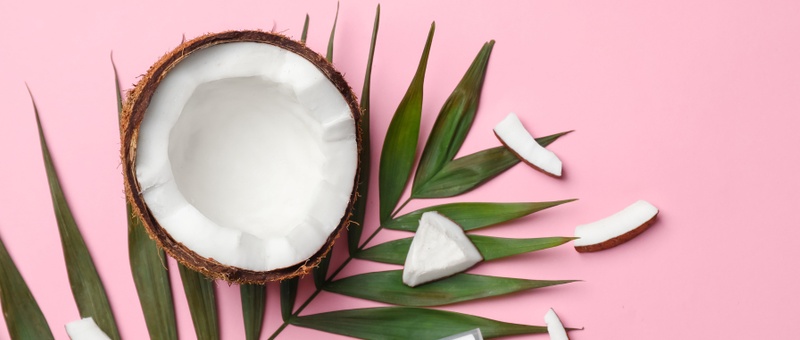
L'huile de coco est-elle bonne pour vos cheveux ?
Revu par des pairs par Dr Colin Tidy, MRCGPDernière mise à jour par Victoria RawDernière mise à jour 24 Mar 2026
Respecte les directives éditoriales
- TéléchargerTélécharger
- Partager
- Language
- Discussion
- Version audio
- Ajouter aux sources préférées sur Google
L'huile de coco peut offrir une gamme d'avantages pour vos cheveux. Vous avez probablement entendu parler de son utilisation sur la peau, mais beaucoup de gens l'utilisent pour favoriser la croissance des cheveux ou pour démêler. Nous explorons les avantages possibles et la meilleure façon d'inclure l'huile de coco dans votre routine capillaire.
L'huile de coco est-elle bonne pour vos cheveux ?
Coconut oil is easily absorbed, making it one of the better oils for repairing dry hair. It helps to moisturise your hair, prevent dandruff, and is gentle on your scalp. Most coconut oil is made from natural ingredients, meaning it tends to be safe for sensitive scalps and is less likely to cause irritation.
What are the side effects of coconut oil?
More research is needed into the wider, long-term effects of coconut oil on the hair, as there is some evidence of negative side effects.
Dr Catherine Borysiewicz, consultant dermatologist at Spire Healthcare, explains that when you leave unrefined oil on your roots and scalp for too long, it's absorbed into your scalp, which can cause your hair growth to slow down.
In addition, coconut oil can make your hair greasy and dull if it builds up on your scalp. This is more likely if you have extra-fine hair.
Borysiewicz says: "In certain instances, coconut oil can even have a drying effect if it is overused or used on the wrong hair type, as it can penetrate the hair cuticle.
"This takes up space within the strands, causing a build-up of proteins."
How to use coconut oil for hair
Borysiewicz says that you can use coconut oil as a split-end treatment for extra dry hair while on the go. However, the best option is to apply the oil on to damp hair after washing.
Warm the coconut oil slightly before applying - do this by adding a small amount to your palm and rubbing your hands together. This makes it more malleable and easier to apply to your hair. If you prefer a liquid consistency, you could also heat the coconut oil up on low heat over a stove. Make sure to allow the oil to cool before pouring on to your hair.
Apply the coconut oil sparingly to your hair - avoiding your scalp to prevent build-up and grease. Spread the coconut oil through the lengths of your hair to add moisture and to detangle.
After applying the coconut oil, dry your hair and style as normal. Make sure you use a heat protectant if using a hairdryer, straighteners, or curling wand.
Borysiewicz adds that you will need to be aware of your hair type before using a coconut oil hair mask. Assess your hair regularly to see if it is suitable for you.
"Using coconut oil once a week is more than enough," she advises. "If you apply it too heavily or too often then your hair follicles may become clogged, and it can cause a build-up of excess oils."
Can you leave coconut oil in your hair overnight?
Do not put coconut oil into your hair before bed and sleep on it. Coconut oil hair masks can clog hair follicles, make your hair greasy, and reduce growth.
You can leave coconut oil in your hair for up to 30 minutes. If you have thin or highly porous hair, 15 minutes is likely enough time.
If you want to use coconut oil as a hair mask or a scale treatment, and your hair type allows, leaving it in overnight occasionally shouldn't cause issues.
Does coconut oil help hair growth?
Some people believe coconut oil helped their hair growth. Coconut oil can improve the health of your hair which can make it appear to be growing at a faster rate, as it can reduce breakage and split ends.
However, there is currently no evidence to support this.
Does coconut oil thicken hair?
There is no medical research to suggest that coconut oil offers a thickening effect on the hair.
If you are hoping to thicken your hair, Borysiewicz suggests considering the following options instead:
Avoid restrictive dieting - eat lots of oxygen-and vitamin-rich foods, such as leafy greens and fruits.
Reduce over-styling, colouring, and heat application to your hair.
Opt for caffeine-based hair products.
Treat yourself to regular head massages to increase the blood flow to the pores in your scalp.
Check with your doctor or dermatologist if you suspect thinning hair might have an underlying health cause.
Is coconut oil good for your skin?
As well as being used on hair, coconut oil is frequently applied on skin and offers a range of benefits.
You can use coconut oil to wash your face like any other face wash. Rub it over your face and then let it sit for a few minutes before washing it off with a warm, wet cloth.
You can also use coconut oil as a make-up remover by applying it to a cotton pad - alternative products for this include micellar water.
Is coconut oil a good moisturiser?
Depending on your skin type coconut oil can be a general moisturiser. However, if you have oily or combination skin, coconut oil might not be the best moisturiser for you. This is because it is comedogenic and can clog your pores.
Borysiewicz says: "Coconut oil is rich in antioxidants and nutrients to help protect the skin. It has been noted as a natural source of antibacterial, antifungal, and antiviral properties."
Other benefits of using coconut oil for skin
Reducing the appearance of fine lines.
Protecting the skin against environmental stressors.
Soothing irritated skin.
Exfoliating dry skin if mixed with raw sugar or sea salt to create a scrub.
Before including coconut oil in your haircare routine, you should assess your hair type, any allergies you might have, and what part of your hair health you want to treat.
Sélections des patients pour Hair and scalp

Santé de la peau, des ongles et des cheveux
4 problèmes capillaires courants en hiver - et comment les traiter
En hiver, nous passons constamment du froid extérieur au chauffage central intérieur. Ces deux conditions peuvent être agressives pour nos cheveux, les privant de l'humidité dont ils ont besoin pour rester en bonne santé et pleins de vitalité. Nous avons demandé à un spécialiste des cheveux des conseils pour prévenir les problèmes capillaires les plus courants en hiver, et explorer d'autres problèmes de santé qui pourraient être liés à vos soucis capillaires.
par Victoria Raw
Santé de la peau, des ongles et des cheveux
L'huile de romarin aide-t-elle réellement à faire pousser les cheveux ?
Nous sommes toujours à la recherche du dernier produit miracle pour la santé - surtout s'il est peu coûteux et facilement disponible dans les magasins. Et TikTok regorge de revendications selon lesquelles l'huile de romarin est un remède pour une croissance rapide des cheveux. Mais y a-t-il des preuves que cela fonctionne ?
par Victoria Raw
À propos de l'auteurVoir la biographie complète

Emily Jane Bashforth
Auteur de chroniques
NCTJ
Emily est rédactrice spécialisée chez Patient, écrivant des articles sur une variété de sujets liés à la santé et au bien-être.
À propos du critiqueVoir la biographie complète

Dr Colin Tidy, MRCGP
Médecin généraliste, Auteur médical
MBBS, MRCGP, MRCP (Paediatrics), DCH
Le Dr Colin Tidy est un médecin du NHS, basé dans l'Oxfordshire.
Historique de l'article
Les informations sur cette page sont examinées par des cliniciens qualifiés.
Article également disponible en Anglais, Allemand, Espagnol, Français, Italien, Portugais, Hindi, Hébreu, Arabe, and Suédois.
Next review due: 25 Mar 2029
24 Mar 2026 | Dernière version
4 Aug 2022 | Publié à l'origine
Écrit par :
Emily Jane Bashforth

Demandez, partagez, connectez-vous.
Parcourez les discussions, posez des questions et partagez vos expériences sur des centaines de sujets de santé.

Vous ne vous sentez pas bien ?
Évaluez vos symptômes en ligne gratuitement
Inscrivez-vous à la newsletter Patient
Votre dose hebdomadaire de conseils de santé clairs et fiables - rédigés pour vous aider à vous sentir informé, confiant et maître de la situation.
En vous abonnant, vous acceptez notre Politique de confidentialité. Vous pouvez vous désabonner à tout moment. Nous ne vendons jamais vos données.
Plus sur la santé de la peau, des ongles et des cheveux
- Les greffes de cheveux peuvent-elles améliorer la santé mentale ?
- Inquiet pour un grain de beauté ? Obtenez la tranquillité d'esprit avec un contrôle en ligne des grains de beauté
- Les probiotiques favorisent-ils des cheveux en bonne santé ?
- Eczéma chez les enfants : comment apaiser votre enfant
- Comment se débarrasser des cicatrices d'acné : votre guide ultime
- Comment prévenir et apaiser les kystes cutanés : un guide simple
- Comment empêcher votre enfant d'attraper une verrue plantaire
- Comment distinguer l'acné des autres problèmes de peau
- Comment traiter un piercing infecté
- Y a-t-il un lien entre l'alimentation et l'acné ?
- Mis à jourLes meilleurs aliments et nutriments à consommer pour une peau saine
- Les ingrédients de la crème cicatrisante à surveiller
- Les signes avant-coureurs de l'insolation et de l'épuisement dû à la chaleur
- Quels sont les bienfaits du collagène et peut-il prévenir le vieillissement de la peau ?
- À quoi sert l'après-soleil et en avez-vous vraiment besoin ?
- Que faire si vous avez un poil incarné infecté
- Ce que vos ongles révèlent sur votre santé
- Quels remèdes naturels aident à apaiser l'eczéma ?
- Pourquoi avons-nous des ongles ?
- Pourquoi les cheveux deviennent gris - et comment le mode de vie peut jouer un rôle