Anatomie du sein
Revu par Dr Hayley Willacy, FRCGP Dernière mise à jour par Dr Laurence KnottDernière mise à jour 12 Nov 2018
Respecte les directives éditoriales
- TéléchargerTélécharger
- Partager
- Language
- Discussion
- Version audio
- Ajouter aux sources préférées sur Google
Le nom médical pour le sein est glande mammaire. Chaque sein est constitué de tissu recouvrant les muscles de la paroi thoracique (les muscles pectoraux). Chez les femmes, les seins sont principalement composés de tissu spécialisé (tissu glandulaire) qui produit du lait. La partie restante est constituée de tissu adipeux. Chez les humains, le tissu mammaire commence à s'élargir à la puberté. Cela diffère des autres primates, où le tissu mammaire ne s'élargit que pendant la production de lait.
Structure of the breast
Breast cross section
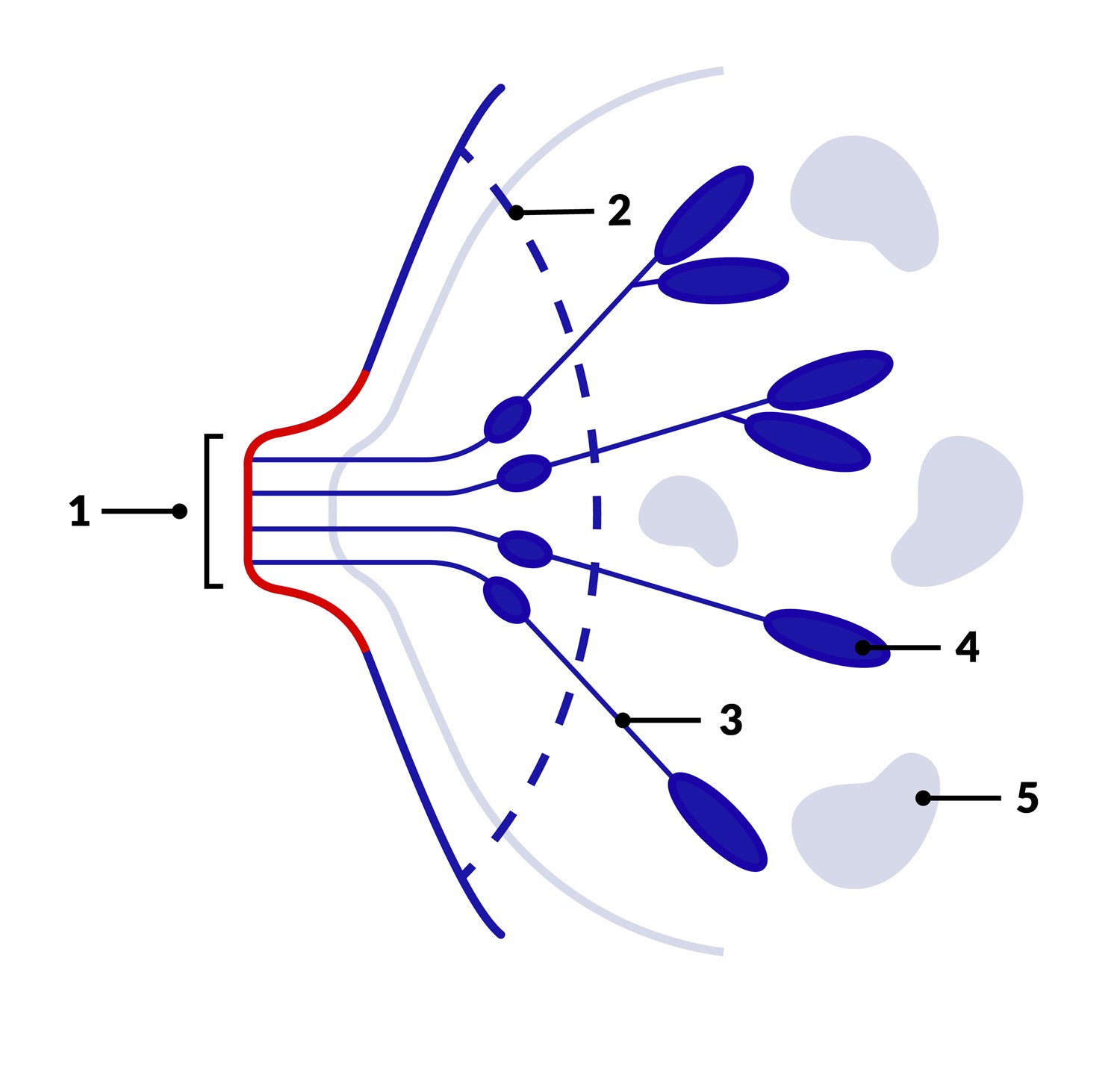
Key |
|---|
1. Nipple |
The breast is composed of glandular structures called lobules. In women, the lobules are composed of specialised tissue which can produce milk during periods of lactation. The lobules themselves are organised into lobes. Each lobe contains 15-20 lobules. The space between the lobules is filled with fat cells and connective tissue (the support tissue of the body). Ligaments support the breasts and give them shape. Nerves running through the breasts provide sensation. Lymph vessels are responsible for the circulation of body fluid and drain into the lymph nodes. The lymph nodes draining the breast are located in the armpits and behind the breastbone. Blood vessels circulate blood through the tissues. The amount of fat in the breast is what determines its size.
The breasts do not contain muscle. They sit on top of the pectoral muscles that are part of the chest wall.
The male breast has a similar composition except the tissue making up the lobules has no capacity to produce milk.
In the fetus (the developing unborn baby) the breasts develop along the 'milk lines', tracts of tissue on either side of the body that run from the armpits to the groins. Extra nipples or even entire breasts can develop anywhere along these lines. Extra nipples are common but the presence of a whole additional breast is unusual.
How does lactation work
The lactating tissue of the lobules produces milk. Milk produced by each lobule travels through little tubes called ducts, which open out on to the nipple. The pigmented area of the nipple is called the areola. The areola also contains modified sweat glands called Montgomery's glands. Their purpose is to lubricate the breast during breastfeeding.
Some disorders of the breast
Douleur mammaire
Breast pain is a common symptom that most women experience at least some time in their lives. The medical term for it is mastalgia. Most breast pain is cyclical - that is, it occurs on a monthly basis, usually just before a period. The breasts may feel swollen and lumpy around this time. It is thought that cyclical breast pain is caused by the breast tissue becoming extra sensitive to the normal hormone changes that occur around menstruation. There does not seem to be any disorder of the hormone system itself.
Pain that is not related to periods is called non-cyclical. It can be caused by a breast disorder (eg, infection or breastfeeding) or from a problem with the muscles or ribs beneath the breast. It may be worth keeping a diary to see whether your pain is cyclical or non-cyclical.
Cyclical pain may be helped by a good support bra, painkillers such as paracétamol, non-steroidal anti-inflammatory preparations to apply directly to the surface of the breast - such as ibuprofène ou diclofénac - and hormone-blocking medicines such as danazol. Evening primrose oil used to be widely used but is no longer available on prescription, as there is little evidence for its use. However, some women have found it helpful and it can still be bought from a chemist.
Several medicines can cause cyclical breast pain, including hormones, antidepressants and treatments for high blood pressure. Check your medication and talk to your doctor if you think this is the problem.
The treatment of non-cyclical breast pain depends on the cause, although sometimes no cause is found. It may disappear without treatment after a few months. It is sometimes helped by non-steroidal anti-inflammatory medicines taken in tablet form or rubbed on to the skin.
Breast pain and breast cancer
le cancer du sein usually causes a painless lump but this is not a golden rule. If you have any type of breast pain, it's best to get it checked out by your doctor.
Sélections des patients pour la santé des seins

Santé des femmes
Pourquoi nous devons parler de la maladie des implants mammaires
Avez-vous entendu parler de la maladie des implants mammaires ? Bien qu'elle ne soit pas encore reconnue comme une condition médicale officielle, comprendre qu'il s'agit d'un effet secondaire possible de la chirurgie des implants mammaires peut aider les gens à prendre des décisions plus éclairées, à identifier la cause de leurs problèmes de santé et à améliorer leurs chances de rétablissement.
par Amberley Davis
Santé des femmes
Vérifiez-vous vos seins ?
En tant que médecin généraliste, je vois régulièrement des femmes avec des problèmes mammaires - et elles s'inquiètent presque toujours du cancer. Mais les masses, bosses et autres problèmes mammaires ne sont souvent pas cancéreux. Et s'ils le sont, un traitement précoce de nos jours est généralement très efficace. Le mot clé est précoce - si vous avez un problème mammaire, il est toujours important de le faire vérifier par votre médecin.
par Dr Sarah Jarvis
À propos de l'auteurVoir la biographie complète

Dr Laurence Knott
Médecin généraliste, Auteur médical
Licence (Hons) Biochimie, MBBS
Le Dr Laurence Knott a obtenu son diplôme en 1973 et a acquis une vaste expérience en tant que médecin généraliste.
À propos du critiqueVoir la biographie complète

Dr Hayley Willacy, FRCGP
Médecin généraliste, Auteur médical
MBChB (1992), DRCOG, DFFP, MRCOG (Part 1) MRCGP (2007), DFSRH (2013), MSc - medical education (2020)
Le Dr Hayley Willacy était médecin généraliste au NHS travaillant dans le nord-ouest de l'Angleterre, qui a pris sa retraite de la pratique clinique en 2022 après 30 ans.
Historique de l'article
Les informations sur cette page sont examinées par des cliniciens qualifiés.
Article également disponible en Anglais, Allemand, Espagnol, Français, Italien, Portugais, Hindi, Hébreu, Arabe, and Suédois.
12 Nov 2018 | Dernière version

Demandez, partagez, connectez-vous.
Parcourez les discussions, posez des questions et partagez vos expériences sur des centaines de sujets de santé.

Vous ne vous sentez pas bien ?
Évaluez vos symptômes en ligne gratuitement
Inscrivez-vous à la newsletter Patient
Votre dose hebdomadaire de conseils de santé clairs et fiables - rédigés pour vous aider à vous sentir informé, confiant et maître de la situation.
En vous abonnant, vous acceptez notre Politique de confidentialité. Vous pouvez vous désabonner à tout moment. Nous ne vendons jamais vos données.
Plus sur la santé des femmes
- Vidéos sur la vaginose bactérienne
- Peut-on prévenir les saignements intermenstruels sous pilule ?
- Pilates clinique : un soutien à la récupération après un cancer du sein
- Les pilules contraceptives modifient-elles votre comportement ?
- La contraception hormonale affecte-t-elle votre libido ?
- Comment prendre soin de votre santé mentale pendant votre cycle menstruel
- Une nouvelle opération pourrait retarder la ménopause de 20 ans
- Tableau des pertes sanguines menstruelles
- Pauvreté menstruelle : une crise de santé publique
- Quiz : Quand aurai-je mes premières règles ?
- Clients mystères : Les femmes reçoivent-elles les meilleurs conseils en matière de contraception ?
- NouveauToo many pills? The worrying rise of polypharmacy in midlife women
- Comprendre les kystes vaginaux
- Vidéo : Comment la PID affecte-t-elle la fertilité ?
- Quelles sont les causes des règles abondantes et des saignements vaginaux anormaux ?
- Ce que le THS a fait pour moi
- Ce que c'est d'être chirurgien du sein atteint d'un cancer du sein
- Ce que vous devez savoir sur la testostérone et la ménopause
- Quel est le lien entre le SOPK et le diabète ?
- Santé des femmes dans le sport : blessures, menstruation et maternité