Can what you eat before bed help you sleep better?
Revu par Dr Colin Tidy, MRCGPRédigé par Victoria RawPublié à l'origine 23 Nov 2026
Respecte les directives éditoriales
- TéléchargerTélécharger
- Partager
- Language
- Discussion
- Ask Patient
- Version audio
- Ajouter aux sources préférées sur Google
The temptation to have a snack or drink before bed is sometimes hard to resist. However, not all foods and beverages are ideal choices when you're preparing for a good night's sleep.
We explore some of the best things to eat and drink before bed, how they may support better sleep, and why they could benefit your overall wellbeing.
Sélections vidéo pour Sommeil et insomnieBibliothèque vidéo
How does your diet affect your sleep?
Most of us know the feeling of heading to the fridge after dinner in search of something else to satisfy those evening cravings.
However, choosing the wrong foods could make it harder to fall asleep and stay asleep - particularly if you already struggle with getting a good night's rest.
For most of us, having a little snack or a relaxing drink before bed is a simple pleasure. But it's easy to underestimate just how much what we eat and drink can influence the quality of our sleep.
Hazel Shore, Registered Dietitian and SCOPE-Certified Obesity Specialist, explains that what we consume can affect not only how well we sleep but also how our bodies recover overnight.
“Caffeine in tea, coffee, energy drinks, and some fizzy drinks can keep you awake, alcohol can disturb your sleep, and a big meal close to bedtime can make it harder to drop off,” she warns.
Hazel Shore

Which nutrients support a good night’s sleep?
Certain nutrients play an important role in supporting healthy sleep. Shore suggests that, rather than just focusing solely on foods and drinks that could disrupt your rest, it's worth including more nutrient-rich foods in your everyday diet that may help promote better sleep.
She highlights three key nutrients:
Tryptophan - found in foods such as milk, eggs, poultry, beans, and seeds. Tryptophan is an amino acid that your body uses to produce serotonin, which can then be converted into melatonin. This is the hormone that helps regulate your sleep-wake cycle.
Vitamine B6 - found in foods including bananas, oats, poultry, and some types of fish. Vitamin B6 plays a role in the production of neurotransmitters involved in sleep regulation. While there is promising research into this relationship, there isn't enough evidence to suggest that simply eating more B6-rich foods will directly improve your sleep.
Protéines - important for muscle maintenance and repair, protein may also support overnight recovery. Some small studies suggest that consuming enough protein could help promote muscle repair during sleep.
Shore notes that you don’t need to focus on individual nutrients. It’s better to prioritise un régime équilibré with enough energy throughout the day rather than relying on a particular bedtime food.
“Fibre-rich carbohydrate foods, such as oats, wholegrain bread, beans, and lentils, provide energy and can help prevent constipation,” she explains. “Eating protein and fats alongside them can slow digestion, so your blood sugar rises more gradually. This doesn’t necessarily mean better sleep, though.”
When should you eat before bed?
When it comes to sleep, both the size of your evening meal and how close to bedtime you eat can make a difference. Eating a large meal late in the evening, particularly one that's high in fat, can slow digestion and increase the chance of discomfort or acid reflux when you lie down.
“Try to have balanced meals and, unless you’ve been advised otherwise, leave a few hours between eating and going to bed,” says Shore.
“It doesn’t need to be a rigid cut-off, and a small snack is fine if you’re hungry. If you often wake up needing the toilet, try drinking more earlier in the day and less in the couple of hours before bed.
“If you have diabetes, particularly if you take insulin or some other diabetes medicines, speak to your diabetes team before changing your meal times.”
Shore also recommends being mindful of caffeine consumption, suggesting that your last caffeinated drink should ideally be around lunchtime.
When it comes to alcohol, although it might initially make you feel sleepy and help you drift off faster, even small amounts can interfere with your sleep quality and leave you feeling less rested the following morning.
How much should you eat in the evening?
When deciding what to eat before bed and when to eat it, it's also important to consider portion sizes. The aim isn't simply to avoid eating too much, but to make sure you don't go to bed hungry.
Shore explains that going to bed hungry offers little benefit, as hunger itself can make it harder to relax, settle down, and fall asleep.
“If you’re hungry in the evening, a small snack that combines carbohydrate with some protein, such as cereal with milk, Yaourt grec with fruit, or wholegrain toast with nut butter, can help you feel satisfied,” she says.
“Keep the portion smaller than a main meal, so you’re comfortable rather than overly full, and don’t worry about a strict cut-off time if hunger is affecting your sleep.”
What are the best foods to eat before bed?
Shore stresses that no single food or drink can guarantee a good night’s sleep. If you regularly have sleep issues, it's always worth speaking to your doctor or pharmacist to rule out any underlying health conditions and discuss possible causes.
That said, certain food and drink combinations may help you relax, promote deeper sleep, and support overnight recovery. Shore highlights several options worth incorporating into your evening routine to help create the right conditions for a more restful night.
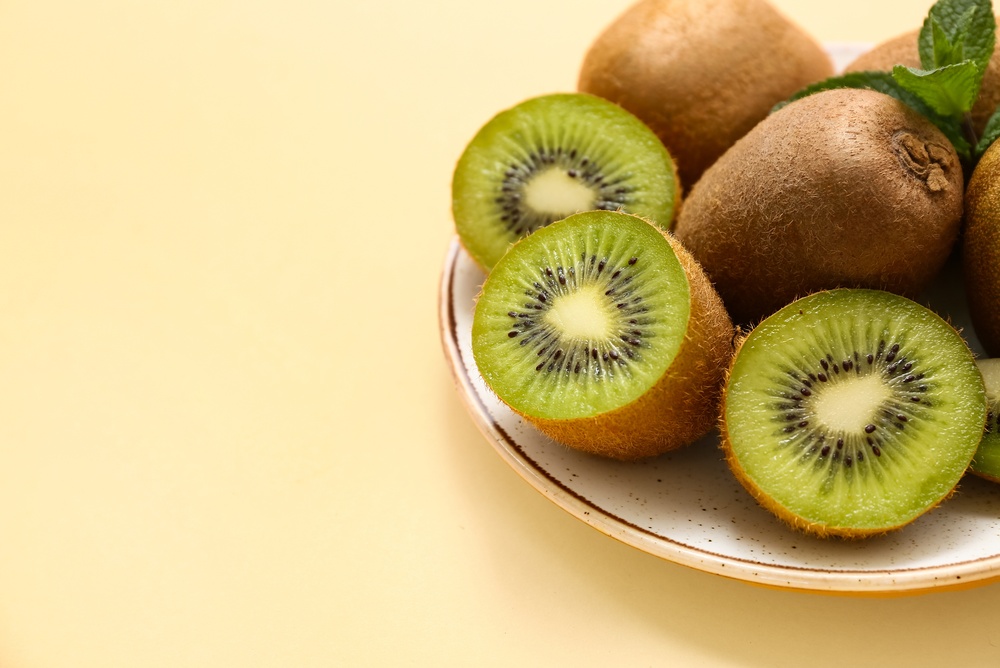
Kiwis
A good source of vitamin C and fibre, kiwis are one of the better-researched foods for sleep. Small studies have found that eating two kiwis around an hour before bed may improve your sleep.
Try Greek yoghurt with sliced kiwi and a sprinkle of oats, or two kiwis alongside a small pot of yoghurt.
Milk and yoghurt
Both milk and yoghurt provide protein and calcium, while early research suggests that dairy could help support better sleep.
Having a protein-rich snack before bed may also aid overnight muscle repair, particularly after strength training. If you’re lactose intolerant, you can opt for fortified plant-based alternatives, such as almond, soy, or oat milk.
For a simple bedtime snack, try a small bowl of plain porridge made with milk or low-sugar cereal served with milk.
Oats and other fibre-rich carbohydrates
Foods such as oats and wholegrain toast are filling and slower to digest, making them a good option for a small evening snack to prevent you from going to bed hungry.
Try wholegrain toast with nut butter or oatcakes topped with cottage cheese.
Mediterranean-style foods
People who follow a Mediterranean-style diet, rich in vegetables, fruit, wholegrains, beans, lentils, fish, and olive oil, tend to report better sleep. Rather than focusing on one particular bedtime snack, the benefits appear to be linked to overall eating habits throughout the day.
What are the best drinks to have before bed?
When it comes to drinks, Shore suggests a warm, caffeine-free milky drink, which the NHS recommends as a simple way to help you wind down before bed.
Caffeine-free herbal teas, such as chamomile, are also worth trying. Some studies suggest chamomile may help improve sleep quality, although most have looked at extracts rather than tea itself.
It’s also a good idea to buvez beaucoup d'eau throughout the day, rather than leaving it until the evening, so you’re not drinking too much in the last couple of hours before bed.
Sélections des patients pour Sommeil et insomnie

Mode de vie sain
Comment s'endormir rapidement : 5 méthodes simples pour un sommeil rapide
Si vous avez du mal à dormir, vous n'êtes pas seul. Voici quelques méthodes populaires pour vous détendre et vous endormir plus rapidement.
par Victoria Raw

Mode de vie sain
Comment améliorer votre comportement de sommeil
Le sommeil est essentiel pour notre bien-être, et le manque de repos peut affecter tout, de la performance au travail à la fonction immunitaire. Alors qu'un sur cinq d'entre nous ne dort pas suffisamment, nous explorons les meilleures façons d'améliorer nos habitudes de sommeil.
par Victoria Raw

Mode de vie sain
The Scandinavian Sleep Method - could separate duvets help you sleep better?
The Scandinavian Sleep Method involves having your own duvet instead of sharing one with your partner. But why is this trend gaining popularity, how could it affect your sleep, and is it worth trying for yourself? We explore all you need to know.
par Victoria Raw

Santé mentale
Is your house haunted? The science behind sleep paralysis
Have you ever woken in the middle of the night, certain there’s someone standing at the end of your bed, but found yourself unable to move or call for help? Perhaps you’ve sensed a dark figure in the corner of your room, felt pressure on your chest, or heard strange noises that seem to come from nowhere. It might sound like the plot of a classic ghost story. But there’s a scientific explanation for these frightening experiences - sleep paralysis. With Halloween approaching, we explore what happens during sleep paralysis, why some people see or sense a presence in their bedroom, and what you can do to reduce the chances of it happening again.
par Thomas Andrew Porteus, MBCS
Mode de vie sain
Insomnie
As many as one in three people can have some difficulty with sleeping. However, there are many things you can do to help yourself. This leaflet aims to show you some of them. For example, simple things like winding down before bedtime, avoiding certain foods and drinks, and a bedtime routine can help. EDITORS NOTES Dr Krishna Vakharia, 24th November 2023 There is a new oral medication that NICE has recommended called daridorexant. This can only be used under certain conditions. Your doctor will discuss if it is suitable for you. For further information take a look at the further reading section.
par Dr Doug McKechnie, MRCGP

Mode de vie sain
Comment empêcher le ronflement de gâcher votre sommeil
Avec deux personnes sur cinq qui ronflent, il y a de fortes chances que vous soyez soit celui qui fait du bruit, soit celui qui reste éveillé à l'écouter. Pour certains, le ronflement est une gêne occasionnelle après quelques verres ou un gros rhume. Pour d'autres, c'est une bataille nocturne qui laisse les deux partenaires épuisés et peut même tendre les relations. Heureusement, le ronflement n'est pas quelque chose que vous devez simplement supporter. Des solutions rapides qui peuvent aider immédiatement aux solutions à plus long terme qui traitent la cause sous-jacente, il existe de nombreuses façons de dormir plus paisiblement.
par Heather Ainsworth
À propos de l'auteurVoir la biographie complète
Rédigé par

Victoria Raw
Auteur de chroniques
Licence (Hons), Littérature anglaise
Victoria is a content writer at Patient, with special interests spanning mental wellbeing, societal trends, and the impact of technology on our health.
Throughout her career, Victoria has partnered with a range of charities such as Ovarian Cancer Action, Scleroderma and Raynaud's UK, St John Ambulance, Andy's Man Club, the RSPCA, and Barnardo's. Her work has seen her interview a variety of well-known personalities - among them actress Gaynor Faye, Sky Sports presenter Adam Smith, and comedian Alex Mitchell, exploring their experiences and stories.
À propos du critiqueVoir la biographie complète

Dr Colin Tidy, MRCGP
Médecin généraliste, Auteur médical
MBBS, MRCGP, MRCP (Paediatrics), DCH
Le Dr Colin Tidy est un médecin du NHS, basé dans l'Oxfordshire.
Historique de l'article
Article également disponible en Anglais, Allemand, Espagnol, Français, Italien, Portugais, Hindi, Hébreu, Arabe, and Suédois.
Next review due: 23 Nov 2029
23 Nov 2026 | Publié à l'origine
Écrit par :
Victoria RawRevu par
Dr Colin Tidy, MRCGP
Partagez vos pensées ou expériences avec les autres dans notre communautés de patients.
Inscrivez-vous à la newsletter Patient
Votre dose hebdomadaire de conseils de santé clairs et fiables - rédigés pour vous aider à vous sentir informé, confiant et maître de la situation.
En vous abonnant, vous acceptez notre Politique de confidentialité. Vous pouvez vous désabonner à tout moment. Nous ne vendons jamais vos données.