FA complementation group G
Dernière mise à jour 3 mars 2025
Respecte les directives éditoriales
- TéléchargerTélécharger
- Partager
- Language
- Discussion
- Version audio
- Ajouter aux sources préférées sur Google
The FANCG gene provides instructions for making a protein that is involved in a process known as the Fanconi anaemia (FA) pathway. The FA pathway turns on (activates) when the process of making new copies of DNA, called DNA replication, is blocked due to DNA damage. The FA pathway works to prevent a certain type of DNA damage known as interstrand cross-links (ICLs). ICLs are abnormal connections between two DNA building blocks (nucleotides) on opposite strands of DNA. These cross-links stop the process of DNA replication and can be caused by a buildup of toxic substances produced in the body or by treatment with certain cancer therapy drugs (sometimes known as DNA cross-linking agents).
Normal function
The FANCG gene provides instructions for making a protein that is involved in a process known as the Fanconi anaemia (FA) pathway. The FA pathway turns on (activates) when the process of making new copies of DNA, called DNA replication, is blocked due to DNA damage. The FA pathway works to prevent a certain type of DNA damage known as interstrand cross-links (ICLs). ICLs are abnormal connections between two DNA building blocks (nucleotides) on opposite strands of DNA. These cross-links stop the process of DNA replication and can be caused by a buildup of toxic substances produced in the body or by treatment with certain cancer therapy drugs (sometimes known as DNA cross-linking agents).
The FANCG protein is one of several proteins that form a group known as the FA core complex. The FA core complex is composed of eight FA proteins (including FANCG) and two proteins called Fanconi anaemia-associated proteins (FAAPs). This complex activates two proteins, called FANCD2 and FANCI, by attaching a single molecule called ubiquitin to each of them (a process called monoubiquitination). The activation of FANCD2 and FANCI attracts DNA repair proteins to the area of DNA damage so the cross-link can be corrected and DNA replication can continue.
Conditions referring to this gene or chromosome
Other names
FANCG_HUMAN
Fanconi anaemia, complementation group G
XRCC9
Related patient information and medicines
Patient information leaflet
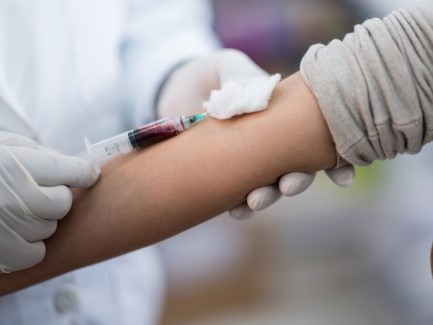
Analyses de sang
La main reasons to know your blood group are if you need to have a blood transfusion or if you are pregnant. You cannot request a blood test just to know your blood group on the NHS. What is blood made up of. Bl... UE blood test - this is often written as 'U+E', U and Es' or 'U&E' and stands for urea and electrolytes. It is used as a measure of.

Patient information leaflet
Évanouissement
Fainting is a temporary loss of consciousness that happens when the brain does not receive enough oxygen because of reduced blood flow to the brain. Driving and faints The Driver and Vehicle Licensing Agency (DVLA) rules on dr... For Group 1 (car and motorcycle) license holders, 'simple' faints (vasovagal syncope) that occur only whilst standing.

Patient information leaflet
Laxatifs
Laxatifs sont medicines that sont used to treat constipation. They can be taken by mouth as liquids, tablets, capsules, powders that dissolve in water, or they can be given via the back passage (rectum). In the trial, 40 adults with persi... Briefly, on average, 50 g de prunes (about six prunes) twice daily seemed à be better at easing.
Patient information leaflet
Find out if you are eligible for a free NHS flu vaccination
Open the flu jab Is the flu vaccine free for you this winter. The flu vaccine is free on the NHS for people most likely to get seriously ill from flu, and for those who could easily pass it on to someone at risk. Whether you qualify depends on your age, your health, and a few other things such as being pregnant or caring for someone. The groups.
Patient information leaflet
Stéatose hépatique non alcoolique
Stéatose hépatique non alcoolique (NAFLD) describes a range of conditions caused by a build-up of fat within liver cells. It is very common and in many cases is linked to being obese or overweight. Most people with NAFLD do not develop serious liver problems. This not only helps with NAFLD, but will help reduce your risk of developing.
Patient information leaflet
Syndrome d'alcoolisation fœtale
FAS est a pattern of disabilities that can develop in a bébé as it grows in the womb (uterus) because the mother drank alcohol whilst pregnant and the baby is therefore exposed to alcohol before birth. Fetal alcohol syndrome (FAS) is part of a group de conditions called fetal alcohol spectrum disorders (FASDs). These are a range of disabilities a.
Lectures complémentaires et références
- FA complementation group G; MedlinePlus, National Library of Medicine.
- de Winter JP, Joenje H. The genetic and molecular basis of Fanconi anemia. Mutat Res. 2009 Jul 31;668(1-2):11-9. doi: 10.1016/j.mrfmmm.2008.11.004. Epub 2008 Nov 14.
- Deakyne JS, Mazin AV. Fanconi anemia: at the crossroads of DNA repair. Biochemistry (Mosc). 2011 Jan;76(1):36-48. doi: 10.1134/s0006297911010068.
- Kee Y, D'Andrea AD. Expanded roles of the Fanconi anemia pathway in preserving genomic stability. Genes Dev. 2010 Aug 15;24(16):1680-94. doi: 10.1101/gad.1955310.
- Kitao H, Takata M. Fanconi anemia: a disorder defective in the DNA damage response. Int J Hematol. 2011 Apr;93(4):417-424. doi: 10.1007/s12185-011-0777-z. Epub 2011 Feb 18.
- Mathew CG. Fanconi anaemia genes and susceptibility to cancer. Oncogene. 2006 Sep 25;25(43):5875-84. doi: 10.1038/sj.onc.1209878.
- Mehta PA, Ebens CL. Fanconi Anemia. 2002 Feb 14 [updated 2026 Jan 15]. In: Adam MP, Bick S, Mirzaa GM, Wallace SE, Amemiya A, editors. GeneReviews(R) [Internet]. Seattle (WA): University of Washington, Seattle; 1993-2026. Available from http://www.ncbi.nlm.nih.gov/books/NBK1401/
- Taniguchi T, D'Andrea AD. Molecular pathogenesis of Fanconi anemia: recent progress. Blood. 2006 Jun 1;107(11):4223-33. doi: 10.1182/blood-2005-10-4240. Epub 2006 Feb 21.
Participez à la conversation
Partagez vos pensées ou expériences avec les autres dans notre communautés de patients.

Demandez, partagez, connectez-vous.
Parcourez les discussions, posez des questions et partagez vos expériences sur des centaines de sujets de santé.
Inscrivez-vous à la newsletter Patient
Votre dose hebdomadaire de conseils de santé clairs et fiables - rédigés pour vous aider à vous sentir informé, confiant et maître de la situation.
En vous abonnant, vous acceptez notre Politique de confidentialité. Vous pouvez vous désabonner à tout moment. Nous ne vendons jamais vos données.