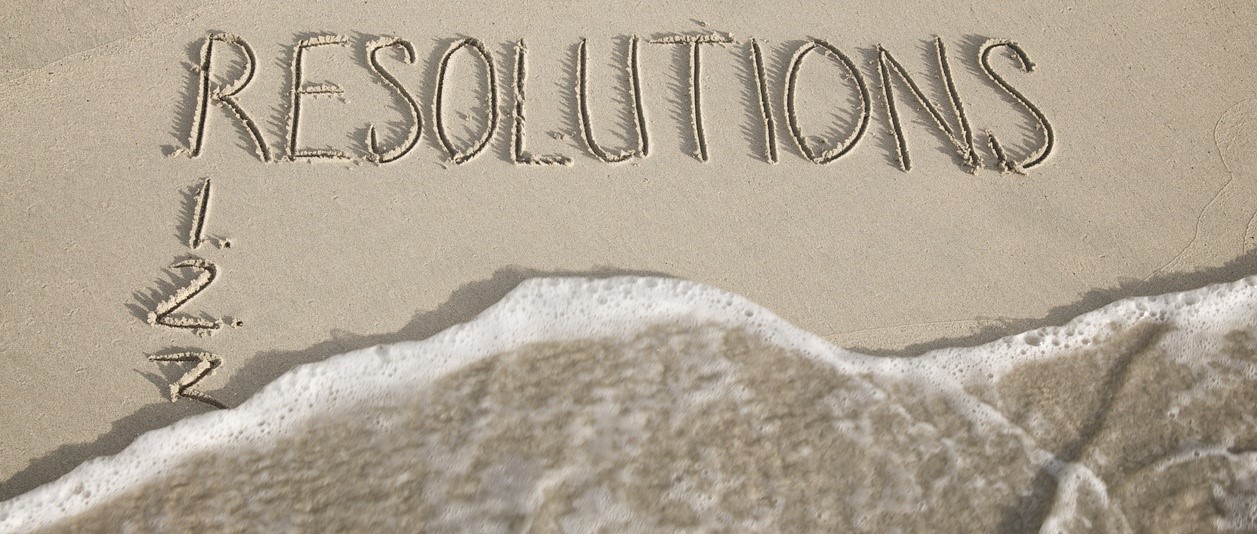
Pourquoi les résolutions du Nouvel An échouent - et ce que vous pouvez faire à ce sujet
Revu par Dr Krishna Vakharia, MRCGPRédigé par Rose ButcherPublié à l'origine 8 Jan 2024
Respecte les directives éditoriales
- TéléchargerTélécharger
- Partager
- Language
- Discussion
- Ask Patient
- Version audio
- Ajouter aux sources préférées sur Google
As good as our intentions are at the start of the year, we can sometimes put ourselves under immense pression to see through our new year’s resolutions. Failing to meet our own expectations can make us give them up entirely, which has a knock-on effect on our santé mentale. When this happens, what can be done to ensure we stick to our goals for the year?
Soutien en santé mentale pour les adultes et les enfants
Thérapie cognitivo-comportementale (TCC) et thérapie psychologique en ligne pour les adultes et les enfants de 8 à 17 ans. Les cliniciens agréés de Onebright accompagnent les personnes confrontées à l’anxiété, à la dépression et à d’autres difficultés émotionnelles.
Most new year resolutions fail
By making a resolution, you're making a firm decision to do or not to do something. Setting resolutions has been the go-to approach to starting each year in many cultures since the Babylonian times, more than 4,000 years ago.
It isn't a bad thing to want to make healthy changes, such as learning a new skill, starting a new diet or improving your fitness. However, problems tend to arise when we set sudden, drastic and unrealistic goals for ourselves.
This is why so many new year resolutions fail. A large-scale 3-year study found that 55% of people break their New Year's resolutions within a year, with1:
11% last less than a month.
19% last at least one month.
14% last at least three months.
11% last at least six months.
But it is possible to make long-lasting resolutions. If you're unsure of how to keep yours, here we explore five tried and tested ways to approach and achieve your 2024 goals.
How to succeed in your 2024 goals
1. Replace resolutions with habits
It is possible to realistically achieve certain goals in the long term - or at least for the year ahead. The reason why many new year's resolutions fail is that we tend to have an underlying urge to reinvent ourselves and rush into the process - often at a great cost to our wellbeing.
This means we often think up unrealistic outcome-focussed resolutions that become joyless, and too hard to meet and sustain over time.
Instead, replace unattainable resolutions with habit forming at the start of the new year. James Clear, author of Atomic Habits, says it takes 66 days on average for a new behaviour to become habit - something you naturally and automatically do. This is based on a study of 96 people, which also found that it can take anywhere from 18 days to 254 days for someone to form a new habit, depending on the person, the behaviour, and the circumstances2.
No matter how many days it takes you to create a new healthy habit, once it's formed you won't have to remember why, when, where, or how to do it. This makes them so much more successful than most new year resolutions, which we're more likely to abandon if they're impractical to follow every day.
2. Repeat, practise and tweak
You can start to create a habit by choosing an action that's manageable and easily repeatable, like taking vitamins at the same time each day. According to behavioural expert Dr Kyra Bobinet, the more you can repeat this action in your day-to-day life, the faster it'll become a habit.
Using a 5-minute daily workout habit as an example, Bobinet advises us to think of it as a practice we would follow when learning anything new, like a sport or musical instrument. Setting a fixed, time-bound goal to this may miss the mark.
By thinking of it as a learning process, you don’t expect to be good at the habit straight away and this greatly reduces feelings of failure and self-blame if it doesn't always go to plan.
Bobinet explains that new year's resolutions can fail because habits don't get off the ground, you realise they're unenjoyable, or they disrupt your other priorities.
Sometimes, you successfully follow a resolution for a long time, but you are bored and need to level up or switch it up.
This is where Bobinet's "practise and tweak approach" comes in, which simply means adjusting or tweaking the habit you want to form if it becomes too difficult to stick to, instead of viewing this as a failed attempt.
Bobinet explains that adopting this mindset allows us to steer clear of avoidant behaviours that may be triggered by threat responses in our brains3. We can keep practising and updating our habits as a lifelong endeavour, which makes her approach one of the new year's resolution alternatives likely to go the distance.
3. Focus on immediate rewards
We're usually motivated to pursue long-term goals by the desire to receive delayed rewards, for example reaching a fitness goal at the end of the upcoming year.
However, studies have found that immediate rewards make us more likely to stick with our goal-related activities4. An immediate reward means you are having a positive or enjoyable experience while carrying out your goal.
For example4:
Of 96 people, most reported being more successful in pursuing their new year's resolution when it provided an immediate sense of enjoyment or fulfillment.
Of 40 students, most were more able to persist with their studies if they enjoyed their study materials, compared to materials that were more important for their education but less enjoyable.
Of 80 gym-goers, most participated in a cardio activity for longer if they enjoyed it, regardless of their long-term fitness goal.
4. Look back before moving forward
Some new year goals are more difficult to start than others. In The Science of Stuck, trauma specialist Britt Frank, says that new year’s resolutions can fail when we are not honest with ourselves about past events5.
The neuro-psychotherapist highlights the importance of assessing why we have struggled in the past before we even think about starting new goals each year. Without this, we are likely to repeatedly break them year after year.
If an experience in your past is holding you back, therapy can be épuisant and difficult to face, yet for many it's an important step to changing how our brains relate to the past and the present.
Par exemple, trauma therapy helps organise how our memories are stored, while psychodynamic therapy explores how our unprocessed past experiences relate to our present unconscious feelings.
5. Practise visualisation
Another reason why new year's resolutions fail might be the belief that a certain practice is undoable, which leads us to decide not to do it.
Visualisation can allow us to mentally picture the things that we want in our lives. Sometimes all it takes is to focus our attention on our most important goals and bring them to the forefront of our minds. One study of 65 tennis players found that they generally performed better in matches after an imagery exercise where they imagined doing well6.
In other words, being positive about your goals can go a long way.
Pour en savoir plus
Oscarsson et al: A large-scale experiment on New Year’s resolutions: Approach-oriented goals are more successful than avoidance-oriented goals
Lally et al: How are habits formed: modelling habit formation in the real world.
Basnakova et al: The habenula clock influences response to a stressor
Fishbach and Wolley: Immediate rewards predict adherence to long-term goals
Blankert and Hamstra: Imagining success: multiple achievement goals and the effectiveness of imagery.
Sélections des patients pour Bien-être mental

Santé mentale
Quels sont les bienfaits pour la santé mentale de faire son lit le matin ?
Faire son lit le matin est une tâche simple à laquelle beaucoup ne réfléchissent pas à deux fois — c’est peut-être la première chose que vous faites en vous levant. Cependant, pour d’autres, faire son lit peut sembler être un véritable défi. Si vous cherchez à adopter de meilleures habitudes, découvrons les bienfaits de faire son lit.
par Emily Jane Bashforth
Santé mentale
Maîtrise de l’esprit et du corps : comment canaliser votre « télékinésie intérieure »
The dark nights have arrived, and right on cue, Mike Flanagan has turned his attention to one of Stephen King’s most iconic tales of teenage torment and supernatural terror... Carrie. The story of a schoolgirl with telekinetic powers - the fictional ability to move objects using the mind alone - has gripped our morbid imaginations for decades. Little wonder, then, that this horror classic is getting a new lease of life in a television adaptation. But while we ourselves may not be able to bend spoons or move furniture, we do possess our own real-world form of ‘internal-telekinesis’. Through mental focus and controlled breathing, we can influence our heart rate and help calm an overworked nervous system.
par Hannah Boynton-Forshaw
À propos de l'auteurVoir la biographie complète
Rédigé par

Rose Butcher
Auteur de chroniques
Rose is a Feature Writer with Patient, covering a variety of topics about mental health, ADHD and well-being.
À propos du critiqueVoir la biographie complète

Dr Krishna Vakharia, MRCGP
Médecin-chef pour la santé, Optum UK
MBChB, MRCGP(2013), BMedSci (hons), DFSRH, DRCOG, PGDipDerm (Distn)
Le Dr Krishna Vakharia est un médecin généraliste du NHS. Elle est également examinatrice régulière pour le diplôme de troisième cycle en dermatologie pratique à l'Université de Cardiff, ainsi que médecin-chef pour la santé chez Optum UK.
Historique de l'article
Article également disponible en Anglais, Allemand, Espagnol, Français, Italien, Portugais, Hindi, Hébreu, Arabe, and Suédois.
8 Jan 2024 | Publié à l'origine
Écrit par :
Rose ButcherRevu par
Dr Krishna Vakharia, MRCGP
Partagez vos pensées ou expériences avec les autres dans notre communautés de patients.
Inscrivez-vous à la newsletter Patient
Votre dose hebdomadaire de conseils de santé clairs et fiables - rédigés pour vous aider à vous sentir informé, confiant et maître de la situation.
En vous abonnant, vous acceptez notre Politique de confidentialité. Vous pouvez vous désabonner à tout moment. Nous ne vendons jamais vos données.