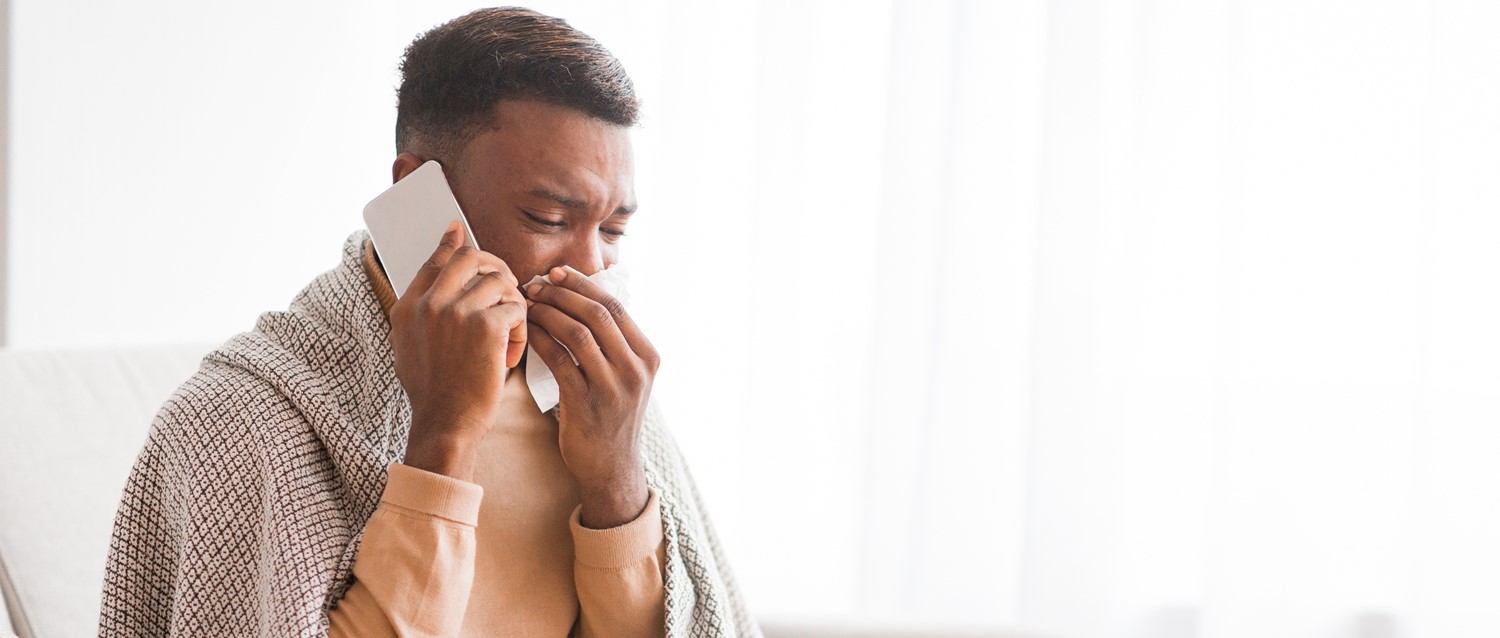
Pourquoi ressentons-nous de l'anxiété à l'idée d'appeler pour dire que nous sommes malades au travail lorsque nous sommes réellement souffrants ?
Revu par Dr Sarah JarvisDernière mise à jour par Emily Jane BashforthDernière mise à jour 14 Jan 2022
Respecte les directives éditoriales
- TéléchargerTélécharger
- Partager
- Language
- Discussion
- Version audio
- Ajouter aux sources préférées sur Google
Les données des dix dernières années ont montré que les employés sont plus susceptibles d'être malades le mercredi que tout autre jour, le mardi arrivant en deuxième position. Entre 2016 et 2017, les entreprises ont perdu en moyenne 1,5 jour par employé le mercredi, 2016 étant l'année où les absences du mercredi étaient les plus nombreuses. Le premier lundi de février est également surnommé la Journée nationale des arrêts maladie, car c'est le jour où la proportion la plus élevée de personnes se déclarent malades. Cependant, appeler au travail en étant malade peut provoquer une grande anxiété.

Where does "sick day guilt" come from?
Many factors can contribute to fear of calling into work sick.
Human behaviour expert Claire Brummell says: "There is a legacy of fear-based management styles in this country. This means that many of us have experienced a situation with a manager where we have had our needs negatively impacted when we have needed time off work for being legitimately ill."
She explains how we may have been ridiculed, dismissed, disbelieved, demeaned or even threatened with unjust disciplinary action in order to coerce us into working, even when we are ill.
"Every time a manager has acted in a way that has been detrimental to our needs when we have called in sick, it has conditioned us to feel anxious. That's because, subconsciously, we fear that our needs will be compromised when we do the same thing in the future," says Brummell.
"Likewise, we may have seen that other employees have been treated poorly by managers for calling in sick. Even if we have not personally experienced an issue with it in the past, the awareness of a pattern of calling in sick and receiving a negative reaction can create that anxiety for the future if we do the same."
Concern about the impact on our colleagues if we are off sick may also play a part. If co-workers are already under pressure, we may be loath to add to their workload if our work cannot be postponed. In addition, if there is nobody to cover for us while we are away, we may be worried that urgent deadlines will be missed or dread the idea of returning to a mountain of work.
All this l'anxiété and guilt surrounding sick days can lead to us as employees working when we are unwell, which can have consequences both for ourselves and for others. It could result in other colleagues becoming infected if germs are spread around a workplace, and it can cause an illness to worsen if we don't get the rest we need - leading to more time off at a later date.
Toxic productivity
Sick day guilt and the pressure to be constantly productive can mean employees only call in sick when we are "at death's door" and feel "deserving" of a sick day.
Throughout history, society seems to have had an obsession with productivity and getting stuff done. There's a bottomless well of advice, tips, tools and tricks on how to be more productive and manage your time efficiently. Productivity software alone accounts for an $133 billion (£97.7 billion) market, according to IBISWorld research.
Being over-productive is glamorised as the "the hustle", and it is often modelled by the super wealthy. Hustle culture has been propelled in recent years, particularly for the Generation-Z demographic. The pressures and expectations to be endlessly working, achieving, creating, moving and simply doing can lead to burnout: arguably, this pressure has heightened following advances in technology which mean we have constant access to online information and messages. In addition, these expectations can intensify the guilt of needing a sick day, even though it is impossible to be our most productive when we are unwell.
Why do we feel anxious about calling in sick?
Brummell says the presence of anxiety (that is not a clinically diagnosed condition) is almost always one of the below or a combination:
A reaction to an unmet need (or needs) from the past.
A reaction to an unmet need (or needs) in the present.
A fear that one or more of your needs will not be met in the future.
She says there are several needs that can be impacted in a situation like this, such as:
Security need
"If someone believes that their job might be at risk if they call in sick, this creates a fear that their security needs will be compromised in the future, as they will no longer feel safe and secure in their role and future income," Brummell says.
Value need
She adds that if someone is treated as if it is not acceptable to take time off from work to recover when they are genuinely sick, it implies that they are not worthy of getting what they need in order to heal.
"It sends a message that the business or their manager's wants and needs are more important than their physical well-being, making them feel undervalued."
Personal power
Brummell hypothesises that feeling they don't have a choice and that they have to work, even if sick, can cause employees to lose a sense of empowerment. This negative impact on someone's personal power need can make them feel out of control when they are working, despite knowing they should be resting and recovering.
Why do we feel guilty about needing time off?
"The feeling of guilt we experience in these situations is because we are conditioned as a society to view doing anything to prioritise our own well-being as selfish," suggests Brummell.
"This means that, even when we are physically in need of prioritising ourselves and our healing because we are genuinely ill, we still respond in a way that suggests we are doing something wrong. This further impacts our Value need, because it implies that we should still be prioritising other people, who are not worthy of being the priority, when we are genuinely ill."
She highlights the irony of this dynamic, since calling in sick may protect others from becoming ill and, as such, prevents a ripple effect on the business that would be created by many people needing sickness absence simultaneously.
"Not only is it not selfish to call in sick, it is Selfirst - the practice of meeting your own needs as a priority, in ways that do not do harm to others, and sometimes can benefit them. It is actually taking care of the needs of others as well."
Brummell stresses the importance of managers and employers reminding their staff it is both acceptable to call in sick when they are genuinely unfit for work, and actively encouraged. She says making this clear from the start of employment, and explicitly supporting their teams, minimises their fears for the future.
"Encouraging employees to do what is best for them, their team and the wider organisation creates a more pleasant working environment for everyone."
Sélections des patients pour la santé au travail

Santé générale et mode de vie
Comment le SII affecte-t-il les personnes au travail ?
Équilibrer le travail avec le syndrome du côlon irritable (SCI) peut poser de grands défis, d'autant plus que le SCI est souvent lié à l'anxiété et au stress. Les symptômes du SCI peuvent avoir un impact réel sur le bien-être physique et mental d'une personne, surtout lorsqu'elle pourrait avoir besoin d'aménagements mais se sent trop gênée pour se confier à des collègues ou employeurs qui ne comprennent pas.
par Emily Jane Bashforth
Santé générale et mode de vie
Que pouvons-nous apprendre des entreprises les plus saines de Grande-Bretagne ?
La plupart des entreprises sont conscientes des liens entre la santé au travail et la productivité. La logique est simple : si les employés sont en bonne santé, ils prendront moins de jours de congé maladie et travailleront plus efficacement le reste du temps. Sans parler de l'augmentation de la satisfaction au travail lorsqu'ils sentent que leur employeur se soucie de leur bien-être.
par Abi Millar
À propos de l'auteurVoir la biographie complète

Emily Jane Bashforth
Auteur de chroniques
NCTJ
Emily est rédactrice spécialisée chez Patient, écrivant des articles sur une variété de sujets liés à la santé et au bien-être.
À propos du critiqueVoir la biographie complète

Dr Sarah Jarvis
Consultant Clinique
MA (Cantab), BM, BCh (Oxon), DRCOG, FRCGP, MBE
Après avoir suivi une formation en médecine à Cambridge et Oxford, le Dr Sarah Jarvis MBE est devenue médecin généraliste.
Historique de l'article
Les informations sur cette page sont examinées par des cliniciens qualifiés.
Article également disponible en Anglais, Allemand, Espagnol, Français, Italien, Portugais, Hindi, Hébreu, Arabe, and Suédois.
14 Jan 2022 | Dernière version
14 Jan 2022 | Publié à l'origine

Demandez, partagez, connectez-vous.
Parcourez les discussions, posez des questions et partagez vos expériences sur des centaines de sujets de santé.

Vous ne vous sentez pas bien ?
Évaluez vos symptômes en ligne gratuitement
Inscrivez-vous à la newsletter Patient
Votre dose hebdomadaire de conseils de santé clairs et fiables - rédigés pour vous aider à vous sentir informé, confiant et maître de la situation.
En vous abonnant, vous acceptez notre Politique de confidentialité. Vous pouvez vous désabonner à tout moment. Nous ne vendons jamais vos données.
Plus sur la santé générale et le mode de vie
- Un guide des lunettes de soleil avec protection UV
- Being 'too clean' isn't bad for your health, experts confirm
- Le froid peut-il vous rendre malade ? Et autres mythes hivernaux
- Peau sèche en hiver : ce que le froid peut faire à votre peau
- Festival à l'étranger ? Amusez-vous et restez en sécurité
- Comment augmenter vos niveaux de vitamine D cet hiver
- Comment gérer la BPCO en hiver
- Comment protéger votre santé mentale au travail en tant que femme noire
- Comment refuser une invitation de Noël
- Comment distinguer les différents virus hivernaux chez les enfants
- Comment s'entraîner pendant une vague de chaleur
- Idées, préoccupations et attentes - un guide pour remplir le formulaire en ligne de votre médecin généraliste
- Est-ce la COVID-19 ou la grippe cet hiver ?
- Voici ce que le froid fait à votre cœur
- Quels sont les bienfaits du collagène et peut-il prévenir le vieillissement de la peau ?
- Quelles sont les principales causes d'admissions à l'hôpital pendant Noël ?
- Qu'est-ce qu'un sourire prosecco ? Conseils pour protéger vos dents à Noël
- Pourquoi il est si important de connaître votre type de peau cet été