Eosinophil peroxidase deficiency
Dernière mise à jour 18 Aug 2020
Respecte les directives éditoriales
- TéléchargerTélécharger
- Partager
- Language
- Discussion
- Ask Patient
- Version audio
- Ajouter aux sources préférées sur Google
Eosinophil peroxidase deficiency is a condition that affects certain white blood cells called eosinophils but causes no health problems in affected individuals. Eosinophils aid in the body's immune response. During a normal immune response, these cells are turned on (activated), and they travel to the area of injury or inflammation. The cells then release proteins and other compounds that have a toxic effect on severely damaged cells or invading organisms. One of these proteins is called eosinophil peroxidase. In eosinophil peroxidase deficiency, eosinophils have little or no eosinophil peroxidase. A lack of this protein does not seem to affect the eosinophils' ability to carry out an immune response.
Description
Eosinophil peroxidase deficiency is a condition that affects certain white blood cells called eosinophils but causes no health problems in affected individuals. Eosinophils aid in the body's immune response. During a normal immune response, these cells are turned on (activated), and they travel to the area of injury or inflammation. The cells then release proteins and other compounds that have a toxic effect on severely damaged cells or invading organisms. One of these proteins is called eosinophil peroxidase. In eosinophil peroxidase deficiency, eosinophils have little or no eosinophil peroxidase. A lack of this protein does not seem to affect the eosinophils' ability to carry out an immune response.
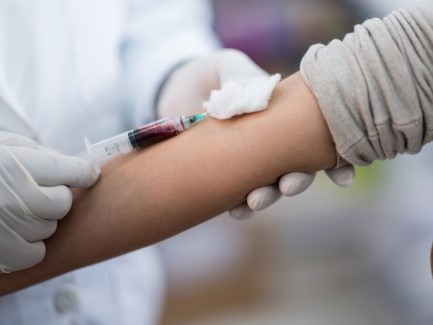
Because eosinophil peroxidase deficiency does not cause any health problems, this condition is often diagnosed when blood tests are done for other reasons or when a family member has been diagnosed with the condition.
Inheritance patterns
The source lists the following possible inheritance patterns: Autosomal recessive. More than one pattern can apply in different cases.
Related genes
Other names
EPXD
Peroxidase and phospholipid deficiency in eosinophils
Presentey anomaly
Related patient information and medicines

Patient information leaflet
Le système immunitaire
A person with a weak immune system might have difficulty fighting off infections. If pathogens manage to get through these barriers, they encounter special white blood cells present in your bloodstream. There are different types of white cells, called neutrophils (polymorphs), lymphocytes, eosinophils, monocytes, and basophils. White blood cells.
Patient information leaflet
Analyses de sang
Millions of red blood cells a... Red cells contain a chemical called haemoglobin. This binds to oxygen and takes oxygen from the lungs to all parts of the body. White cells (leukocytes) There are different types of white cells which are called neutrophils (polymorphs), lymphocytes, eosinophils, monocytes and basophils. They are part of the immune.

Patient information leaflet
Leucémies infantiles
Childhood la leucémie It is very important to know which. This is because the outlook (prognosis) and treatments vary for th... White cells (leukocytes). There are different types of white cells, which are called neutrophils (polymorphs), lymphocytes, eosinophils, monocytes and basophils. They are part of the immune system. The cells that are made.

Patient information leaflet
Œsophagite à éosinophiles
Commonly, the inflammation is caused by acid leaking up from the stomach (a condition known as acid reflux). In some people, however, it can be caused by a condition known as eosinophilic oesophagitis. In eosinophilic oesophagitis, particular types of white blood cells (called eosinophils) gather in large numbers in the lining of the oesophagus,.

Patient information leaflet
Puis-je prendre le complexe de vitamine B et la vitamine C ensemble ?
Kidney stones (renal calculi) High doses of vitamin C can increase the amount of oxalate in your urine, which significantly raises the risk of developing kidney stones, especially if you have had them before. Carence en G6PD Très high doses of vitamin C can cause oxidative stress and lead to the breakdown of red blood cells (haemolysis) in.

Patient information leaflet
Puis-je prendre de la vitamine B12 et de la vitamine C ensemble ?
Carence en G6PD Très high doses of vitamin C can cause oxidative stress and lead to the breakdown of red blood cells (haemolysis) in individuals with la déficience en G6PD. Food and drink warnings Alcohol It is bes... Our Vérificateur d'Interactions Médicamenteuses helps you check whether your prescriptions, over-the-counter medicines, and supplements are safe to.
Lectures complémentaires et références
- Eosinophil peroxidase deficiency; MedlinePlus, National Library of Medicine.
- Kutter D, Mueller-Hagedorn S, Forges T, Glaesener R. A case of eosinophil peroxidase deficiency. Ann Hematol. 1995 Dec;71(6):315-7. doi: 10.1007/BF01697987.
- Nakagawa T, Ikemoto T, Takeuchi T, Tanaka K, Tanigawa N, Yamamoto D, Shimizu A. Eosinophilic peroxidase deficiency: Identification of a point mutation (D648N) and prediction of structural changes. Hum Mutat. 2001 Mar;17(3):235-6. doi: 10.1002/humu.10.
- Romano M, Patriarca P, Melo C, Baralle FE, Dri P. Hereditary eosinophil peroxidase deficiency: immunochemical and spectroscopic studies and evidence for a compound heterozygosity of the defect. Proc Natl Acad Sci U S A. 1994 Dec 20;91(26):12496-500. doi: 10.1073/pnas.91.26.12496.
- Zabucchi G, Soranzo MR, Menegazzi R, Vecchio M, Knowles A, Piccinini C, Spessotto P, Patriarca P. Eosinophil peroxidase deficiency: morphological and immunocytochemical studies of the eosinophil-specific granules. Blood. 1992 Dec 1;80(11):2903-10.
Partagez vos pensées ou expériences avec les autres dans notre communautés de patients.
Accès simple à des traitements fiables et à des services de santé en ligne.
Common conditions
Get help with common conditions through the NHS, without a GP appointment.





Inscrivez-vous à la newsletter Patient
Votre dose hebdomadaire de conseils de santé clairs et fiables - rédigés pour vous aider à vous sentir informé, confiant et maître de la situation.
En vous abonnant, vous acceptez notre Politique de confidentialité. Vous pouvez vous désabonner à tout moment. Nous ne vendons jamais vos données.