eosinophil peroxidase
Dernière mise à jour 18 Aug 2020
Respecte les directives éditoriales
- TéléchargerTélécharger
- Partager
- Language
- Discussion
- Ask Patient
- Version audio
- Ajouter aux sources préférées sur Google
La EPX gene provides instructions for making a protein called eosinophil peroxidase. This protein is found within certain white blood cells called eosinophils. During a normal immune response, eosinophils are activated (turned on), and they travel to the area of injury or inflammation. The cells then release proteins and other compounds that have a toxic effect on severely damaged cells or invading organisms. One of these proteins is called eosinophil peroxidase. This protein helps form molecules that are highly toxic to bacteria and parasites. These toxic molecules also play a role in regulating inflammation by fighting microbial invaders.
Sélections vidéo pour GènesBibliothèque vidéo
Normal function
La EPX gene provides instructions for making a protein called eosinophil peroxidase. This protein is found within certain white blood cells called eosinophils. During a normal immune response, eosinophils are activated (turned on), and they travel to the area of injury or inflammation. The cells then release proteins and other compounds that have a toxic effect on severely damaged cells or invading organisms. One of these proteins is called eosinophil peroxidase. This protein helps form molecules that are highly toxic to bacteria and parasites. These toxic molecules also play a role in regulating inflammation by fighting microbial invaders.
The eosinophil peroxidase protein is produced as a long strand that is cut (cleaved) into two smaller pieces. The shorter piece is known as the light chain and the longer piece is known as the heavy chain. These two pieces are attached to each other to form functional eosinophil peroxidase.
Conditions referring to this gene or chromosome
Other names
eosinophil peroxidase preproprotein
EPO
EPP
EPX-PEN
Related patient information and medicines
Patient information leaflet
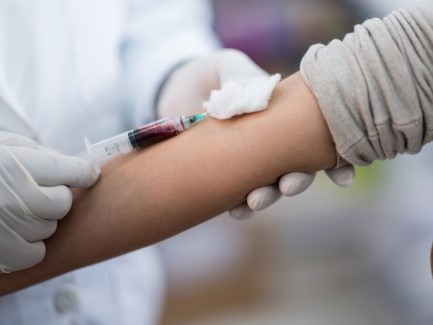
Analyses de sang
This binds to oxygen and takes oxygen from the lungs to all parts of the body. White cells (leukocytes) There are different types of white cells which are called neutrophils (polymorphs), lymphocytes, eosinophils, monocytes and basophils. They are part of the immune system The immune system. Their mai... Neutrophils engulf germs (bacteria) and.
Patient information leaflet
Allergie médicamenteuse
Medicines can cause allergic reactions. In this leaflet th... It frequently occurs on the hands, feet or genitals. Drug Reaction Drug Reaction Hypersensitivity syndromes - this is also known as 'drug reaction with eosinophilia and systemic signs' (DRESS). The skin rash is accompanied by other features such as fever, swollen glands and a rise in.

Patient information leaflet
Le système immunitaire
This leaflet gives a brief overview of the système immunitaire and how it works. A person with a weak immune system might have difficulty fighting off infections. If pathogens manage to get through these barrier... There are different types of white cells, called neutrophils (polymorphs), lymphocytes, eosinophils, monocytes, and basophils. White blood.

Patient information leaflet
asthme
Treatment is usually with ... This leaflet gives a general overview of asthma. There are other separate leaflets in this series. Some GP surgeries have access to a FeNO test, but others may need to refer to a specialist to get it. A blood test for eosinophils. Eosinophils are a type of white blood cell that can be raised due to several different.
Patient information leaflet
Polycythémie rubra vera
Polycythaemia rubra vera (PRV) is a myeloproliferative disorder, which means the bone marrow makes too many blood cells. It is also sometimes just called polycythaemia (PV). White cell... There are different types of white cells, which are called neutrophils (polymorphs), lymphocytes, eosinophils, monocytes and basophils. They are part of the.

Patient information leaflet
Leucémies infantiles
White cells (leukocytes). There are different types of white cells, which are called neutrophils (polymorphs), lymphocytes, eosinophils, monocytes and basophils. They are part of the immune system. The abnormal stem cell multi... The cells that are made from the abnormal stem cells mature and develop into near-normal white cells - mainly.
Lectures complémentaires et références
- eosinophil peroxidase; MedlinePlus, National Library of Medicine.
- Acharya KR, Ackerman SJ. Eosinophil granule proteins: form and function. J Biol Chem. 2014 Jun 20;289(25):17406-15. doi: 10.1074/jbc.R113.546218. Epub 2014 May 6.
- Romano M, Baralle FE, Patriarca P. Expression and characterization of recombinant human eosinophil peroxidase. Impact of the R286H substitution on the biosynthesis and activity of the enzyme. Eur J Biochem. 2000 Jun;267(12):3704-11. doi: 10.1046/j.1432-1327.2000.01403.x.
- Yamaguchi Y, Zhang DE, Sun Z, Albee EA, Nagata S, Tenen DG, Ackerman SJ. Functional characterization of the promoter for the gene encoding human eosinophil peroxidase. J Biol Chem. 1994 Jul 29;269(30):19410-9.
Partagez vos pensées ou expériences avec les autres dans notre communautés de patients.
Accès simple à des traitements fiables et à des services de santé en ligne.
Common conditions
Get help with common conditions through the NHS, without a GP appointment.





Inscrivez-vous à la newsletter Patient
Votre dose hebdomadaire de conseils de santé clairs et fiables - rédigés pour vous aider à vous sentir informé, confiant et maître de la situation.
En vous abonnant, vous acceptez notre Politique de confidentialité. Vous pouvez vous désabonner à tout moment. Nous ne vendons jamais vos données.