Gastrointestinal stromal tumour
Dernière mise à jour 14 Jul 2021
Respecte les directives éditoriales
- TéléchargerTélécharger
- Partager
- Language
- Discussion
- Version audio
- Ajouter aux sources préférées sur Google
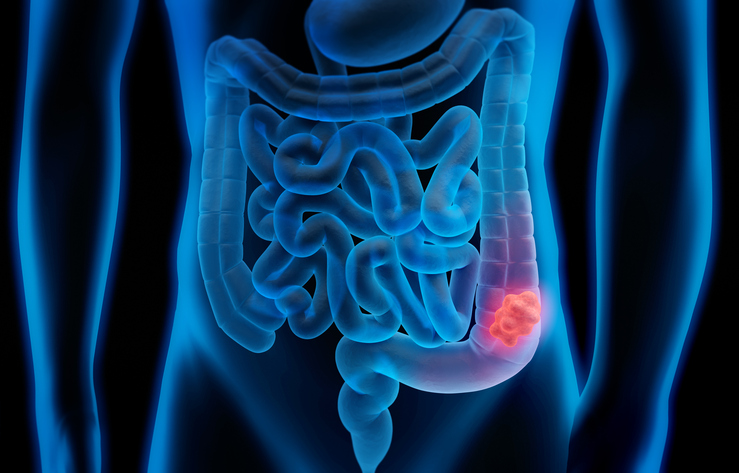
A gastrointestinal stromal tumour (GIST) is a type of tumour that occurs in the gastrointestinal tract, most commonly in the stomach or small intestine. This type of tumour is thought to grow from specialized cells found in the gastrointestinal tract called interstitial cells of Cajal (ICCs) or precursors to these cells. Affected individuals can develop one or more tumours. GISTs are usually found in adults between ages 40 and 70; rarely, children and young adults develop this type of tumour.
Description
A gastrointestinal stromal tumour (GIST) is a type of tumour that occurs in the gastrointestinal tract, most commonly in the stomach or small intestine. This type of tumour is thought to grow from specialized cells found in the gastrointestinal tract called interstitial cells of Cajal (ICCs) or precursors to these cells. Affected individuals can develop one or more tumours. GISTs are usually found in adults between ages 40 and 70; rarely, children and young adults develop this type of tumour.
Small tumours may cause no signs or symptoms. However, some people with GISTs may experience pain or swelling in the belly area (abdomen), nausea, vomiting, loss of appetite, or weight loss. Sometimes, tumours cause bleeding into the gastrointestinal tract, which may lead to low red blood cell counts (anaemia) and, consequently, weakness and tiredness. Bleeding into the intestines may cause black and tarry stools, and bleeding into the throat or stomach may cause vomiting of blood.
Affected individuals with no family history of GIST typically have only one tumour (called a sporadic GIST). People with a family history of GISTs (called familial GISTs) often have multiple tumours and additional signs or symptoms, including noncancerous overgrowth (hyperplasia) of other cells in the gastrointestinal tract and patches of dark skin on various areas of the body. Some affected individuals have a skin condition called urticaria pigmentosa (also known as maculopapular cutaneous mastocytosis), which is characterised by raised patches of brownish skin that sting or itch when touched.
A rare form of GIST, called succinate dehydrogenase (SDH)-deficient GIST, tends to occur in childhood or young adulthood and affects females more commonly than males. In this form, tumours are almost always in the stomach. Individuals with an SDH-deficient GIST have a high risk of developing other types of tumours, particularly noncancerous tumours in the nervous system called paragangliomas and noncancerous lung tumours called pulmonary chondromas. When GISTs occur in combination with paragangliomas, the condition is known as Carney-Stratakis syndrome; the combination of GISTs, paragangliomas, and pulmonary chondromas is known as Carney triad; and the combination of GISTs and pulmonary chondroma is known as incomplete Carney triad.
Inheritance patterns
The source lists the following possible inheritance patterns: Autosomal dominant; Autosomal recessive. More than one pattern can apply in different cases.
Related genes
Other names
Gastrointestinal stromal neoplasm
Gastrointestinal stromal sarcoma
ESSENCE
Related patient information and medicines
Patient information leaflet
Cancer du côlon
Colon cancer and rectal cancer (also called colorectal cancer) are common in the UK. The colon and rectum are parts of your bowel. Most cases occur in people aged over 50. If bowel cancer is diagnosed at an early stage, there is a good chance of a cure. Sometimes bowel cancer begins from a cell within the lining of the colon or rectum which.

Patient information leaflet
Cancer de l'estomac
It is common in Japan and China but is less common in the UK. About 5,000 people develop stomach cancer each année dans the UK. Stomach cancer is more common in men than in women and tends to occur mainly in older people. Most people who develop stomach cancer ar... What are the types of stomach cancer. Adenocarcinoma du ulcères de l'estomac In most cases,.

Patient information leaflet
Cancer de l'œsophage
Cancer de l'œsophage est cancer of the gullet (oesophagus). There are over 8,000 new cases diagnosed every year in the UK and two thirds of new diagnoses are in men.t is the 7th most common cause of cancer death in the UK and accounts for 5% of all cancer deaths. In general, the more advanced the cancer (the more it has grown and spread), the less.

Patient information leaflet
Tumeur de Wilms
A Tumeur de Wilms is a type of kidney cancer that usually affects young children. Wilms' tumours can appear in older children and adults but this is very rare. A Wilms' tumour is also known as a nephroblastoma Wilm's tumour is the most common type of kidney cancer in children but is very rare. About 80 children are diagnosed with a Wilms' tumour.

Patient information leaflet
Cancer du pancréas
Qu'est-ce que pancreatic cancer. Cancer du pancréas est a cancerous growth in the pancreas. The pancreas is a gland located behind the stomach and in the upper part of your tummy (abdomen). For more information about the pancreas, including pancreas location, see What does the pancreas do. Types of pancreatic cancer There are several types of pancreatic.

Patient information leaflet
Cancer primitif du foie
Loss of appetite. Weight loss and tiredness. Many people who develop primary liver cancer will already have symptoms associated with scarring of the liver (cirrhosis). If you already have cirrhosis and your health becomes worse quite quickly, the cause may be a liver cancer which has developed. Everyone with cirrhosis should be having regular.
Lectures complémentaires et références
- Gastrointestinal stromal tumour; MedlinePlus, National Library of Medicine.
- Agaram NP, Wong GC, Guo T, Maki RG, Singer S, Dematteo RP, Besmer P, Antonescu CR. Novel V600E BRAF mutations in imatinib-naive and imatinib-resistant gastrointestinal stromal tumors. Genes Chromosomes Cancer. 2008 Oct;47(10):853-9. doi: 10.1002/gcc.20589.
- Heinrich MC, Corless CL, Duensing A, McGreevey L, Chen CJ, Joseph N, Singer S, Griffith DJ, Haley A, Town A, Demetri GD, Fletcher CD, Fletcher JA. PDGFRA activating mutations in gastrointestinal stromal tumors. Science. 2003 Jan 31;299(5607):708-10. doi: 10.1126/science.1079666. Epub 2003 Jan 9.
- Hirota S, Isozaki K, Moriyama Y, Hashimoto K, Nishida T, Ishiguro S, Kawano K, Hanada M, Kurata A, Takeda M, Muhammad Tunio G, Matsuzawa Y, Kanakura Y, Shinomura Y, Kitamura Y. Gain-of-function mutations of c-kit in human gastrointestinal stromal tumors. Science. 1998 Jan 23;279(5350):577-80. doi: 10.1126/science.279.5350.577.
- Hirota S, Ohashi A, Nishida T, Isozaki K, Kinoshita K, Shinomura Y, Kitamura Y. Gain-of-function mutations of platelet-derived growth factor receptor alpha gene in gastrointestinal stromal tumors. Gastroenterology. 2003 Sep;125(3):660-7. doi: 10.1016/s0016-5085(03)01046-1.
- Isozaki K, Terris B, Belghiti J, Schiffmann S, Hirota S, Vanderwinden JM. Germline-activating mutation in the kinase domain of KIT gene in familial gastrointestinal stromal tumors. Am J Pathol. 2000 Nov;157(5):1581-5. doi: 10.1016/S0002-9440(10)64795-5.
- Oudijk L, Gaal J, Korpershoek E, van Nederveen FH, Kelly L, Schiavon G, Verweij J, Mathijssen RH, den Bakker MA, Oldenburg RA, van Loon RL, O'Sullivan MJ, de Krijger RR, Dinjens WN. SDHA mutations in adult and pediatric wild-type gastrointestinal stromal tumors. Mod Pathol. 2013 Mar;26(3):456-63. doi: 10.1038/modpathol.2012.186. Epub 2012 Nov 23.
- Roskoski R Jr. Signaling by Kit protein-tyrosine kinase--the stem cell factor receptor. Biochem Biophys Res Commun. 2005 Nov 11;337(1):1-13. doi: 10.1016/j.bbrc.2005.08.055.
- Wagner AJ, Remillard SP, Zhang YX, Doyle LA, George S, Hornick JL. Loss of expression of SDHA predicts SDHA mutations in gastrointestinal stromal tumors. Mod Pathol. 2013 Feb;26(2):289-94. doi: 10.1038/modpathol.2012.153. Epub 2012 Sep 7.
Participez à la conversation
Partagez vos pensées ou expériences avec les autres dans notre communautés de patients.

Demandez, partagez, connectez-vous.
Parcourez les discussions, posez des questions et partagez vos expériences sur des centaines de sujets de santé.
Inscrivez-vous à la newsletter Patient
Votre dose hebdomadaire de conseils de santé clairs et fiables - rédigés pour vous aider à vous sentir informé, confiant et maître de la situation.
En vous abonnant, vous acceptez notre Politique de confidentialité. Vous pouvez vous désabonner à tout moment. Nous ne vendons jamais vos données.