HSD10 disease
Dernière mise à jour 18 Aug 2020
Respecte les directives éditoriales
- TéléchargerTélécharger
- Partager
- Language
- Discussion
- Ask Patient
- Version audio
- Ajouter aux sources préférées sur Google
HSD10 disease is a disorder that affects the nervous system, vision, and heart. It is typically more severe in males than in females. Most affected males have a form of HSD10 disease in which early development seems normal, followed by a stage in which affected individuals rapidly lose skills they have acquired. This developmental regression often occurs between the ages of 1 and 2 and results in severe intellectual disability and loss of communication skills and motor skills such as sitting, standing, and walking. This form of the disorder is referred to as the infantile type. Less commonly, affected males have severe neurological problems from birth and never develop motor skills. This form is called the neonatal type. Males with the infantile or neonatal type frequently have weak muscle tone (hypotonia), recurrent seizures (epilepsy), and vision loss that gradually gets worse. Weakening of the heart muscle (cardiomyopathy) also occurs and is a common cause of death in males with severe HSD10 disease. Many affected males do not survive beyond early childhood.
Sélections vidéo pour Conditions génétiquesBibliothèque vidéo
Description
HSD10 disease is a disorder that affects the nervous system, vision, and heart. It is typically more severe in males than in females. Most affected males have a form of HSD10 disease in which early development seems normal, followed by a stage in which affected individuals rapidly lose skills they have acquired. This developmental regression often occurs between the ages of 1 and 2 and results in severe intellectual disability and loss of communication skills and motor skills such as sitting, standing, and walking. This form of the disorder is referred to as the infantile type. Less commonly, affected males have severe neurological problems from birth and never develop motor skills. This form is called the neonatal type. Males with the infantile or neonatal type frequently have weak muscle tone (hypotonia), recurrent seizures (epilepsy), and vision loss that gradually gets worse. Weakening of the heart muscle (cardiomyopathy) also occurs and is a common cause of death in males with severe HSD10 disease. Many affected males do not survive beyond early childhood.
Females with HSD10 disease may have developmental delay, learning problems, or intellectual disability, but they do not experience developmental regression. Some affected females have additional features of this condition, such as epilepsy, movement problems, and hearing loss. Affected females appear to have a normal life expectancy.
Inheritance patterns
The source lists the following possible inheritance patterns: X-linked. More than one pattern can apply in different cases.
Related genes
Other names
17β-hydroxysteroid dehydrogenase type 10 deficiency
2-methyl-3-hydroxybutyric aciduria
2-methyl-3-hydroxybutyryl-CoA dehydrogenase deficiency
2M3HBA
3-hydroxy-2-methylbutyryl-CoA dehydrogenase deficiency
3H2MBD deficiency
HSD10 deficiency
Hydroxyacyl-CoA dehydrogenase II deficiency
MHBD deficiency
Related patient information and medicines
Patient information leaflet
Maladie main-pied-bouche
Hand, foot and mouth maladie is usually a short mild illness cela mainly affects children. Most children fully recover within ten days, and usually less. What is hand, foot and mouth disease. Maladie main-pied-bouche (HFMD) is due à an infection cela usually causes a typical illness, including a typical rash. It is most commonly caused by the.
Patient information leaflet
Maladie de Hirschsprung
Hirschsprung's disease is a condition where some of the nerves are missing in a part of the bowel (gut). As a result the bowel muscles can't squeeze properly in that part of the gut. So they can't force the poo through that bit of gut. The poo gets stuck causing a blockage (obstruction). This problem is usually quite apparent early on in life as.

Patient information leaflet
Maladie de Huntington
Huntington's disease is a genetically inherited condition that causes parts of the brain and nervous system to stop working properly over time. It is a slowly progressive condition that interferes with the movements of your body, thinking and judgement, and can lead to a change in your behaviour. Huntington's disease is a genetically inherited.

Patient information leaflet
Maladie rénale diabétique
Maladie rénale diabétique is a complication cela se produit dans certains personnes with diabetes. Treatment aims to prevent or delay the progression of the disease. What is diabetic kidney disease. Diabetic kidney disease (diabetic nephropathy) est a complication that occurs in some people avec diabetes. Maladie rénale diabétique is one of the causes of chronic.
Patient information leaflet
Maladies liées à l'amiante
People exposed to asbestos can develop diseases in later life. These most commonly affect the lungs but can also affect the lining of the tummy (abdomen). Some conditions - for example, mesothelioma or lung cancer - are more serious than others. This leaflet gives a brief overview of the diseases that are related to having an exposure to asbestos.
Patient information leaflet
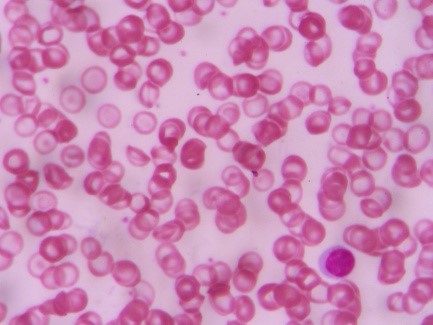
Drépanocytose
Sickle cell disease (SCD) est a serious, inherited condition affecting the blood and various organs in the body. It affects the red blood cells, causing episodes of 'sickling', which produce episodes of pain and other symptoms. In between episodes of sickling, people with SCD are normally well. So, early diagnosis and specialist treatment are.
Lectures complémentaires et références
- HSD10 disease; MedlinePlus, National Library of Medicine.
- Chatfield KC, Coughlin CR 2nd, Friederich MW, Gallagher RC, Hesselberth JR, Lovell MA, Ofman R, Swanson MA, Thomas JA, Wanders RJ, Wartchow EP, Van Hove JL. Mitochondrial energy failure in HSD10 disease is due to defective mtDNA transcript processing. Mitochondrion. 2015 Mar;21:1-10. doi: 10.1016/j.mito.2014.12.005. Epub 2015 Jan 6.
- Deutschmann AJ, Amberger A, Zavadil C, Steinbeisser H, Mayr JA, Feichtinger RG, Oerum S, Yue WW, Zschocke J. Mutation or knock-down of 17beta-hydroxysteroid dehydrogenase type 10 cause loss of MRPP1 and impaired processing of mitochondrial heavy strand transcripts. Hum Mol Genet. 2014 Jul 1;23(13):3618-28. doi: 10.1093/hmg/ddu072. Epub 2014 Feb 18.
- Holzmann J, Frank P, Loffler E, Bennett KL, Gerner C, Rossmanith W. RNase P without RNA: identification and functional reconstitution of the human mitochondrial tRNA processing enzyme. Cell. 2008 Oct 31;135(3):462-74. doi: 10.1016/j.cell.2008.09.013.
- Ofman R, Ruiter JP, Feenstra M, Duran M, Poll-The BT, Zschocke J, Ensenauer R, Lehnert W, Sass JO, Sperl W, Wanders RJ. 2-Methyl-3-hydroxybutyryl-CoA dehydrogenase deficiency is caused by mutations in the HADH2 gene. Am J Hum Genet. 2003 May;72(5):1300-7. doi: 10.1086/375116. Epub 2003 Apr 14.
- Vilardo E, Nachbagauer C, Buzet A, Taschner A, Holzmann J, Rossmanith W. A subcomplex of human mitochondrial RNase P is a bifunctional methyltransferase--extensive moonlighting in mitochondrial tRNA biogenesis. Nucleic Acids Res. 2012 Dec;40(22):11583-93. doi: 10.1093/nar/gks910. Epub 2012 Oct 5.
- Vilardo E, Rossmanith W. Molecular insights into HSD10 disease: impact of SDR5C1 mutations on the human mitochondrial RNase P complex. Nucleic Acids Res. 2015 Jul 27;43(13):6649. doi: 10.1093/nar/gkv658. Epub 2015 Jun 19. No abstract available.
- Yang SY, He XY, Miller D. HSD17B10: a gene involved in cognitive function through metabolism of isoleucine and neuroactive steroids. Mol Genet Metab. 2007 Sep-Oct;92(1-2):36-42. doi: 10.1016/j.ymgme.2007.06.001. Epub 2007 Jul 6.
- Yang SY, He XY, Schulz H. Multiple functions of type 10 17beta-hydroxysteroid dehydrogenase. Trends Endocrinol Metab. 2005 May-Jun;16(4):167-75. doi: 10.1016/j.tem.2005.03.006.
- Zschocke J. HSD10 disease: clinical consequences of mutations in the HSD17B10 gene. J Inherit Metab Dis. 2012 Jan;35(1):81-9. doi: 10.1007/s10545-011-9415-4. Epub 2011 Nov 30.
Partagez vos pensées ou expériences avec les autres dans notre communautés de patients.
Accès simple à des traitements fiables et à des services de santé en ligne.
Common conditions
Get help with common conditions through the NHS, without a GP appointment.





Inscrivez-vous à la newsletter Patient
Votre dose hebdomadaire de conseils de santé clairs et fiables - rédigés pour vous aider à vous sentir informé, confiant et maître de la situation.
En vous abonnant, vous acceptez notre Politique de confidentialité. Vous pouvez vous désabonner à tout moment. Nous ne vendons jamais vos données.