Paroxysmal nocturnal hemoglobinuria
Dernière mise à jour 5 Apr 2022
Respecte les directives éditoriales
- TéléchargerTélécharger
- Partager
- Language
- Discussion
- Ask Patient
- Version audio
- Ajouter aux sources préférées sur Google
Paroxysmal nocturnal hemoglobinuria (PNH) is an acquired (not inherited) disorder that leads to the premature death and impaired production of blood cells. The disorder affects red blood cells (erythrocytes), which carry oxygen; white blood cells (leukocytes), which protect the body from infections; and platelets (thrombocytes), which are involved in blood clotting. PNH can occur at any age, although it is most often diagnosed in young adulthood.
Description
Paroxysmal nocturnal hemoglobinuria (PNH) is an acquired (not inherited) disorder that leads to the premature death and impaired production of blood cells. The disorder affects red blood cells (erythrocytes), which carry oxygen; white blood cells (leukocytes), which protect the body from infections; and platelets (thrombocytes), which are involved in blood clotting. PNH can occur at any age, although it is most often diagnosed in young adulthood.
People with PNH have sudden, recurring episodes of symptoms (paroxysmal symptoms), which may be triggered by stresses on the body, such as infections or physical exertion. During these episodes, red blood cells are broken down earlier than they should be (hemolysis). Affected individuals may pass dark-colored urine because of the presence of hemoglobin, the oxygen-carrying protein in blood. The abnormal presence of hemoglobin in the urine is called hemoglobinuria. In many, but not all cases, hemoglobinuria is most noticeable early in the morning, upon passing urine that has accumulated in the bladder during the night (nocturnal).
The premature breakdown of red blood cells results in a shortage of these cells in the blood (hemolytic anaemia), which can cause signs and symptoms such as fatigue, weakness, abnormally pale skin (pallor), shortness of breath, and an increased heart rate (tachycardia). People with PNH may also be prone to infections because of a shortage of white blood cells (leukopenia).
Abnormal platelets associated with PNH can cause problems in the blood clotting process. As a result, people with this disorder may experience abnormal blood clotting (thrombosis), especially in large abdominal veins; or, less often, episodes of severe bleeding (hemorrhage).
Individuals with PNH are at increased risk of developing cancer in blood-forming cells (leukemia). In some cases, people who have or have been treated for another blood disease called aplastic anaemia may develop PNH. In a small number of affected individuals, the signs and symptoms of PNH disappear on their own.
A very rare form of PNH involves abnormal inflammation in addition to the typical features described above. Inflammation is a normal immune system response to injury and foreign invaders (such as bacteria). In people with this rare form of PNH, the immune response is turned on (activated) abnormally and can cause recurrent aseptic meningitis (which is inflammation of the membranes surrounding the brain and spinal cord that is not related to infection); a red, itchy rash (known as hives or urticaria); joint pain (arthralgia); or inflammatory bowel disease. The inflammatory disorders usually begin earlier than the blood cell problems.
Inheritance patterns
The source lists the following possible inheritance patterns: X-linked dominant; Autosomal dominant+New variant. More than one pattern can apply in different cases.
Related genes
Other names
Hemoglobinuria, paroxysmal
Marchiafava-Micheli syndrome
PNH
Related patient information and medicines

Patient information leaflet
Thrombophilie
Thrombophilia refers to a group of conditions where the blood clots more easily than normal. These blood clots can cause problems such as deep vein thrombosis (DVT) or pulmonary embolism. See the separate leaflets called Deep vein thrombosis Deep vein thrombosis a... It increases the risk of a blood clot in a vein by about eight times. It.
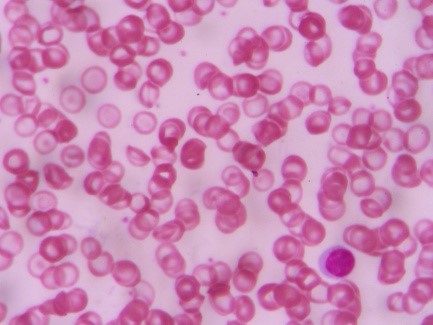
Patient information leaflet
Drépanocytose
Sickle cell disease (SCD) is a serious, inherited condition affecting the blood et various organs in the body. It affects the red blood cells, causing episodes of 'sickling', which produce episodes of pain and other symptoms. Normal and sickle-shaped blood... The rest of this leaflet will discuss SCD, which includes anémie falciforme and the.

Patient information leaflet
Céphalées en grappe
Cluster headaches occur comme attacks of severe, one-sided headaches. Typically, a number of attacks occur over several weeks - a bout (cluster) of attacks. It is sometimes difficult for doctors to rule out another type of headache called paroxysmal hemicrania. This is a rare condition of unknown cause which causes one-sided headaches similar to.

Patient information leaflet
Coqueluche
Coqueluche is a highly contagious poumon infection that causes severe coughing fits, often with breaks of feeling well. It usually lasts several weeks, and most people make a full recovery. This leaflet explains the stages and symptoms, treatment, and prevention. Whooping cough is a highly contagious infection caused by the bacterium Bordetella.
Patient information leaflet
Incontinence urinaire
Incontinence urinaire d'effort and urge incontinence are the most common types of incontinence. Many people are embarrassed by the problem but, importantly, incontinence is often treatable so you should see your GP for help. This leaflet provides a general overview of urinary incontinence. It may help you to understand the bladder and why incontinence.
Patient information leaflet
Médicament pour l'énurésie nocturne - desmopressine
Desmopressine est the medicine most commonly used to treat bedwetting. It can be used both short-term (for example, for a school trip or a sleepover) or long-term. What is desmopressin. Desmopressin is the most popular medicine used to treat bedwetting. Before it is considered, reasons for the bedwetting, and advice or other measures are usually.
Lectures complémentaires et références
- Paroxysmal nocturnal hemoglobinuria; MedlinePlus, National Library of Medicine.
- Brodsky RA, Hu R. PIG-A mutations in paroxysmal nocturnal hemoglobinuria and in normal hematopoiesis. Leuk Lymphoma. 2006 Jul;47(7):1215-21. doi: 10.1080/10428190600555520.
- Brodsky RA. Paroxysmal nocturnal hemoglobinuria without GPI-anchor deficiency. J Clin Invest. 2019 Dec 2;129(12):5074-5076. doi: 10.1172/JCI131647.
- Grunewald M, Grunewald A, Schmid A, Schopflin C, Schauer S, Griesshammer M, Koksch M. The platelet function defect of paroxysmal nocturnal haemoglobinuria. Platelets. 2004 May;15(3):145-54. doi: 10.1080/09537105310001657110.
- Gurnari C, Colak C, Zawit M, Maciejewski JP. Chronic Budd-Chiari syndrome in paroxysmal nocturnal haemoglobinuria. Lancet. 2021 Sep 11;398(10304):e14. doi: 10.1016/S0140-6736(21)01542-7. No abstract available.
- Gurnari C, Pagliuca S, Kewan T, Bahaj W, Mori M, Patel BJ, Visconte V, Maciejewski JP. Is nature truly healing itself? Spontaneous remissions in Paroxysmal Nocturnal Hemoglobinuria. Blood Cancer J. 2021 Nov 27;11(11):187. doi: 10.1038/s41408-021-00582-5. No abstract available.
- Hochsmann B, Murakami Y, Osato M, Knaus A, Kawamoto M, Inoue N, Hirata T, Murata S, Anliker M, Eggermann T, Jager M, Floettmann R, Hollein A, Murase S, Ueda Y, Nishimura JI, Kanakura Y, Kohara N, Schrezenmeier H, Krawitz PM, Kinoshita T. Complement and inflammasome overactivation mediates paroxysmal nocturnal hemoglobinuria with autoinflammation. J Clin Invest. 2019 Dec 2;129(12):5123-5136. doi: 10.1172/JCI123501.
- Inoue N, Izui-Sarumaru T, Murakami Y, Endo Y, Nishimura J, Kurokawa K, Kuwayama M, Shime H, Machii T, Kanakura Y, Meyers G, Wittwer C, Chen Z, Babcock W, Frei-Lahr D, Parker CJ, Kinoshita T. Molecular basis of clonal expansion of hematopoiesis in 2 patients with paroxysmal nocturnal hemoglobinuria (PNH). Blood. 2006 Dec 15;108(13):4232-6. doi: 10.1182/blood-2006-05-025148. Epub 2006 Aug 29.
- Luzzatto L, Gianfaldoni G. Recent advances in biological and clinical aspects of paroxysmal nocturnal hemoglobinuria. Int J Hematol. 2006 Aug;84(2):104-12. doi: 10.1532/IJH97.06117.
- Luzzatto L. Paroxysmal nocturnal hemoglobinuria: an acquired X-linked genetic disease with somatic-cell mosaicism. Curr Opin Genet Dev. 2006 Jun;16(3):317-22. doi: 10.1016/j.gde.2006.04.015. Epub 2006 May 2.
- Mortazavi Y, Merk B, McIntosh J, Marsh JC, Schrezenmeier H, Rutherford TR; BIOMED II Pathophysiology and Treatment of Aplastic Anaemia Study Group. The spectrum of PIG-A gene mutations in aplastic anemia/paroxysmal nocturnal hemoglobinuria (AA/PNH): a high incidence of multiple mutations and evidence of a mutational hot spot. Blood. 2003 Apr 1;101(7):2833-41. doi: 10.1182/blood-2002-07-2095. Epub 2002 Nov 7.
- Rosti V. The molecular basis of paroxysmal nocturnal hemoglobinuria. Haematologica. 2000 Jan;85(1):82-7.
- Shichishima T, Noji H. Heterogeneity in the molecular pathogenesis of paroxysmal nocturnal hemoglobinuria (PNH) syndromes and expansion mechanism of a PNH clone. Int J Hematol. 2006 Aug;84(2):97-103. doi: 10.1532/IJH97.06083.
- Tiu R, Maciejewski J. Immune pathogenesis of paroxysmal nocturnal hemoglobinuria. Int J Hematol. 2006 Aug;84(2):113-7. doi: 10.1532/IJH97.06144.
Partagez vos pensées ou expériences avec les autres dans notre communautés de patients.
Accès simple à des traitements fiables et à des services de santé en ligne.
Common conditions
Get help with common conditions through the NHS, without a GP appointment.





Inscrivez-vous à la newsletter Patient
Votre dose hebdomadaire de conseils de santé clairs et fiables - rédigés pour vous aider à vous sentir informé, confiant et maître de la situation.
En vous abonnant, vous acceptez notre Politique de confidentialité. Vous pouvez vous désabonner à tout moment. Nous ne vendons jamais vos données.