Treacher Collins syndrome
Dernière mise à jour 18 août 2023
Respecte les directives éditoriales
- TéléchargerTélécharger
- Partager
- Language
- Discussion
- Version audio
- Ajouter aux sources préférées sur Google
Treacher Collins syndrome is a condition that affects the development of bones and other tissues of the face. The signs and symptoms of this disorder vary greatly, ranging from almost unnoticeable to severe. Most affected individuals have underdeveloped facial bones, particularly the cheek bones, and a very small jaw and chin (micrognathia). Some people with this condition are also born with an opening in the roof of the mouth called a cleft palate. In severe cases, underdevelopment of the facial bones may restrict an affected infant's airway, causing potentially life-threatening respiratory problems.
Description
Treacher Collins syndrome is a condition that affects the development of bones and other tissues of the face. The signs and symptoms of this disorder vary greatly, ranging from almost unnoticeable to severe. Most affected individuals have underdeveloped facial bones, particularly the cheek bones, and a very small jaw and chin (micrognathia). Some people with this condition are also born with an opening in the roof of the mouth called a cleft palate. In severe cases, underdevelopment of the facial bones may restrict an affected infant's airway, causing potentially life-threatening respiratory problems.
People with Treacher Collins syndrome often have eyes that slant downward, sparse eyelashes, and a notch in the lower eyelids called an eyelid coloboma. Some affected individuals have additional eye abnormalities that can lead to vision loss. This condition is also characterised by absent, small, or unusually formed ears. Hearing loss occurs in about half of all affected individuals; hearing loss is caused by defects of the three small bones in the middle ear, which transmit sound, or by underdevelopment of the ear canal. People with Treacher Collins syndrome usually have normal intelligence.
Inheritance patterns
The source lists the following possible inheritance patterns: Autosomal dominant. More than one pattern can apply in different cases.
Related genes
Other names
Franceschetti-Zwahlen-Klein syndrome
Mandibulofacial dysostosis (MFD1)
Treacher Collins-Franceschetti syndrome
Zygoauromandibular dysplasia
Related patient information and medicines
Patient information leaflet
Perte auditive
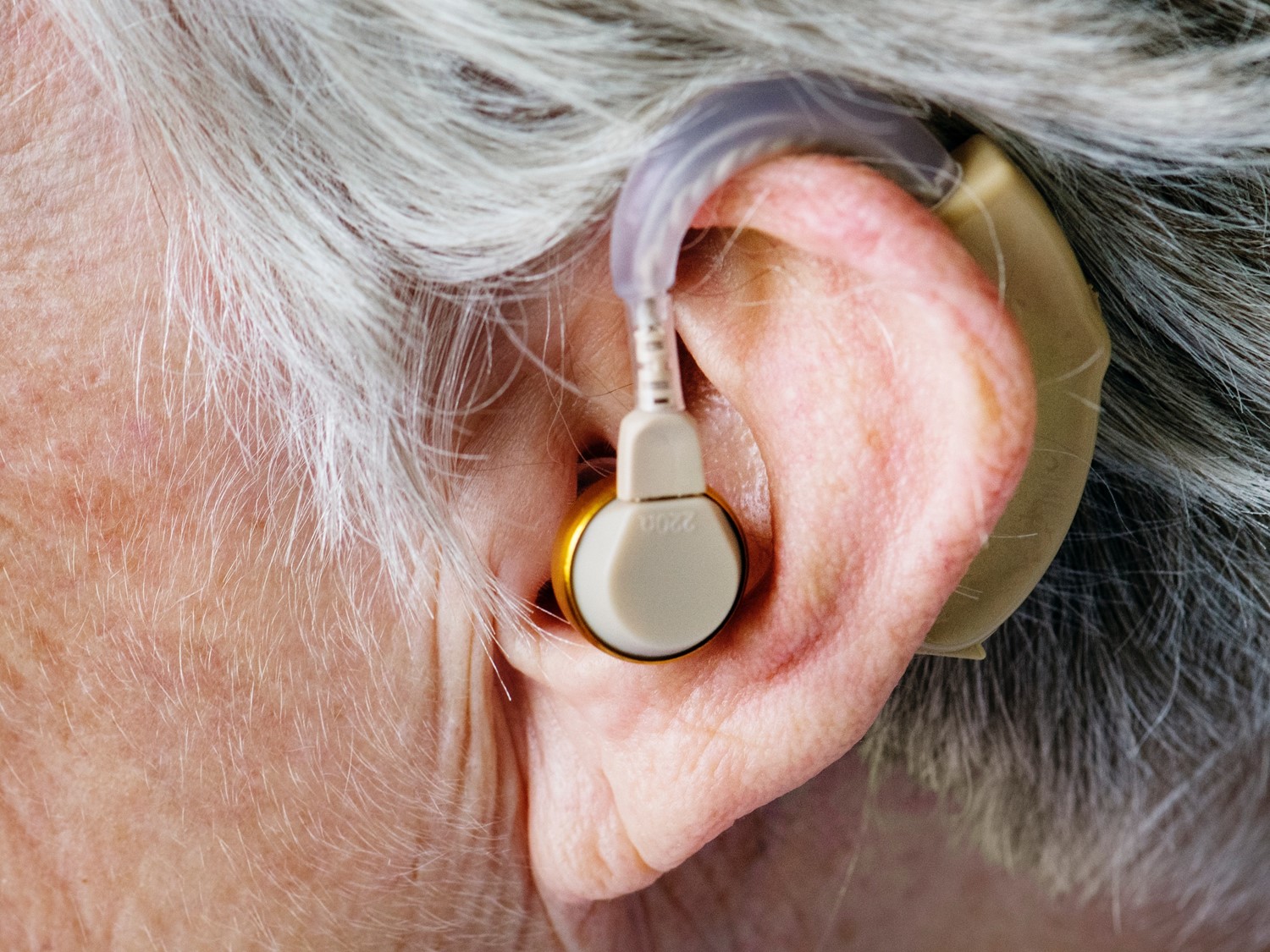
In this article we talk about the different causes of hearing loss, their different characteristics and what you can do about them. Hearing loss is common. There are many inherited (genetic) syndromes which may cause hearing loss. These include Down's syndrome , Syndrome de Treacher Collins and Waardenburg's syndrome. They may have their effects.

Patient information leaflet
Angine microvasculaire
Il y a no agreed definition for CSX. The underlying cause may be sudden narrowing (spasm) of normal coronary arteries without any evidence of atheromatous fatty plaques. What is cardiac syndrome X. Cardiac syndrome X (CSX) is thought to be a type of angina. In CSX chest pain is felt when the heart works harder but the heart arteries appear to be.
Patient information leaflet
Syndrome de pincement précordial
Bien que precordial catch syndrome is a harmless cause of chest pain, there are many other causes of chest pain, some of which are serious and need urgent medical attention. What is precordial catch syndrome. Precordial catch syndrome (PCS) is condition which causes a sharp stabbing pain in the chest. These typically get worse with breathing in,.

Patient information leaflet
Syndrome de Charles Bonnet
Syndrome de Charles Bonnet is a common condition experienced by people who are losing, or have lost, their sight. It involves seeing things which are not really there (having visual hallucinations). The hallucinations are most marked in low light or when relaxing and are often complicated scenes involving faces, children and wild animals. People.

Patient information leaflet
troubles du spectre de l'hypermobilité
troubles du spectre de l'hypermobilité include all people with what used to be called joint hypermobility syndrome, and before that benign joint hypermobility syndrome. Hypermobility spectrum disorders (HSDs) are a group of conditions that involve joint hypermobility (increased range of motion in the joints, sometimes referred to as "loose joints") and.

Patient information leaflet
Côte cervicale
About 1 in 100 personnes sont born with an extra rib called a cervical rib. About 1 in 10 people who have a cervical rib develop thoracic outlet syndrome. This happens if the cervical rib squashes the nerves and blood vessels going into the arm. Treatment can include painkillers, physiotherapy and sometimes surgery to relieve the compression caused.
Lectures complémentaires et références
- Treacher Collins syndrome; MedlinePlus, National Library of Medicine.
- Barbosa M, Jabs EW, Huston S. Treacher Collins Syndrome. 2004 Jul 20 [updated 2024 Jun 20]. In: Adam MP, Bick S, Mirzaa GM, Wallace SE, Amemiya A, editors. GeneReviews(R) [Internet]. Seattle (WA): University of Washington, Seattle; 1993-2026. Available from http://www.ncbi.nlm.nih.gov/books/NBK1532/
- Dauwerse JG, Dixon J, Seland S, Ruivenkamp CA, van Haeringen A, Hoefsloot LH, Peters DJ, Boers AC, Daumer-Haas C, Maiwald R, Zweier C, Kerr B, Cobo AM, Toral JF, Hoogeboom AJ, Lohmann DR, Hehr U, Dixon MJ, Breuning MH, Wieczorek D. Mutations in genes encoding subunits of RNA polymerases I and III cause Treacher Collins syndrome. Nat Genet. 2011 Jan;43(1):20-2. doi: 10.1038/ng.724. Epub 2010 Dec 5.
- Dixon J, Jones NC, Sandell LL, Jayasinghe SM, Crane J, Rey JP, Dixon MJ, Trainor PA. Tcof1/Treacle is required for neural crest cell formation and proliferation deficiencies that cause craniofacial abnormalities. Proc Natl Acad Sci U S A. 2006 Sep 5;103(36):13403-8. doi: 10.1073/pnas.0603730103. Epub 2006 Aug 28.
- Marszalek B, Wojcicki P, Kobus K, Trzeciak WH. Clinical features, treatment and genetic background of Treacher Collins syndrome. J Appl Genet. 2002;43(2):223-33.
- Posnick JC, Ruiz RL. Treacher Collins syndrome: current evaluation, treatment, and future directions. Cleft Palate Craniofac J. 2000 Sep;37(5):434. doi: 10.1597/1545-1569(2000)0372.0.CO;2.
- Sakai D, Trainor PA. Treacher Collins syndrome: unmasking the role of Tcof1/treacle. Int J Biochem Cell Biol. 2009 Jun;41(6):1229-32. doi: 10.1016/j.biocel.2008.10.026. Epub 2008 Nov 5.
- Teber OA, Gillessen-Kaesbach G, Fischer S, Bohringer S, Albrecht B, Albert A, Arslan-Kirchner M, Haan E, Hagedorn-Greiwe M, Hammans C, Henn W, Hinkel GK, Konig R, Kunstmann E, Kunze J, Neumann LM, Prott EC, Rauch A, Rott HD, Seidel H, Spranger S, Sprengel M, Zoll B, Lohmann DR, Wieczorek D. Genotyping in 46 patients with tentative diagnosis of Treacher Collins syndrome revealed unexpected phenotypic variation. Eur J Hum Genet. 2004 Nov;12(11):879-90. doi: 10.1038/sj.ejhg.5201260.
- Trainor PA, Dixon J, Dixon MJ. Treacher Collins syndrome: etiology, pathogenesis and prevention. Eur J Hum Genet. 2009 Mar;17(3):275-83. doi: 10.1038/ejhg.2008.221. Epub 2008 Dec 24.
Participez à la conversation
Partagez vos pensées ou expériences avec les autres dans notre communautés de patients.

Demandez, partagez, connectez-vous.
Parcourez les discussions, posez des questions et partagez vos expériences sur des centaines de sujets de santé.
Inscrivez-vous à la newsletter Patient
Votre dose hebdomadaire de conseils de santé clairs et fiables - rédigés pour vous aider à vous sentir informé, confiant et maître de la situation.
En vous abonnant, vous acceptez notre Politique de confidentialité. Vous pouvez vous désabonner à tout moment. Nous ne vendons jamais vos données.