cyclic nucleotide gated channel subunit beta 3
Dernière mise à jour 14 août 2025
Respecte les directives éditoriales
- TéléchargerTélécharger
- Partager
- Language
- Discussion
- Version audio
- Ajouter aux sources préférées sur Google
The CNGB3 gene provides instructions for making one part (the beta subunit) of the cyclic nucleotide-gated (CNG) channel. These channels are found exclusively in light-sensing (photoreceptor) cells called cones, which are located in a specialized tissue at the back of the eye (retina). Cones provide colour vision and vision in bright light (daytime vision). Other photoreceptor cells, called rods, provide vision in low light (night vision).
Normal function
The CNGB3 gene provides instructions for making one part (the beta subunit) of the cyclic nucleotide-gated (CNG) channel. These channels are found exclusively in light-sensing (photoreceptor) cells called cones, which are located in a specialized tissue at the back of the eye (retina). Cones provide colour vision and vision in bright light (daytime vision). Other photoreceptor cells, called rods, provide vision in low light (night vision).
CNG channels are openings in the cell membrane that transport positively charged atoms (ions) into cells. The CNG channels in cones remain open in low light, allowing ions to flow in. When light enters the eye, these channels close, stopping the flow of ions. This change in ion transport alters the cone's electrical charge, which ultimately generates a signal. This signal is sent to the brain, where it combines with other visual information and is interpreted as vision. The process of translating light into an electrical signal is called phototransduction.
Conditions referring to this gene or chromosome
Other names
ACHM3
achromatopsia (rod monochromacy) 3
cyclic nucleotide gated channel beta 3
Related patient information and medicines

Patient information leaflet
Thalassémie
Thalassémie est an inherited condition affecting the blood. For the more severe forms of thalassaemia, modern treatment gives a good outlook, but lifelong monitoring and treatment are needed. Thalassaemia is an inherited (genetic) condition affecting the blood. The cause is an inherited (genetic) change, involving the genes which tell the body how.

Patient information leaflet
Puis-je prendre Alogliptine et Bisoprolol ensemble ?
It can also slightly increase the risk of your blood sugar dropping too low. Why this happens Bisoprolol is a beta-blocker. These medicines can mask the physical symptoms of low blood sugar, such as a fast heartbeat or tremors. Using other medicines Taking multiple ... Our Vérificateur d'Interactions Médicamenteuses helps you check whether your prescriptions,.
Patient information leaflet
Maladie des valves cardiaques
Heart valves sit in between the chambers of the heart and control the blood flow through the heart. There are four common types of heart valve problem - mitral stenosis, mitral regurgitation , aortic stenosis and aortic regurgitation. The leaflet called Anatomy of the heart includes details about the function of the heart and how le heart beats..

Patient information leaflet
Puis-je prendre Bisoprolol et Trimbow ensemble ?
Bisoprolol may cause the airways to narrow, making it harder to breathe and potentially triggering asthma or COPD symptoms. It also makes the formoterol in the Trimbow inhaler less effective at opening your airways. Why this happens Bisoprolol est a 'beta-blocker' and formoterol (in Trimbow) is a 'beta-agonist'. They compete for the same receptors.
Patient information leaflet
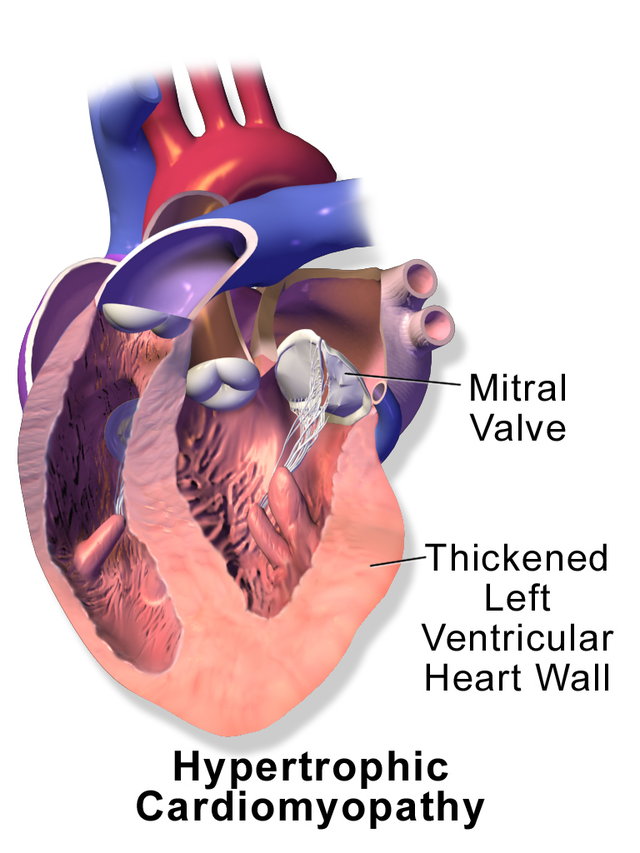
Cardiomyopathie hypertrophique
Dans hypertrophic cardiomyopathy the heart muscle becomes thickened (hypertrophies) dans parts of le heart. In the normal heart, the muscle cells are regular and patterned. In hypertrophic cardiomyopathy the cells of the heart muscle become irregular and disordered. What is hypertrophic cardiomyopathy. Hypertrophic cardiomyopathy is a disease in.
Patient information leaflet
Glaucome
See the separate leaflet called Glaucome aigu par fermeture de l'angle for more details. The rest of this leaflet deals only with chronic open-angle glaucoma, referred to from this point as glaucoma. What happens in glaucoma. Normally fluid (also called 'aqueous humour') in the eye drains away through a mesh as more fluid is made: that way, the pressure in.
Lectures complémentaires et références
- cyclic nucleotide gated channel subunit beta 3; MedlinePlus, National Library of Medicine.
- Hirji N, Aboshiha J, Georgiou M, Bainbridge J, Michaelides M. Achromatopsia: clinical features, molecular genetics, animal models and therapeutic options. Ophthalmic Genet. 2018 Apr;39(2):149-157. doi: 10.1080/13816810.2017.1418389. Epub 2018 Jan 5.
- Johnson S, Michaelides M, Aligianis IA, Ainsworth JR, Mollon JD, Maher ER, Moore AT, Hunt DM. Achromatopsia caused by novel mutations in both CNGA3 and CNGB3. J Med Genet. 2004 Feb;41(2):e20. doi: 10.1136/jmg.2003.011437. No abstract available.
- Kohl S, Baumann B, Broghammer M, Jagle H, Sieving P, Kellner U, Spegal R, Anastasi M, Zrenner E, Sharpe LT, Wissinger B. Mutations in the CNGB3 gene encoding the beta-subunit of the cone photoreceptor cGMP-gated channel are responsible for achromatopsia (ACHM3) linked to chromosome 8q21. Hum Mol Genet. 2000 Sep 1;9(14):2107-16. doi: 10.1093/hmg/9.14.2107.
- Kohl S, Jagle H, Wissinger B, Zobor D. Achromatopsia. 2004 Jun 24 [updated 2018 Sep 20]. In: Adam MP, Bick S, Mirzaa GM, Wallace SE, Amemiya A, editors. GeneReviews(R) [Internet]. Seattle (WA): University of Washington, Seattle; 1993-2026. Available from http://www.ncbi.nlm.nih.gov/books/NBK1418/
- Kohl S, Varsanyi B, Antunes GA, Baumann B, Hoyng CB, Jagle H, Rosenberg T, Kellner U, Lorenz B, Salati R, Jurklies B, Farkas A, Andreasson S, Weleber RG, Jacobson SG, Rudolph G, Castellan C, Dollfus H, Legius E, Anastasi M, Bitoun P, Lev D, Sieving PA, Munier FL, Zrenner E, Sharpe LT, Cremers FP, Wissinger B. CNGB3 mutations account for 50% of all cases with autosomal recessive achromatopsia. Eur J Hum Genet. 2005 Mar;13(3):302-8. doi: 10.1038/sj.ejhg.5201269.
- Michaelides M, Aligianis IA, Ainsworth JR, Good P, Mollon JD, Maher ER, Moore AT, Hunt DM. Progressive cone dystrophy associated with mutation in CNGB3. Invest Ophthalmol Vis Sci. 2004 Jun;45(6):1975-82. doi: 10.1167/iovs.03-0898.
- Michalakis S, Gerhardt M, Rudolph G, Priglinger S, Priglinger C. Achromatopsia: Genetics and Gene Therapy. Mol Diagn Ther. 2022 Jan;26(1):51-59. doi: 10.1007/s40291-021-00565-z. Epub 2021 Dec 3.
- Sundin OH, Yang JM, Li Y, Zhu D, Hurd JN, Mitchell TN, Silva ED, Maumenee IH. Genetic basis of total colourblindness among the Pingelapese islanders. Nat Genet. 2000 Jul;25(3):289-93. doi: 10.1038/77162.
- Thiadens AA, Roosing S, Collin RW, van Moll-Ramirez N, van Lith-Verhoeven JJ, van Schooneveld MJ, den Hollander AI, van den Born LI, Hoyng CB, Cremers FP, Klaver CC. Comprehensive analysis of the achromatopsia genes CNGA3 and CNGB3 in progressive cone dystrophy. Ophthalmology. 2010 Apr;117(4):825-30.e1. doi: 10.1016/j.ophtha.2009.09.008. Epub 2010 Jan 15.
- Wiszniewski W, Lewis RA, Lupski JR. Achromatopsia: the CNGB3 p.T383fsX mutation results from a founder effect and is responsible for the visual phenotype in the original report of uniparental disomy 14. Hum Genet. 2007 May;121(3-4):433-9. doi: 10.1007/s00439-006-0314-y. Epub 2007 Jan 31.
Historique de l'article
Article également disponible en Anglais, Allemand, Espagnol, Français, Italien, Portugais, Hindi, Hébreu, Arabe, and Suédois.
14 août 2025 | Dernière version
1 août 2025 | Publié à l'origine
Participez à la conversation
Partagez vos pensées ou expériences avec les autres dans notre communautés de patients.

Demandez, partagez, connectez-vous.
Parcourez les discussions, posez des questions et partagez vos expériences sur des centaines de sujets de santé.
Inscrivez-vous à la newsletter Patient
Votre dose hebdomadaire de conseils de santé clairs et fiables - rédigés pour vous aider à vous sentir informé, confiant et maître de la situation.
En vous abonnant, vous acceptez notre Politique de confidentialité. Vous pouvez vous désabonner à tout moment. Nous ne vendons jamais vos données.