telomerase reverse transcriptase
Dernière mise à jour 2 mai 2023
Respecte les directives éditoriales
- TéléchargerTélécharger
- Partager
- Language
- Discussion
- Version audio
- Ajouter aux sources préférées sur Google
La TERT gene provides instructions for making one component of an enzyme called telomerase. Telomerase maintains structures called telomeres, which are composed of repeated segments of DNA found at the ends of chromosomes. Telomeres protect chromosomes from abnormally sticking together or breaking down (degrading). In most cells, telomeres become progressively shorter as the cell divides. After a certain number of cell divisions, the telomeres become so short that they trigger the cell to stop dividing or to self-destruct (undergo apoptosis). Telomerase counteracts the shortening of telomeres by adding small repeated segments of DNA to the ends of chromosomes each time the cell divides.
Normal function
La TERT gene provides instructions for making one component of an enzyme called telomerase. Telomerase maintains structures called telomeres, which are composed of repeated segments of DNA found at the ends of chromosomes. Telomeres protect chromosomes from abnormally sticking together or breaking down (degrading). In most cells, telomeres become progressively shorter as the cell divides. After a certain number of cell divisions, the telomeres become so short that they trigger the cell to stop dividing or to self-destruct (undergo apoptosis). Telomerase counteracts the shortening of telomeres by adding small repeated segments of DNA to the ends of chromosomes each time the cell divides.
In most types of cells, telomerase is either undetectable or active at very low levels. However, telomerase is highly active in cells that divide rapidly, such as cells that line the lungs and gastrointestinal tract, cells in bone marrow, and cells of the developing fetus. Telomerase allows these cells to divide many times without becoming damaged or undergoing apoptosis. Telomerase is also abnormally active in most cancer cells, which grow and divide without control or order.
The telomerase enzyme consists of two major components that work together. The component produced from the TERT gene is known as hTERT. The other component is produced from a gene called TERC and is known as hTR. The hTR component provides a template for creating the repeated sequence of DNA that telomerase adds to the ends of chromosomes. The hTERT component then adds the new DNA segment to chromosome ends.
Conditions referring to this gene or chromosome
Other names
EST2
hEST2
TCS1
telomerase catalytic subunit
telomerase-associated protein 2
TERT_HUMAN
TP2
TRT
Related patient information and medicines

Patient information leaflet
Vieillissement
The ageing population Globally, populations are becoming older. The change that comes with age (the ageing process) is due to complex goings on inside the body. It may also be that the presence or absence of certain genes allows people to live... With repeated dividing, le telomeres - protective structures at the end of le threads of genes.

Patient information leaflet
Causes de la perte de mémoire et de la démence
It is thought that the... So, doing things such as reading regularly, quizzes, crosswords, memorising plays or poetry, learning new skills, etc, may help to keep your memory in good shape. Who gets dementia. It is estimé that in 2019, there were almost 885,000 people aged 65 years and over living with dementia in the UK. By 2040 this number is.

Patient information leaflet
Maladies de stockage du glycogène
Maladies de stockage du glycogène are a group of inherited diseases. They result from a problem with one of the proteins (known as enzymes) involved in the conversion of glucose to glycogen, or the breakdown of glycogen back into glucose. They mostly tend to affect your liver and muscles. Most are diagnosed in childhood. Symptoms include weakness,.
Patient information leaflet
Insuffisance ovarienne prématurée
Insuffisance ovarienne prématurée is sometimes called premature ovarian failure. The condition occurs when your ovaries no longer work properly when you are under the age of 40 years. Your ovaries no longer produce normal amounts of oestrogen and therefore may not produce eggs. This means that your periods stop (or become irregular) and you may.

Patient information leaflet
Œsophage de Barrett
With persistent reflux. Risk factors It is thought that about 1 in 20 people who have recurring acid reflux eventually develop Barrett's oesophagus. The risk is mainly in people who have had severe acid reflux for many years. However, some people who have had fairly mild symptoms of reflux for years can develop Barrett's oesophagus. Barrett's.
Patient information leaflet
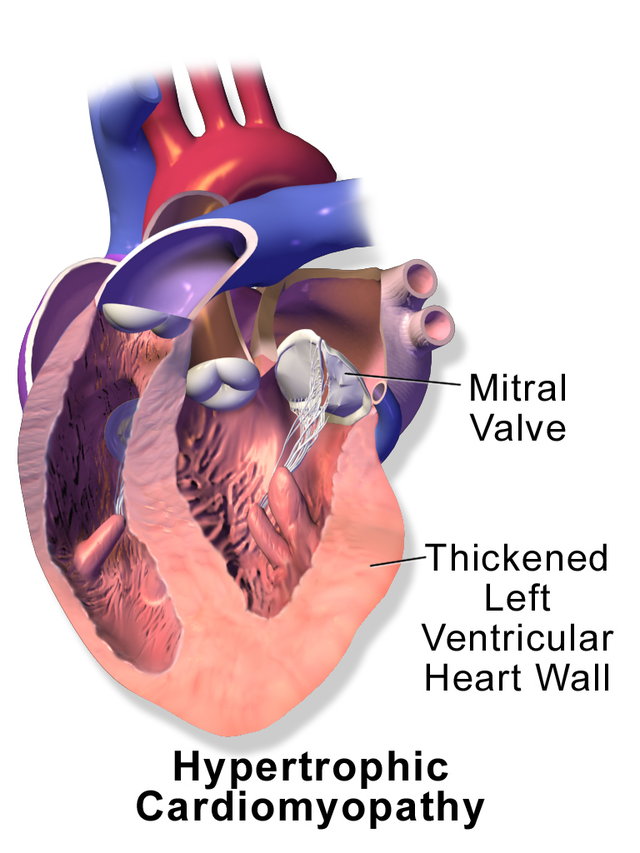
Cardiomyopathie hypertrophique
Parfois the muscle around the right ventricle is also affected. The degree of thickening may vary in different places. For example, the wall dividing the right and left ventricle (the septum) is often the area with the greatest thickening. In about 1 in 4 people the muscle thickening is evenly distributed throughout the walls of the left.
Lectures complémentaires et références
- telomerase reverse transcriptase; MedlinePlus, National Library of Medicine.
- Arish N, Petukhov D, Wallach-Dayan SB. The Role of Telomerase and Telomeres in Interstitial Lung Diseases: From Molecules to Clinical Implications. Int J Mol Sci. 2019 Jun 19;20(12):2996. doi: 10.3390/ijms20122996.
- Armanios M, Chen JL, Chang YP, Brodsky RA, Hawkins A, Griffin CA, Eshleman JR, Cohen AR, Chakravarti A, Hamosh A, Greider CW. Haploinsufficiency of telomerase reverse transcriptase leads to anticipation in autosomal dominant dyskeratosis congenita. Proc Natl Acad Sci U S A. 2005 Nov 1;102(44):15960-4. doi: 10.1073/pnas.0508124102. Epub 2005 Oct 24.
- Armanios MY, Chen JJ, Cogan JD, Alder JK, Ingersoll RG, Markin C, Lawson WE, Xie M, Vulto I, Phillips JA 3rd, Lansdorp PM, Greider CW, Loyd JE. Telomerase mutations in families with idiopathic pulmonary fibrosis. N Engl J Med. 2007 Mar 29;356(13):1317-26. doi: 10.1056/NEJMoa066157.
- Autexier C, Lue NF. The structure and function of telomerase reverse transcriptase. Annu Rev Biochem. 2006;75:493-517. doi: 10.1146/annurev.biochem.75.103004.142412.
- Baird DM. Variation at the TERT locus and predisposition for cancer. Expert Rev Mol Med. 2010 May 18;12:e16. doi: 10.1017/S146239941000147X.
- Ballew BJ, Savage SA. Updates on the biology and management of dyskeratosis congenita and related telomere biology disorders. Expert Rev Hematol. 2013 Jun;6(3):327-37. doi: 10.1586/ehm.13.23.
- Basel-Vanagaite L, Dokal I, Tamary H, Avigdor A, Garty BZ, Volkov A, Vulliamy T. Expanding the clinical phenotype of autosomal dominant dyskeratosis congenita caused by TERT mutations. Haematologica. 2008 Jun;93(6):943-4. doi: 10.3324/haematol.12317. Epub 2008 May 6. No abstract available.
- Cao Y, Bryan TM, Reddel RR. Increased copy number of the TERT and TERC telomerase subunit genes in cancer cells. Cancer Sci. 2008 Jun;99(6):1092-9. doi: 10.1111/j.1349-7006.2008.00815.x.
- Huang FW, Hodis E, Xu MJ, Kryukov GV, Chin L, Garraway LA. Highly recurrent TERT promoter mutations in human melanoma. Science. 2013 Feb 22;339(6122):957-9. doi: 10.1126/science.1229259. Epub 2013 Jan 24.
- Marrone A, Walne A, Tamary H, Masunari Y, Kirwan M, Beswick R, Vulliamy T, Dokal I. Telomerase reverse-transcriptase homozygous mutations in autosomal recessive dyskeratosis congenita and Hoyeraal-Hreidarsson syndrome. Blood. 2007 Dec 15;110(13):4198-205. doi: 10.1182/blood-2006-12-062851. Epub 2007 Sep 4.
- Nishio N, Kojima S. Recent progress in dyskeratosis congenita. Int J Hematol. 2010 Oct;92(3):419-24. doi: 10.1007/s12185-010-0695-5. Epub 2010 Oct 1.
- Tsakiri KD, Cronkhite JT, Kuan PJ, Xing C, Raghu G, Weissler JC, Rosenblatt RL, Shay JW, Garcia CK. Adult-onset pulmonary fibrosis caused by mutations in telomerase. Proc Natl Acad Sci U S A. 2007 May 1;104(18):7552-7. doi: 10.1073/pnas.0701009104. Epub 2007 Apr 25.
- Vulliamy TJ, Walne A, Baskaradas A, Mason PJ, Marrone A, Dokal I. Mutations in the reverse transcriptase component of telomerase (TERT) in patients with bone marrow failure. Blood Cells Mol Dis. 2005 May-Jun;34(3):257-63. doi: 10.1016/j.bcmd.2004.12.008.
- Yamaguchi H, Calado RT, Ly H, Kajigaya S, Baerlocher GM, Chanock SJ, Lansdorp PM, Young NS. Mutations in TERT, the gene for telomerase reverse transcriptase, in aplastic anemia. N Engl J Med. 2005 Apr 7;352(14):1413-24. doi: 10.1056/NEJMoa042980.
- Yan S, Han B, Wu Y, Zhou D, Zhao Y. Telomerase gene mutation screening and telomere overhang detection in Chinese patients with acute myeloid leukemia. Leuk Lymphoma. 2013 Jul;54(7):1437-41. doi: 10.3109/10428194.2012.729834. Epub 2012 Dec 10.
Participez à la conversation
Partagez vos pensées ou expériences avec les autres dans notre communautés de patients.

Demandez, partagez, connectez-vous.
Parcourez les discussions, posez des questions et partagez vos expériences sur des centaines de sujets de santé.
Inscrivez-vous à la newsletter Patient
Votre dose hebdomadaire de conseils de santé clairs et fiables - rédigés pour vous aider à vous sentir informé, confiant et maître de la situation.
En vous abonnant, vous acceptez notre Politique de confidentialité. Vous pouvez vous désabonner à tout moment. Nous ne vendons jamais vos données.