Prothèses dentaires
Revu par Dr Hayley Willacy, FRCGP Rédigé par Toothpick Publié à l'origine 23 Feb 2015
Respecte les directives éditoriales
- TéléchargerTélécharger
- Partager
- Language
- Discussion
- Ask Patient
- Version audio
- Ajouter aux sources préférées sur Google
Avis concernant le contenu
Cette page n’a pas été vérifiée récemment ; certaines informations ou certains liens externes ont donc peut-être changé.
Les dentiers sont des dents artificielles amovibles fabriquées en acrylique ou en métal qui remplacent les dents manquantes. Bien que votre dentiste vise à ce que vous conserviez autant que possible vos propres dents, même les personnes qui maintiennent une bonne routine d'hygiène dentaire peuvent avoir besoin de dentiers à un moment de leur vie. Perdre des dents peut non seulement poser des problèmes pour votre parole et votre alimentation, mais aussi avoir un impact émotionnel. Quelles que soient les raisons de la perte de dents, les dentiers peuvent prévenir ces problèmes, restaurer la confiance en soi et améliorer votre apparence en apportant un soutien supplémentaire à vos joues et à vos lèvres. Il existe plusieurs types de dentiers à considérer en fonction de votre situation, et les coûts varient en conséquence.
En un coup d'œil
Dentures are custom-made prosthetic teeth to replace missing natural teeth.
You may need complete or partial dentures, depending on how many teeth are missing.
Complete immediate dentures are fitted straight after teeth are removed.
Partial dentures fill gaps and can be attached to your natural teeth.
Dentures generally need to be removed at night to let your gums rest.
NHS costs for dentures are £214 in England; private costs vary greatly.
You should still visit your dentist regularly for check-ups even with dentures.
Sélections vidéo pour Problèmes dentairesBibliothèque vidéo
What sort of dentures do I need?
Dentures are formed by taking an impression from your mouth and are custom made by a dental technician for the best fit. The colour and the shape of the dentures may be adjusted to look as close to natural teeth as possible.
Depending on how many teeth are missing, you may need to be fitted with complete dentures or partial dentures. Your dentist will give you options depending on your circumstances:
Complete immediate dentures
Also known as full dentures, these prosthetic teeth will be fitted if all your upper and/or lower teeth need to be removed. In most cases, your dentist will be able to insert new dentures immediately after any remaining natural teeth have been removed, ensuring you will not have to go any time without teeth while your gums are healing. Complete dentures fit snugly over your gums and jawbone.
Although your dentist will have taken measurements and modelled your jaw during a prior visit to ensure the dentures fit straightaway, your gums and bone may shrink over time. This is especially true during the first six months after the teeth have been removed and the gum heals. If this is the case, you may need to have your dentures adjusted or replaced to improve the fit.
Complete conventional dentures
In some cases, your dentist might advise that your gums need to heal before you can wear dentures. Although this means that you will be without teeth for several months, you will be more likely to have dentures that fit without needing adjustment later.
Implant-assisted dentures
If you are not able to wear unassisted dentures due to bone loss or an insufficient palate, or if conventional dentures are not suited, an option could be implant-assisted dentures.
Depending on the condition of your jaw, four to six implants will be fitted to each arch, with special fittings that the denture will attach to. Like single tooth implants, this will require creating a hole through your gum into your jawbone to insert an artificial titanium root. This root will require two to six months to fuse with the bone before the denture can be attached to it.
Partial dentures
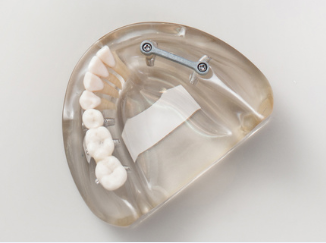
If you have some of your own natural teeth, you may only need a partial denture to fill in the gaps left by missing teeth. Partial dentures usually consist of a metal or plastic plate with a number of false teeth attached. These are either fastened to your natural teeth with a metal clasp so they can be unclipped and removed, or crowns are placed over some of your natural teeth to serve as anchors for the denture.
partial-dentures
How long should I wear dentures for?
For the first few days after being fitted with dentures, you may be advised to wear them constantly. Once your mouth gets used to wearing them, you should remove dentures before you go to bed. This will allow your gums to rest and prevent any fungal infections from developing.
How much do dentures cost?
Having dentures fitted is a band 3 treatment, which costs £214 for NHS dental patients in England. Privately, partial dentures will cost upwards of £400 and complete dentures will cost upwards of £600. The cost of implant-assisted dentures will vary significantly depending on the work involved but is likely to cost in the region of £3,000 upwards. Your dentist can provide you with a written quote before you decide. It is worth noting that dental implants help to preserve the amount of jaw bone which forms the foundation to support the denture.
How long will dentures last?
Well cared-for dentures should last several years but they may need to be relined or re-made after normal wear or after any changes in the shape of your mouth as your gums or bone shrink. Poorly fitting dentures can lead to several problems, including discomfort, bad breath, mouth sores and infections.
Some people who have been wearing full dentures over long periods can find it difficult to have well fitted dentures made.
Will dentures affect how and what I can eat?
Once you first start wearing dentures, you may want to get used to eating with small pieces of soft foods, while avoiding any particularly hard or sticky food. Once you are more familiar with dentures, you should be able to return to a normal, healthy diet.
Do I need to use an adhesive to keep dentures in place?
While you are getting familiar with your dentures, you may want to use a fixative to help keep them in place. This may also be the case if your gums have shrunk a lot. However, tight fitting dentures should not require any adhesive to keep them in place.
Will my mouth require special care?
Even if you have full dentures, you should still take good care of your mouth. Brush your gums, tongue and roof of your mouth twice a day with toothpaste and a soft toothbrush. If you have partial dentures, your natural teeth should be cleaned twice daily to prevent tooth decay, gum disease and any future loss of teeth.
What is the best way to care for dentures?
Dentures need to be cleaned as dutifully as natural teeth and are just as susceptible to plaque and trapped food deposits. At least every morning and night you should brush them with paste or soap and water before soaking. Then, they will need to be soaked in a denture cleaning solution. Particular care needs to be taken to remove any traces of denture fixative.
Finally, your dentures need to be brushed as you would your own teeth, with toothpaste and a small-headed toothbrush. If your dentures have a plaque build-up or stains, your dentist or hygienist can clean them for you.
If you remove your dentures overnight, store them in a small amount of water to stop them warping.
Remember that dentures can be quite delicate and may chip, crack or break if dropped, so take extra care when cleaning them. Do not try to adjust dentures as you may damage them beyond repair.
How often should I visit my dentist?
Even if you have complete dentures, you should plan to see your dentist regularly for a check-up so that they can monitor the health of your mouth lining and ensure that your dentures are fitting properly.
This article was provided by Toothpick, the leading provider of online dentist appointments au Royaume-Uni.
Sélections des patients pour Problèmes dentaires

Soin bucco-dentaire
Redressement des dents
Les dents mal alignées peuvent nuire à votre confiance, vous faire sourire moins et affecter votre vie personnelle et sociale. Heureusement, il existe de nombreuses solutions d'orthodontie pour aligner les dents qui vous laisseront avec un sourire parfaitement droit et la confiance de sourire davantage. L'alignement des dents est presque exclusivement réalisé par des dentistes privés et le coût variera en fonction du traitement et du prestataire de services.
by Toothpick

Soin bucco-dentaire
Dents de sagesse
Au total, les adultes peuvent s'attendre à avoir quatre dents de sagesse : une de chaque côté de la mâchoire supérieure et inférieure. Parfois appelées « troisièmes molaires », les dents de sagesse sont les dernières à apparaître et leur arrivée, qui peut parfois intervenir tard dans la vingtaine, n'est pas toujours bien accueillie. Dans certains cas, il n'y a pas assez d'espace dans la mâchoire pour que ces dents supplémentaires poussent, ce qui peut malheureusement entraîner une série de problèmes douloureux. Souvent, l'inconfort et la douleur disparaissent d'eux-mêmes, mais parfois, les dents de sagesse doivent être extraites. La procédure est généralement rapide, réalisée sous anesthésie locale, avec un temps de récupération de quelques jours.
par Dr Hayley Willacy, FRCGP
Questions fréquemment posées
What is the difference between immediate and conventional complete dentures?
Complete immediate dentures are fitted immediately after your remaining natural teeth are removed, so you don't have to go without teeth. However, your gums and bone will shrink during healing, potentially requiring adjustments or replacements later. Complete conventional dentures involve a waiting period of several months for your gums to heal before they are fitted. This means you will be without teeth for a time, but the dentures are more likely to fit without needing subsequent adjustment.
When might implant-assisted dentures be recommended?
Implant-assisted dentures might be recommended if you struggle to wear unassisted dentures due to factors like bone loss or an insufficient palate, or if conventional dentures are not suitable for you. This option involves surgically placing titanium implants into your jawbone to provide a stable attachment for the denture, requiring a healing period for the implants to fuse with the bone.
What are partial dentures made of and how do they stay in place?
Partial dentures typically consist of a metal or plastic plate with false teeth attached to fill gaps where natural teeth are missing. They are usually fastened to your existing natural teeth with a metal clasp, allowing them to be unclipped and removed. Alternatively, crowns can be placed over some of your natural teeth to act as anchors for the denture.
How long does it take for implants to fuse with the bone for implant-assisted dentures?
For implant-assisted dentures, once the artificial titanium roots (implants) are inserted into your jawbone, it typically takes between two to six months for them to fuse with the bone before the denture can be securely attached.
Can I adjust my dentures myself if they become uncomfortable?
No, you should not attempt to adjust your dentures yourself. They can be quite delicate, and trying to adjust them may cause damage beyond repair. If your dentures are uncomfortable or not fitting properly, you should consult your dentist.
À propos de l'auteur
Rédigé par

Toothpick
À propos du critiqueVoir la biographie complète

Dr Hayley Willacy, FRCGP
Médecin généraliste, Auteur médical
MBChB (1992), DRCOG, DFFP, MRCOG (Part 1) MRCGP (2007), DFSRH (2013), MSc - medical education (2020)
Le Dr Hayley Willacy était médecin généraliste au NHS travaillant dans le nord-ouest de l'Angleterre, qui a pris sa retraite de la pratique clinique en 2022 après 30 ans.
Historique de l'article
Article également disponible en Anglais, Allemand, Espagnol, Français, Italien, Portugais, Hindi, Hébreu, Arabe, and Suédois.
23 Feb 2015 | Publié à l'origine
Écrit par :
Toothpick
Revu par
Dr Hayley Willacy, FRCGP
Partagez vos pensées ou expériences avec les autres dans notre communautés de patients.
Accès simple à des traitements fiables et à des services de santé en ligne.
Common conditions
Get help with common conditions through the NHS, without a GP appointment.





Inscrivez-vous à la newsletter Patient
Votre dose hebdomadaire de conseils de santé clairs et fiables - rédigés pour vous aider à vous sentir informé, confiant et maître de la situation.
En vous abonnant, vous acceptez notre Politique de confidentialité. Vous pouvez vous désabonner à tout moment. Nous ne vendons jamais vos données.