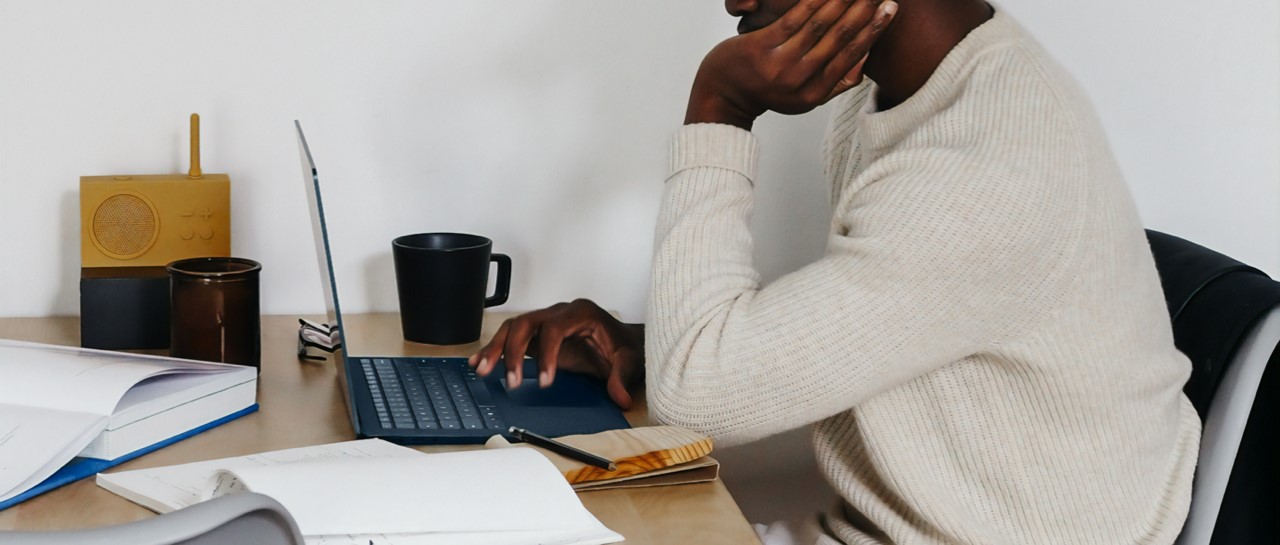
How to avoid neck, shoulder and back pain while working from home
Peer reviewed by Dr Sarah JarvisLast updated by Andrea DowneyLast updated 11 May 2020
Meets Patient’s editorial guidelines
- DownloadDownload
- Share
- Language
- Discussion
- Audio Version
- Add to preferred sources on Google
Have you found it hard to set up a comfortable workspace during the coronavirus lockdown? Started missing your standing desk or office chair whilst working from home? Our workspace can cause our muscles considerable pain if not set up properly, so we asked two experts to explain how best to do it.
Use Patient's coronavirus checker tool if you have any symptoms of fever or a new cough. Until you have used the tool and been advised what action to take, please stay at home and avoid contact with other people.
Working from home takes some adjustment. Some parts of it are enjoyable; other parts like aches and pain from a poorly set-up workspace not so much. As the saying goes, prevention is better than a cure, which is why setting your workspace up properly is important.
Here Dr Kianoush Missaghi, neuroscientist and training specialist for Freeletics, and Darren Doak, personal trainer and national field manager for The Training Room, explain how you can ensure your workspace is ready to go.
Supporting your body
"It's all about trying to adapt your environment as much as possible to support your body's more natural and relaxed position," Missaghi says.
The top of the screen needs to be level with your eyes - if possible the screen would be adjustable to a comfortable position. The keyboard should be in front of you with enough room for your wrists to rest when you're not using it and you should be able to use the mouse without reaching for it, Doak explains.
"When setting up a desk to ensure it isn't causing pain or damage to your muscles, establish whether there is adequate work surface to allow a flexible arrangement for the screen, keyboard and mouse operation. Also, make sure there is adequate knee room to maintain a comfortable position," he adds.
"Some people may consider using a gym ball instead of a chair as this can be used to improve core stability muscles and posture. This can be used to good effect as long as the ball height is correct and allows the upper legs to be parallel to the floor."
Missaghi recommends using a chair that properly supports your lower back, which may mean investing in a new office chair.
DIY yourself a standing desk
If you're someone who has a standing desk at work, you're probably struggling to adjust to the constant sitting while working from home.
Standing desks are an excellent way to help maintain good posture as we're less likely to slouch at them like we would if we were sitting.
You can make a standing desk in your own home simply by using books or other objects to lift the height of your screen.
"To utilise a DIY standing desk, the above protocols should be considered with a gradual introduction until it becomes more manageable. Think about the height of your screen and accessibility of the mouse, for example, as your muscles will take time to adjust to unfamiliar posture changes," Doak says.
"Space, accessibility and comfort are paramount in these new environments. Taking regular breaks and moving about are very important too, as are stretching sore and tired muscles.
"There are common muscles that are affected, such as the rhomboid and trapezius muscles as well as the hamstrings and quadratus lumborum. Online yoga and Pilates sessions are easily accessible, and a daily regimen of whole-body stretching can be very effective at alleviating the additional loads and stressors that come with working in makeshift spaces.
"Adequate light and access to fresh air are also shown to be highly beneficial."
Avoid the couch
It's very tempting to sit in your pyjamas on the sofa while you work - after all, who is going to know? But it's very important that you work in a space that's set up to put you in the best position to work, and the sofa just isn't up to the task.
"Getting up, dressed and prepared for the day is highly recommended to maintain your normal routine as much as possible," Doak says.
"Stay away from couches and bed areas to ensure you can disconnect your home life from working life.
"I also find that if you're able to, you should be in an upstairs setting. So when you do have to leave the workspace for food and water or even just to answer the door (social distancing taken into account), you have a set of stairs to negotiate, helping with blood flow to those muscles that have been sitting idle.
"Try to keep distractions to a minimum. However, having the TV or radio on for some staves off feelings of loneliness, especially if you're used to a bustling office environment."
Patient picks for Neck and shoulder

Bones, joints and muscles
Video: Neck pain exercises
Neck pain is very common but in most cases is not caused by a serious problem. Pain is more likely to be muscular and the exercises outlined here are recommended to ease symptoms.
by Lilly Sabri, MHPC

Bones, joints and muscles
When should you worry about neck pain?
Many of us will get neck pain at some point, often walking up with a sore or aching neck. It's hardly surprising - the neck is a miracle of natural engineering. It allows us to twist our heads in all directions while still supporting the weight of our skulls and protecting the vital nerves connecting our brains with the rest of our bodies.
by Victoria Raw
About the author

Andrea Downey
About the reviewerView full bio

Dr Sarah Jarvis
Clinical Consultant
MA (Cantab), BM, BCh (Oxon), DRCOG, FRCGP, MBE
After training in medicine at Cambridge and Oxford, Dr Sarah Jarvis MBE became a GP.
Article history
The information on this page is peer reviewed by qualified clinicians.
Article also available in English, German, Spanish, French, Italian, Portuguese, Hindi, Hebrew, Arabic, and Swedish.
11 May 2020 | Latest version
Join the conversation
Share your thoughts or experiences with others in our patient communities.

Ask, share, connect.
Browse discussions, ask questions, and share experiences across hundreds of health topics.

Feeling unwell?
Assess your symptoms online for free
Sign up to the Patient newsletter
Your weekly dose of clear, trustworthy health advice - written to help you feel informed, confident and in control.
By subscribing you accept our Privacy Policy. You can unsubscribe at any time. We never sell your data.
More in bones, joints and muscles
- Are joint pain supplements worth your money?
- Beat the chill: why movement matters for your joints in cold weather
- Can creatine supplements help build muscle?
- Chemical found in soap and toothpaste linked to osteoporosis
- Do I need an MRI for my back pain?
- How much protein do you need to build muscle?
- How to build muscle on a vegan diet
- How to get back pain under control
- How to treat tennis elbow at home
- Knee pain and exercises videos
- Living with fibromyalgia - Jenny's story
- Natural remedies for joint pain relief
- The best exercises for back pain
- Things you might not know about cleidocranial dysplasia
- Video: Back pain exercises
- Video: Knee pain exercises
- What foods are good for arthritis?
- What is sarcopenia?
- What it's really like to live with gout