
What is astigmatism
Peer reviewed by Dr Krishna Vakharia, MRCGPAuthored by Simon Berry, MCOptom Originally published 23 Feb 2024
Meets Patient’s editorial guidelines
- DownloadDownload
- Share
- Language
- Discussion
- Audio Version
- Add to preferred sources on Google
Astigmatism is a common condition which is usually easily corrected with glasses, contacts lenses or, sometimes, surgery. Here we look at what it means if you have the condition, and what you can do about it.
What is astigmatism?
Astigmatism isn't as straightforward as being short-sighted or long-sighted, and as an eye specialist I regularly get patients worriedly asking me: “Have I got a stigma?” No - you do not have a stigma - but here I'll explain what astigmatism is?
Human eye schematic
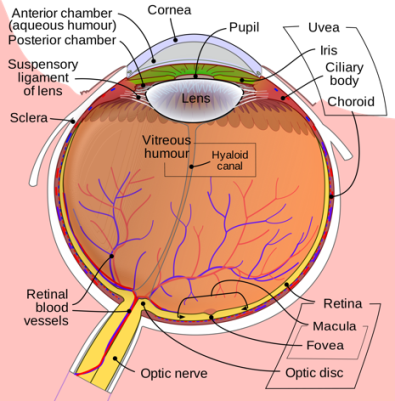
Our eyes have two optical lenses - the lens, which is inside the eye, and the clear front cover, the cornea - which gives us around two thirds of our optical power.
For most people, astigmatism only affects the cornea. It's rare to have astigmatism affecting the lens of your eye, and even rarer for it to affect the retina.
Astigmatism
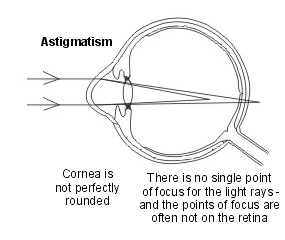
Astigmatism is when the surface of the cornea has two different shaped slopes, creating two different points of focus. Think of the curve of your eye as sports balls.
If you have a round, football or basketball shaped cornea - so all the rays of light entering the eye meet to a single point of focus - there is no astigmatism.
If the curve is different in two different directions, like a rugby ball or an American football, these two different slopes means light entering the eye has a different focus point for each curve - this is astigmatism.
These two different slopes mean that optically, light entering the eye has a different focus point for each curve. This creates a distortion in vision which is different to experience than being just short or long sighted.
How common is astigmatism?
You need to wear glasses when you have a refractive error - a type of vision problem that makes it hard to see clearly due to an issue in how your eyes focus light.
Astigmatism is the most common refractive error affecting around 4 in 10 people around the world.
If you have astigmatism you'll often be long- or short- sighted also, and many optical prescriptions have an astigmatic component to them.
As with other refractive errors, if the numbers are small and it is not causing any symptoms then your astigmatism does not need to be corrected. Your optometrist may not even mention you have an astigmatism if it is not causing any problems.
What are the symptoms of astigmatism?
The key symptoms of astigmatism include:
Blurred or distorted vision.
Glares or halos around lights.
Some people with astigmatism say they have difficulty driving at night but there are many more common things that can cause this symptom
Unlike being short- or near- sighted, how far or near the objects you are looking at does not make a difference - the symptoms are the same.
For example, if you are short sighted and looking at the London Eye, it will appear as a circular structure which is uniformly blurred.
If you have astigmatism, and you are looking at the London Eye, it will look slightly oval shaped and some parts will be more blurred than others.
How does my prescription let me know if I have astigmatism?
On your optical prescription there are generally three numbers. The second and the third number - the cyl and the axis - describe your astigmatism. If there is no second and third number then you do not have astigmatism. The cyl number stands for cylinder - this describes the shape of the optical lens that is needed to correct astigmatism. The higher this number, the more pronounced the astigmatism is, and the worse your vision will be.
The axis number describes the direction of the cylinder. If you think back to the rugby ball analogy - If you wanted to recreate the way it looks, you would need to describe both how sloped each curve is, and the direction of each slope. This is why you have two numbers.
How can I check if I have astigmatism?
Whilst you need to see an optometrist to get an accurate answer about whether and to what extent you have astigmatism - you could try this quick self-test:
Place your left hand over your left eye and from around 30cm (1ft) away look at a target above you.
Do any of the lines appear blacker or more in focus than the others?
If they do, you may have astigmatism in your left eye.
Repeat the process with your right hand over your right eye.
This test is not totally accurate but can give you an idea wether you have any astigmatism.
Does astigmatism get worse?
We are all born with astigmatism as our eyes, in particular our optics, are not fully developed. This corrects itself fairly quickly in the first few months of life using nature’s auto-correct program - emmetropisation.
Usually, all of your early astigmatism will have corrected itself by 6 months old. If a child over 1 year has significant astigmatism then it needs to be corrected to make sure the visual system develops normally.
Once we've finished growing, the cornea settles and astigmatism does not usually change much. There are some eye diseases that change the shape of the cornea and so will also change the astigmatism. The most common of these is keratoconus.
The cornea, and the astigmatism, can also change due to trauma or surgery. All of these conditions can be picked up in a detailed eye examination.
How is astigmatism corrected?
Astigmatism can generally be easily corrected with glasses, contact lenses or surgery.
Glasses will have a magnification effect that can be a little difficult to get used to. For the first few days it is quite common to feel a little sea sick when moving your head around - but this fades quickly.
Contact lenses can be more complicated. With soft contact lenses a toric lens, which is shaped to correct the astigmatism, is needed. It’s important this lens doesn't rotate too much on the eye, otherwise vision would not be stable.
If you feel your vision is getting worse, if you see halos around lights or your sight is blurred, see an optometrist at your opticians to have your eyes checked.
Patient picks for Eye health
Eye health
How to reduce eye strain while watching TV
If you've ever experienced irritated eyes, blurred vision, or headaches while watching TV, you may be one of the many people who encounter eye strain. This common but temporary eye complaint can be soothed or avoided if you adopt some healthy TV viewing habits.
by Amberley Davis

Eye health
What to eat for healthy eyes
Everyone knows that carrots make you see in the dark but what about the role of peppers, kale, almonds, kiwi fruits and seafood in making our eyes healthier? Scientists have discovered that several nutrients help to guard our eyesight, keeping one of our vital senses in good working order as we age.
by Dr Carrie Ruxton, PhD, Child Nutrition
About the authorView full bio
Authored by

Simon Berry, MCOptom
Optometrist
BSc (hons) MCOptom
Simon Berry is an Optometrist from Durham.
About the reviewerView full bio

Dr Krishna Vakharia, MRCGP
Chief Medical Officer for Health, Optum UK
MBChB, MRCGP(2013), BMedSci (hons), DFSRH, DRCOG, PGDipDerm (Distn)
Dr Krishna Vakharia is an NHS GP. She is also a regular examiner for the postgraduate Diploma in Practical Dermatology at Cardiff University as well as being the Chief Medical Officer for health at Optum UK.
Article history
Article also available in English, German, Spanish, French, Italian, Portuguese, Hindi, Hebrew, Arabic, and Swedish.
23 Feb 2024 | Originally published
Authored by:
Simon Berry, MCOptomPeer reviewed by
Dr Krishna Vakharia, MRCGP
Join the conversation
Share your thoughts or experiences with others in our patient communities.

Ask, share, connect.
Browse discussions, ask questions, and share experiences across hundreds of health topics.

Feeling unwell?
Assess your symptoms online for free
Sign up to the Patient newsletter
Your weekly dose of clear, trustworthy health advice - written to help you feel informed, confident and in control.
By subscribing you accept our Privacy Policy. You can unsubscribe at any time. We never sell your data.