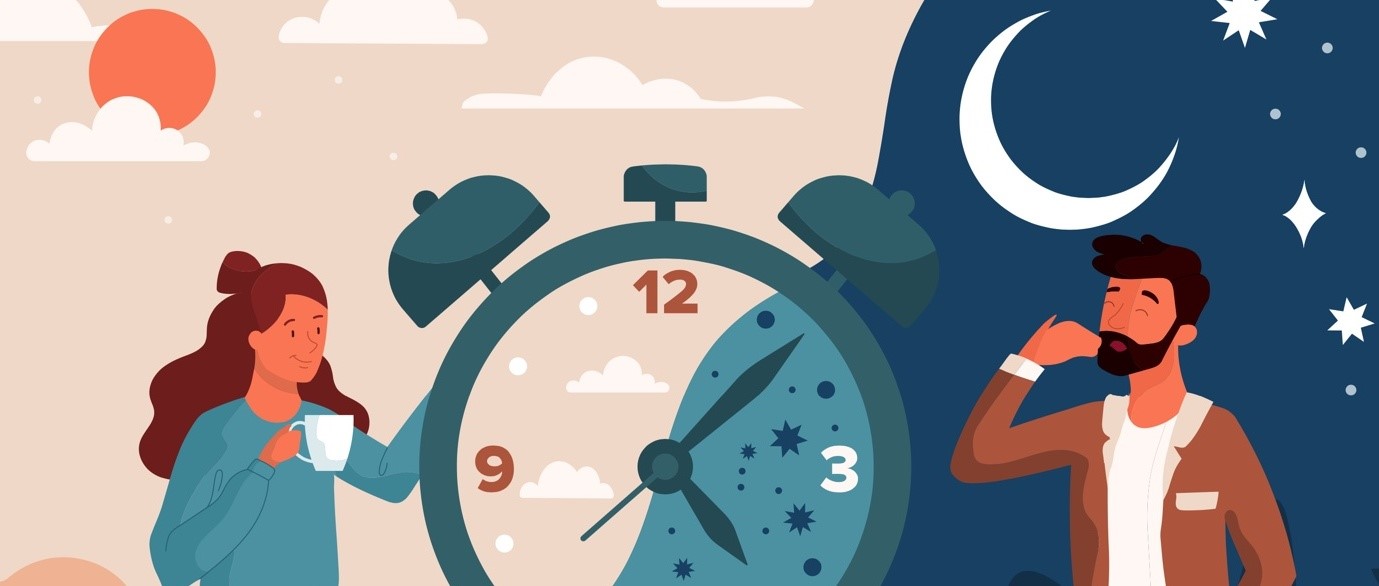
Comment rétablir votre rythme de sommeil avec une routine de coucher saine
Revu par Dr Krishna Vakharia, MRCGPDernière mise à jour par Lawrence HigginsDernière mise à jour 26 Aug 2024
Respecte les directives éditoriales
- TéléchargerTélécharger
- Partager
- Language
- Discussion
- Version audio
- Ajouter aux sources préférées sur Google
A good sleep schedule helps you get the right amount of rest each night and stops you building up a 'sleep debt' that leaves you not feeling at your best. What makes a good sleep schedule, and how does a healthy bedtime routine help you to adopt one?
Why is a sleep schedule so important?
As you sommeil, your body repairs and restores itself, and your brain consolidates memories and retains useful information.
But what's the perfect amount of sleep? The short-term effects of lack of sleep, can cause slower reactions and brain fog to irritability and low mood. Research, shows that lack of sleep is associated with poor heart health and poor mental health. But too much sleep is also linked to health issues.
What is a good sleep schedule?
A good sleep schedule or bedtime routine helps you get the right amount of rest. UKCP psychotherapist Heather Darwall-Smith explains: "On average, adults need 7-9 hours of sleep a night. Making sure you have enough time to get the sleep you need is the first step to improving sleep."
Your body clock
Every cell in your body has a biological clock which keeps near perfect time as it is aligned with the near 24-hour cycle of light and dark. Known as circadian rhythms, this tells your body when to eat or sleep.
This timing is biological and is fundamental to managing how much sleep you need as well as the timing. It aligns with a second process - sleep pressure - which needs to be high to make you sleepy, and together they create a sleep window which is your ideal time to sleep.
Adopting a sleep schedule that wakes you up at the same time each day is one effective way of keeping your internal clock on track.
What's your sleep debt?
According to Darwall-Smith, lots of us carry a huge 'sleep debt', meaning we're functioning on less sleep than we need to feel at our best. The tricky thing is, this doesn't always mean our lights are out before heads hit pillows each night. We can still struggle to fall asleep, get back to sleep, or find ourselves waking too early.
Darwall-Smith says:
A typical sleep pattern that is easily fixed looks like this:
Monday-Thursday: bedtime 12.00 pm, fall asleep around 1 am having been on phone, up at 7 am.
Friday-Saturday: bedtime 1-2 am, up at 9 am.
Sunday: bedtime 9 pm but can't get to sleep, up at 7 am.
The potential issues here are as follows:
Monday-Thursday: getting approximately six hours of sleep a night but in need of 7.5 hours. This creates a sleep debt of six hours over the four days.
Friday-Saturday: a late night and a lie-in results in seven to eight hours sleep. This will pay off the sleep debt, right? No, a sleep debt has to be paid off slowly. You can't recoup what you have missed by lying in. For many people, the late nights also include alcohol, which disrupts sleep quality, so the debt remains.
Sunday night: an attempt to get more sleep means you go to bed early. However, there might not be enough sleep pressure, so despite being tired, you're not sleepy enough to fall asleep - you are trying to work against your biological sleep process.
Monday morning: you're waking up a couple of hours earlier than the previous two days. It's like giving yourself jetlag - the circadian rhythm is misaligned, and you feel terrible.
Is this situation familiar? Darwall-Smith describes this as a combination of social jetlag and sleep debt.
"This can be sorted by instigating a consistent wake time - give or take 15 minutes - even if you've had a late night the previous evening. Allow yourself the time you need to get enough sleep but don't try to get too much - this won't work."
Tips for correcting a poor sleep schedule
Resetting your sleep schedule may sound straightforward on paper, but creating a new, healthy bedtime routine can be tricky, especially when we want to adjust the time of evening we start feeling sleepy.
This is why it's important to address any 'poor sleep hygiene' habits - activities that can seriously affect your ability to fall asleep. Darwall-Smith has some tips on forming healthy sleep habits:
Understand the importance of consistency but don't become obsessive - good sleep is an averaging out of a positive sleep routine and the right amount of sleep versus not perfect sleep. It's not possible to get a perfect night's sleep every night.
Dim or turn off the lights near bedtime - your brain is expecting darkness, so bright light exposure during night-time confuses your circadian rhythms and reduces melatonin production, which can make it hard to fall asleep or reduce sleep quality.
Don't eat too late - eating within three hours of your bedtime routine is associated with disturbed sleep as it confuses your internal clock and inhibits digestion of food.
Address your stress - cortisol, the stress hormone, can keep you awake. Darwall-Smith advises allowing time for regular rest and relaxation in your day.
Exercise during the day - moving more will help increase your sleep pressure but be mindful of exercise too close to bedtime. Your body needs to cool down to help you sleep and an intense session is also likely to spike your stress hormones. Experts recommend a minimum 1- to 2-hour gap before bed.
Can an 'all-nighter' fix your sleep schedule?
Different methods work for different people, but Darwall-Smith says that it takes time for your biological clock to come back into sync. She also cautions that resisting sleep for one whole night puts you at high risk of drowsy driving or lapsed attention. "If pulling an all-nighter, don't drive, operate machinery, or make significant decisions. It is likely to take a couple of days to recover."
How long does it take to get used to a new sleep schedule?
This can take around two weeks, in Darwall-Smith's experience. It's important to trust that your internal clock will adapt, which will gradually make your new bedtime routine and schedule a lot easier, and eventually become second nature.
Sélections des patients pour Sommeil et insomnie
Mode de vie sain
Un bon sommeil est important : ce n'est pas seulement une question d'heures
Un sommeil sain ne concerne pas seulement la quantité, obtenir un sommeil de qualité est essentiel pour votre bien-être général - et il joue également un rôle vital dans la santé de votre cœur. Nous examinons les recherches qui montrent comment votre sommeil peut influencer votre santé cardiovasculaire et métabolique.
par Lawrence Higgins

Mode de vie sain
Qu'est-ce que les trackers de sommeil et fonctionnent-ils ?
Les trackers de sommeil ont connu une popularité croissante ces dernières années. En tant que nation, nous semblons être très curieux de ce qui se passe dans notre corps pendant notre sommeil. Mais, avant de commencer à dépenser de l'argent pour des appareils de suivi du sommeil ou à télécharger des applications, il peut être utile de mieux comprendre comment ils fonctionnent et s'ils sont efficaces.
par Emily Jane Bashforth
À propos de l'auteurVoir la biographie complète

Amberley Davis
Rédacteur senior
BA (Hons), CPD
Amberley est une rédactrice senior chez Patient et a écrit de manière approfondie sur une gamme de sujets liés à la santé et au bien-être.
À propos du critiqueVoir la biographie complète

Dr Krishna Vakharia, MRCGP
Médecin-chef pour la santé, Optum UK
MBChB, MRCGP(2013), BMedSci (hons), DFSRH, DRCOG, PGDipDerm (Distn)
Le Dr Krishna Vakharia est un médecin généraliste du NHS. Elle est également examinatrice régulière pour le diplôme de troisième cycle en dermatologie pratique à l'Université de Cardiff, ainsi que médecin-chef pour la santé chez Optum UK.
Historique de l'article
Les informations sur cette page sont examinées par des cliniciens qualifiés.
Article également disponible en Anglais, Allemand, Espagnol, Français, Italien, Portugais, Hindi, Hébreu, Arabe, and Suédois.
Next review due: 30 Aug 2027
26 Aug 2024 | Dernière version
30 sept. 2022 | Publié à l'origine
Écrit par :
Amberley Davis

Demandez, partagez, connectez-vous.
Parcourez les discussions, posez des questions et partagez vos expériences sur des centaines de sujets de santé.

Vous ne vous sentez pas bien ?
Évaluez vos symptômes en ligne gratuitement
Inscrivez-vous à la newsletter Patient
Votre dose hebdomadaire de conseils de santé clairs et fiables - rédigés pour vous aider à vous sentir informé, confiant et maître de la situation.
En vous abonnant, vous acceptez notre Politique de confidentialité. Vous pouvez vous désabonner à tout moment. Nous ne vendons jamais vos données.
Plus sur la vie saine
- Certains aliments peuvent-ils imiter les effets des injections pour perdre du poids ?
- L'IMC est-il important ?
- Comment la perte de beaucoup de poids affecte-t-elle votre santé mentale ?
- Comment prendre soin de votre santé mentale cet hiver
- Comment réduire votre IMC et perdre du poids sainement
- Mis à jourComment empêcher le ronflement de gâcher votre sommeil
- Comment parler à votre enfant de son poids
- Mis à jourComment s'entraîner sans avoir l'impression de faire de l'exercice
- La course est-elle mauvaise pour vos genoux ?
- Maintenir les enfants actifs pendant Noël
- Pas tout à fait 'retour à la normale' : un guide pour la guérison familiale post-pandémique
- Détecter la dépression chez votre partenaire
- Mis à jourLes meilleurs exercices avec bandes de résistance pour développer les muscles
- Qu'est-ce que la 'bonne santé mentale' ?
- Qu'est-ce que la créatine ? Avantages, utilisations et risques
- Que faire si vous vous sentez seul
- Que faire lorsque votre enfant ne peut pas dormir