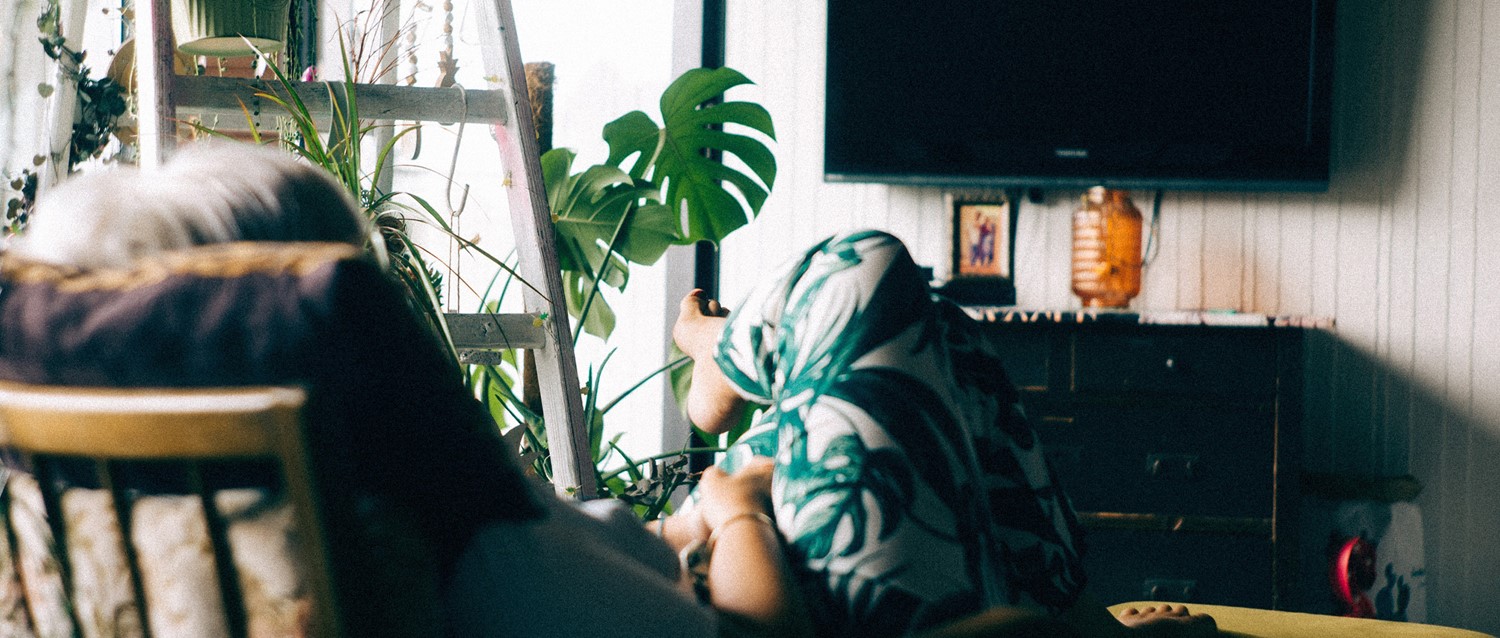
Éteignez la télévision dans la chambre pour éviter de prendre du poids
Revu par Natalie HealeyDernière mise à jour par Natalie HealeyDernière mise à jour 11 juin 2019
Respecte les directives éditoriales
- TéléchargerTélécharger
- Partager
- Language
- Discussion
- Version audio
- Ajouter aux sources préférées sur Google
Dormir avec une télévision ou une lumière allumée dans votre chambre peut être un facteur de risque de prise de poids, selon les scientifiques.

The study, conducted at the National Institutes of Health, is the first to suggest an association between exposure to artificial light at night while sleeping and la prise de poids. The researchers believe total darkness at bedtime could reduce the chances of becoming obese.
The results varied with the level of artificial light exposure. Using a small nightlight was not associated with weight gain, whereas those who slept with a light or television on were 17% more likely to have gained five kilograms or more over five years.
The team looked at data from over 40,000 women. The participants were aged 35-74, had no history of cancer or une maladie cardiaque, and were not shift workers or pregnant when the study began. Women were asked whether they slept with no light, a small nightlight, light outside of the room, or a light or television on in the room. Weight, height, waist and hip circumference and indice de masse corporelle (IMC) measurements were recorded at the start of the study, and five years later at the end.
Dr Chandra Jackson, head of the NIEHS Social and Environmental Determinants of Health Equity Group, and one of the study's co-authors said: "Humans are genetically adapted to a natural environment consisting of sunlight during the day and darkness at night. Exposure to artificial light at night may alter hormones and other biological processes in ways that raise the risk of health conditions like l'obésité."
Of course, other factors may explain the association between artificial light and weight gain. But the researchers say their findings did not change when they controlled the data for characterisations that may be associated with artificial light exposure at night or weight gain, such as age, children in the home, race, calories consumed and physical activity.
Dr Michelle Miller, associate professor of biochemical medicine at the University of Warwick, said the research was promising but pointed out there were a number of limitations with the methods used.
"The study was only conducted in women; measures of light exposure were self-reported and non-quantifiable and sleep duration was also self-reported. The findings are however consistent with current advice that sleeping environments should be as dark as possible."
Sélections des patients pour Obésité et perte de poids
Mode de vie sain
Certains aliments peuvent-ils imiter les effets des injections pour perdre du poids ?
Weight loss injections have become a rapidly growing medical option for shedding pounds. To qualify, you must meet specific criteria. If you are eligible, you can pay privately to skip long waitlists. On the NHS, access can take much longer. If you find yourself stuck in the middle - unable to afford private care but waiting indefinitely for a prescription - there may be another way. We asked a nutritionist which foods and habits could naturally help curb appetite and support weight loss without medicine.
par Victoria Raw
Mode de vie sain
Problèmes causés par le fait d'être en sous-poids
Les médias regorgent d'histoires alarmantes sur le nombre de personnes obèses et les dégâts que le poids excessif cause à notre santé. Mais que se passe-t-il lorsque notre corps a moins de graisse ou de nutriments essentiels que ce dont il a besoin pour une bonne santé ?
par Dr Sarah Jarvis
Questions fréquemment posées
What is the recommended sleeping environment regarding light?
The findings consistently suggest that sleeping environments should be as dark as possible to potentially reduce the risk of health conditions such as obesity.
How reliable is this study on light exposure and weight gain?
While the research is considered promising, there were some limitations. Measures of light exposure and sleep duration were self-reported by participants and not objectively quantified. Also, the study was conducted exclusively in women.
Could other lifestyle factors explain the link between artificial light and weight gain?
The researchers did consider other factors like age, presence of children in the home, race, calorie intake, and physical activity. However, the association between artificial light and weight gain remained even after accounting for these variables.
Does having a small nightlight increase the risk of weight gain?
The study found no association between using a small nightlight and weight gain. The increased risk was observed in those who slept with a brighter light or a television on.
À propos de l'auteurVoir la biographie complète

Natalie Healey
Journaliste indépendante
Licence (Hons) en Sciences Biomédicales
Elle est une journaliste de santé basée à Londres qui écrit sur la science et la médecine depuis plusieurs années. Elle est l'ancienne responsable éditoriale chez Patient.
À propos du critiqueVoir la biographie complète
Natalie Healey
Journaliste indépendante
Licence (Hons) en Sciences Biomédicales
Elle est une journaliste de santé basée à Londres qui écrit sur la science et la médecine depuis plusieurs années. Elle est l'ancienne responsable éditoriale chez Patient.
Historique de l'article
Les informations sur cette page sont examinées par des cliniciens qualifiés.
Article également disponible en Anglais, Allemand, Espagnol, Français, Italien, Portugais, Hindi, Hébreu, Arabe, and Suédois.
11 juin 2019 | Dernière version

Demandez, partagez, connectez-vous.
Parcourez les discussions, posez des questions et partagez vos expériences sur des centaines de sujets de santé.

Vous ne vous sentez pas bien ?
Évaluez vos symptômes en ligne gratuitement
Inscrivez-vous à la newsletter Patient
Votre dose hebdomadaire de conseils de santé clairs et fiables - rédigés pour vous aider à vous sentir informé, confiant et maître de la situation.
En vous abonnant, vous acceptez notre Politique de confidentialité. Vous pouvez vous désabonner à tout moment. Nous ne vendons jamais vos données.
Plus sur la vie saine
- Les 5 meilleures applications pour un Dry January en 2024
- 5 façons de prendre soin de votre santé mentale ce Noël
- 7 ways to ease 'morning dread' during perimenopause
- Certains aliments peuvent-ils imiter les effets des injections pour perdre du poids ?
- Démystifier les stéréotypes et mythes sur les personnes transgenres
- Les régimes drastiques fonctionnent-ils vraiment pour une perte de poids saine ?
- Avez-vous vraiment besoin de marcher 10 000 pas par jour ?
- L'IMC est-il important ?
- Dr Krishna Vakharia : Un regard en arrière - et vers l'avant
- Votre routine d'exercice vous donne-t-elle de l'acné ?
- Devriez-vous tenir un journal de rêves ?
- Vous envisagez d'essayer la baignade en pleine nature ? Lisez ceci d'abord
- Marche, jogging, répétition : qu'est-ce que le Jeffing ?
- Que signifie être intersexe ?
- Que faire lorsque votre enfant ne peut pas dormir
- Pourquoi être gentil aide les autres et vous profite aussi
- Pourquoi les jeunes LGBTQ+ ont-ils une expérience moins favorable des soins contre le cancer ?