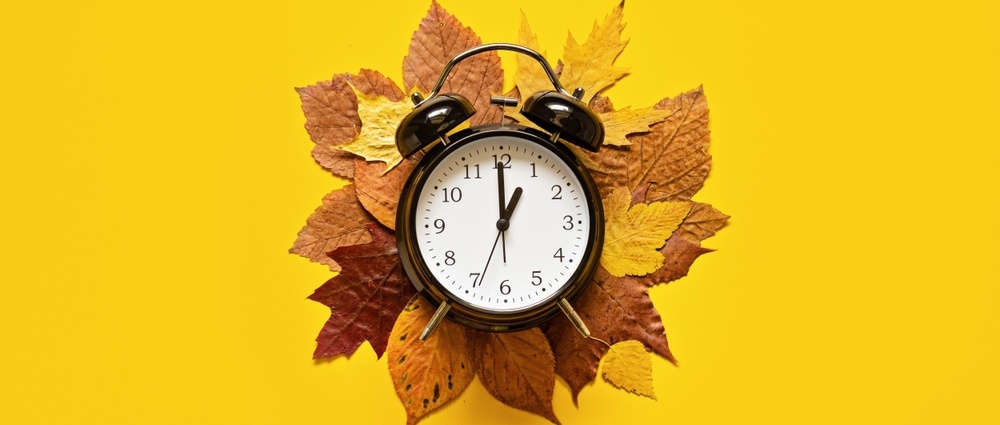
Heure d'été : Pourquoi le changement d'heure peut affecter notre santé
Revu par Dr Colin Tidy, MRCGPDernière mise à jour par Lynn StephenDernière mise à jour 15 Oct 2025
Respecte les directives éditoriales
- TéléchargerTélécharger
- Partager
- Language
- Discussion
- Version audio
- Ajouter aux sources préférées sur Google
The days are getting colder and shorter, which means autumn has arrived in the UK. Soon, the clocks will jump back by an hour to mark the end of Daylight Savings Time or British Summer Time. Although this will give us an extra hour in bed, the clocks changing could have an impact on our health.

Why do our clocks change?
In Britain, the clocks will move back by one hour at 2am on Sunday 26th October. We change the clocks to make better use of natural daylight in the morning.
Between March and October - during Daylight Saving Time - an hour of daylight is borrowed from the morning and added to the end of the day. At the end of October, we push the clocks back and return to standard time or Greenwich Mean Time.
The United States, Canada, Australia and New Zealand - as well as European countries such as France, Germany, Italy, Poland and Spain - also change their clocks.
Every year, the clock change causes a discussion about whether we should continue the practice. Some people welcome the change as it marks the start of a new season, but others argue that it’s an inconvenience.
However, some researchers suggest that changing the clocks can have a serious effect on our health because of the disruption to our circadian rhythms.
Circadian rhythms are physical, mental and behavioural changes that follow a 24-hour cycle, regulating things such as alertness, sleepiness et appétit. These processes tend to be aligned with the cycle of day and night.
How does the clocks changing affect health?
According to research, moving our clocks forward or back by an hour can disturb these natural rhythms - leading to several health issues.
Increase in mood disorders
Research has linked the clocks changing to an increase in mood disorders such as dépression ou trouble affectif saisonnier. When the clocks go forward in the spring, it means we have darker mornings and lighter evenings.
Less morning light can lower levels of the mood-boosting hormone serotonin, which can affect how you feel emotionally - especially if you already have a mental health issue such as depression.
Research has also linked the clocks going back to mood disorders. A US study found an 11% increase in depressive episodes during the switch from daylight saving to standard time.
Disrupted sleep
The clocks changing can also affect our sleep schedules, which in turn can affect our mood and ability to concentrate. The shift may mean we go to bed and wake up earlier or later than usual - and the disruption could lead to insomnie or interrupted sleep.
Although these issues are usually temporary - lasting a few days or weeks - it can make us feel tired and foggy.
Ceci fatigue may also lead to accidents. A study of 732,000 car accidents over two decades found that the annual switch to Daylight Saving Time is associated with a 6% increase in fatal car crashes that week.
Increased chance of cardiovascular disease
The disruption to our circadian rhythms may also be linked to heart disease, according to some studies - although the exact reason why is unknown.
A study review found that the chance of heart attacks increased “modestly but significantly” after the shift to daylight saving time in the spring but not in winter clock change.
According to the researchers, the abrupt change to the ‘sleep-wake cycle’ has been linked to inflammation and imbalances in the nervous system.
Another study found that moving into daylight saving time is associated with a higher chance of maladie cardiovasculaire, mental health issues and immune-related disorders.
How to manage the clocks changing
Get fresh air
Getting l'extérieur and exercising frequently are both useful ways to help you reset your internal body clock. Going for a walk first thing after you wake up may help you adjust to the day after the clocks change.
Avoid caffeine
Stimulants such as la caféine can keep you awake and throw off the natural balance between sleep and wakefulness. If you are having trouble sleeping at night, it may help to avoid le café after midday.
Limit light before bed
Artificial light exposure at night can interfere with your circadian rhythm. Try to avoid using electronic devices that emit de la lumière bleue - such as phones and laptops - in the lead-up to bedtime.
Keep naps short and early in the afternoon
When you’re feeling tired, it’s tempting to have a nap - but longer naps or napping later in the day can mean you struggle to sleep at night. If you do have a nap, keep it short at around 20 minutes.
Follow a consistent sleep schedule
Sticking to a heure du coucher or morning wake-up time can help your body adjust to a stable circadian rhythm. Get your bedroom ready for a good night’s sleep by making it dark and comfortable. Try to relax before bed, for example, by having a bath or reading a book.
Seek help if you’re struggling with your mental health
If you’re experiencing dépression, l'anxiété or another santé mentale problem, it’s important to speak to your doctor for advice. You can also auto-référencement pour le conseil on the NHS.
Sélections des patients pour Dépression
Santé mentale
Comment parler aux gens de votre santé mentale
Demander de l'aide est souvent la première étape pour aller mieux et le rester, mais parler d'un problème de santé mentale n'est pas toujours facile. Il est normal de se sentir nerveux à l'idée de parler de sa santé à un ami ou un membre de la famille de confiance - et s'adresser à votre médecin ou employeur pour obtenir de l'aide peut sembler accablant.
par Lawrence Higgins
Santé mentale
Qu'est-ce que la 'bonne santé mentale' ?
Nous voulons tous nous sentir bien, tant mentalement que physiquement. Mais ce que signifie se sentir bien - surtout en termes de santé mentale - varie pour chacun de nous. Nous avons tous besoin de choses différentes pour nous sentir au mieux.
par Lynn Stephen
À propos de l'auteurVoir la biographie complète

Lydia Smith
Rédacteur de reportages
Licence, Master, MSc
Lydia Smith est une journaliste primée et rédactrice spécialisée qui a beaucoup écrit sur la santé des femmes et la santé mentale. Elle prépare actuellement un MSc en psychologie.
À propos du critiqueVoir la biographie complète

Dr Colin Tidy, MRCGP
Médecin généraliste, Auteur médical
MBBS, MRCGP, MRCP (Paediatrics), DCH
Le Dr Colin Tidy est un médecin du NHS, basé dans l'Oxfordshire.
Historique de l'article
Les informations sur cette page sont examinées par des cliniciens qualifiés.
Article également disponible en Anglais, Allemand, Espagnol, Français, Italien, Portugais, Hindi, Hébreu, Arabe, and Suédois.
Next review due: 15 Oct 2028
15 Oct 2025 | Dernière version
23 oct. 2023 | Publié à l'origine
Écrit par :
Lydia Smith

Demandez, partagez, connectez-vous.
Parcourez les discussions, posez des questions et partagez vos expériences sur des centaines de sujets de santé.

Vous ne vous sentez pas bien ?
Évaluez vos symptômes en ligne gratuitement
Inscrivez-vous à la newsletter Patient
Votre dose hebdomadaire de conseils de santé clairs et fiables - rédigés pour vous aider à vous sentir informé, confiant et maître de la situation.
En vous abonnant, vous acceptez notre Politique de confidentialité. Vous pouvez vous désabonner à tout moment. Nous ne vendons jamais vos données.
Plus sur la santé mentale
- Construire des habitudes plus saines avec Holly Health
- Établir des limites saines pour un nouveau départ en début d'année
- Le rire 'prescrit' peut-il aider les gens à se remettre d'un traumatisme ?
- Le stress peut-il provoquer des crises cardiaques ?
- Faire face au deuil après la perte d'un être cher à cause d'un cancer du poumon
- Gérer la dépression et l'anxiété causées par l'acné adulte
- Comment les étudiants et les enseignants peuvent surmonter le stress des examens
- Comment faire face à l'anxiété liée au changement climatique
- Comment faire face à la mort d'un animal de compagnie
- Comment surmonter votre peur du dentiste
- Comment améliorer votre estime de soi et être plus bienveillant envers vous-même
- Comment gérer le stress lorsqu'on vit avec une cardiomyopathie
- Comment surmonter la peur de l'avion
- Comment parler de la mort aux enfants
- Gérer le deuil lors de votre premier Noël sans un être cher
- Plus que du simple divertissement : Jeanie Y. Chang sur les K-dramas et la santé mentale
- Qu'est-ce que le syndrome sérotoninergique et quelles en sont les causes ?
- Qu'est-ce que la masculinité toxique et comment affecte-t-elle les hommes ?
- Pourquoi est-ce que je me sens déprimé au Nouvel An ?
- Pourquoi utilisons-nous l'humour noir comme mécanisme d'adaptation ?