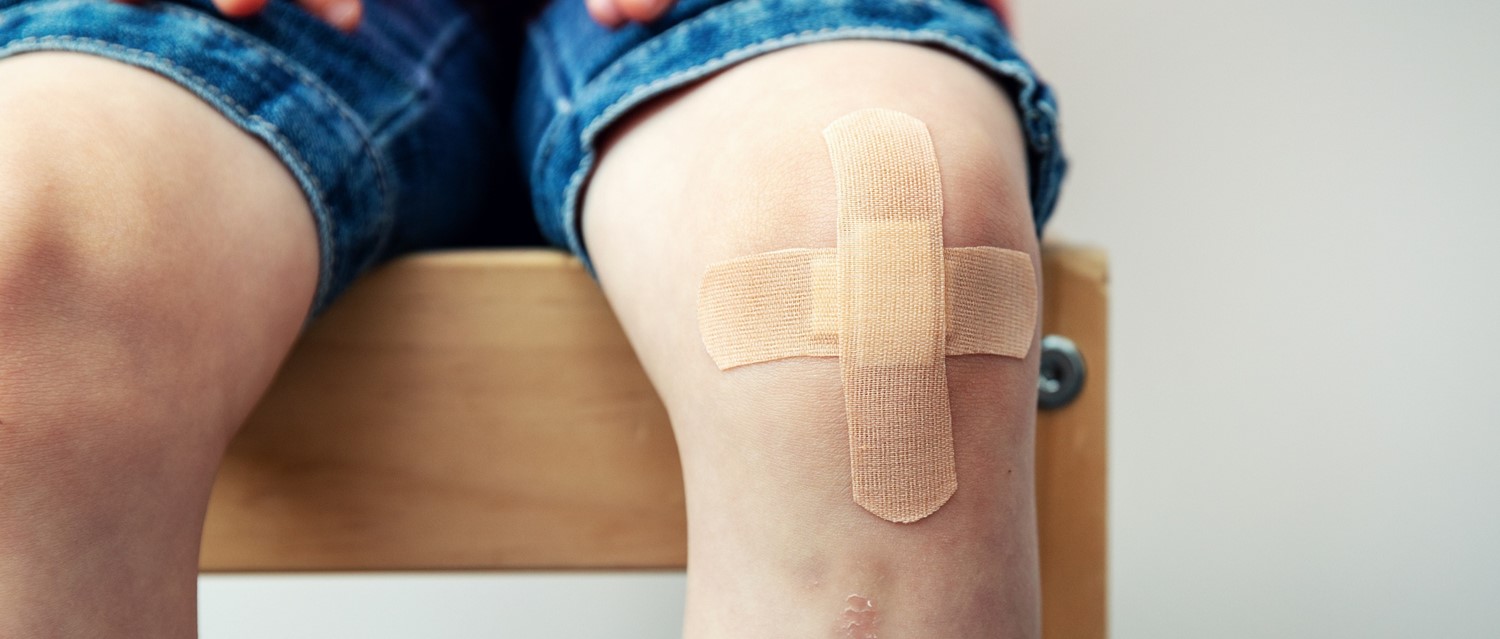
Comment s'auto-enseigner les premiers secours
Revu par Dr Sarah JarvisDernière mise à jour par Andrea DowneyDernière mise à jour 30 Nov 2020
Respecte les directives éditoriales
- TéléchargerTélécharger
- Partager
- Language
- Discussion
- Version audio
- Ajouter aux sources préférées sur Google
Sauriez-vous quoi faire si quelqu'un s'étouffait ? Ou s'il perdait connaissance ? Connaître les premiers secours peut faire la différence entre la vie et la mort, c'est pourquoi il est important de connaître les bases.
Whatever the reason you've put off learning, now is the time to teach yourself some basic first aid. It's not as difficult as you may think and there are plenty of online resources you can use in your own time.
Dr Lynn Thomas, medical director at St John Ambulance, explains the importance of knowing first aid and the basic skills you should have.
Resources and courses
First of all, Dr Thomas points to a wealth of online resources developed by St John Ambulance and the British Red Cross. You can find all you need to know through these resources.
But it's always good to book a course so you learn from a trained professional. Due to coronavirus, the majority of the course material is now taught online, so you can do it in the comfort of your own home.
St John Ambulance also has a free-to-download app which takes you through what to do, step by step, should you ever find yourself in an emergency and needing to perform first aid.
"One of the things I always say about first aid is that you don't know when you're going to need it. It's much better to know about it before you need it rather than trying to work out what to do when something happens," Dr Thomas says.
"We are moving towards making sure there's first aid training available online wherever you are in the world. There are lots of resources online, but it's also really good to do some hands-on first aid training at some point."
The basics
There's a very simple way to remember what to do in an emergency, particularly if someone is unconscious: DRABC.
D: check for any danger.
R: check to see if the person is responsive.
A: check their airways for any obstructions.
B: check if they are respiration.
C: check their circulation. Do they have a pulse?
"If you have that in your mind, you will follow a routine. If you come across someone who has collapsed, you don't want to have to stop and think about it," Dr Thomas says. "The important thing is to know when to call for help as well. If someone is not responsive, call for help and then start first aid. You don't want to delay."
A 999 call operator can stay on the phone and talk you through what to do until help arrives. And if the person is responsive you can still help before paramedics arrive.
"Everybody can do something to help, even if that's just sitting next to that person keeping them calm until help arrives," Dr Thomas adds.
Cardiac arrest
There are three situations Dr Thomas says everyone should be prepared for: cardiac arrest, choking and severe bleeding.
"If someone is in cardiac arrest you go to DRABC," Dr Thomas says. "If their heart has stopped or they're not breathing then you need to start chest compressions."
At the moment, due to COVID-19, it is recommended that you find something to cover the person's mouth with, like a face mask, to do rescue breaths whilst limiting the risk of catching coronavirus. If you cannot find anything then continue with chest compressions without rescue breaths. St John Ambulance have up-to-date directives on COVID-safe CPR on their website.
"You put your hands on their chest, linked together so the heel of your hand is on the lower part of their chest bone, and then you have to start pressing," Dr Thomas explains. "You have to press quite hard and quite fast."
It's hard to keep the right pace of compressions, so St John recommends you push down on the person's chest to the beat of Stayin' Alive by the Bee Gees.
Choking
Another potentially serious situation is if someone is choking.
"Try to see if they can cough up whatever the obstruction is themselves and then you start with back slaps," Dr Thomas says. "Do five back slaps. If that doesn't work, stand behind them and put your hands together into a fist at the bottom of their breastbone and thrust upwards. It's called an abdominal thrust or Heimlich manoeuvre.
"If you've done that five times and that doesn't dislodge it, make sure you've called for help and go back to doing five back slaps then five abdominal thrusts. Keep going until help arrives or the obstruction is cleared."
If at any point they lose consciousness, you need to start chest compressions, like you would for someone who is having a cardiac arrest, she adds.
Severe bleeding
"If someone is bleeding heavily you need to put pressure on the wound with whatever you've got, ideally something clean," Dr Thomas explains. This could be something like a tea towel, clothing or other material.
"But stopping the bleeding is more important than making sure it's really clean - we can deal with the wound being contaminated."
Once you've put pressure on the wound you should elevate it above heart level to try to stem the blood flow. For example, if they've cut their arm badly you should help them hold it above their head while keeping pressure on the wound.
There are also occasions where putting pressure on the wound isn't enough, like when an artery is damaged.
"You have to push quite hard, but if you can't stop it by putting pressure on then you need to make a tourniquet. You can only do this if it's a limb; anywhere else you just have to put as much pressure on as possible," Dr Thomas says.
"Take a belt or scarf or whatever you've got, put it as close as possible to where the injury is and then tie it really tight to try to stop the blood flow. You often can't get it tight enough just by pulling, so if you have one, stick a pen between the knot and turn it to make it tighter."
And what about if you come across someone who has an object in their wound, like a shard of glass?
"If you find somebody with something in a wound, don't take it out - leave it in but try to put pressure around it," Dr Thomas adds.
First aid in children
First aid in children differs slightly to how you would treat an adult, Dr Thomas says.
The biggest difference is how to deal with choking. "What you do with choking in children is different, depending on the age and size of the child, to what you do in adults," Dr Thomas explains.
"For a choking baby, for instance, you wouldn't do Heimlich manoeuvres. You need to lay the baby over your thighs with their head down and one hand on their chest; then you use the heel of your other hand to bash on their back to try to dislodge whatever is in their airway.
"With children you have them standing up a little bit more and again you do the back slaps to see if they can cough it out."
Dealing with a cardiac arrest in children or babies also involves slightly different procedures, although the principles are the same.
The most important thing to do in all situations, whether it's children or adults, is to call for help as soon as possible, Dr Thomas says. Once help is one the way you can start first aid until paramedics arrive to take over.
If you want to find out more about learning first aid, you can do so on the St John Ambulance website.
Sélections des patients pour Premiers secours

Traitement et médicaments
L'importance d'apprendre la RCP
Selon la British Heart Foundation (BHF), 30 000 personnes font un arrêt cardiaque chaque année. Moins d'une personne sur dix survivra. L'arrêt cardiaque peut arriver à n'importe qui, n'importe où, à tout moment - et sans avertissement. Savoir comment pratiquer la RCP pourrait doubler les chances de survie d'une personne. Nous entendons des héros du quotidien qui ont sauvé des vies grâce à la RCP. Leurs histoires soulignent l'importance vitale d'apprendre cette compétence qui sauve des vies.
par Victoria Raw
Traitement et médicaments
4 conseils de premiers secours pour un Noël sûr et joyeux
C’est la période de l’année que nous attendons tous - l’occasion de nous détendre et de profiter de nos traditions de Noël préférées. Mais même avec l’ambiance chaleureuse et insouciante, il est bon de se rappeler que Noël peut aussi apporter quelques dangers supplémentaires dans votre maison. Alors que les festivités s’intensifient, St John Ambulance partage quelques conseils de premiers secours simples pour que la saison reste joyeuse et en sécurité.
par Victoria Raw
À propos de l'auteur

Andrea Downey
À propos du critiqueVoir la biographie complète

Dr Sarah Jarvis
Consultant Clinique
MA (Cantab), BM, BCh (Oxon), DRCOG, FRCGP, MBE
Après avoir suivi une formation en médecine à Cambridge et Oxford, le Dr Sarah Jarvis MBE est devenue médecin généraliste.
Historique de l'article
Les informations sur cette page sont examinées par des cliniciens qualifiés.
Article également disponible en Anglais, Allemand, Espagnol, Français, Italien, Portugais, Hindi, Hébreu, Arabe, and Suédois.
30 Nov 2020 | Dernière version

Demandez, partagez, connectez-vous.
Parcourez les discussions, posez des questions et partagez vos expériences sur des centaines de sujets de santé.

Vous ne vous sentez pas bien ?
Évaluez vos symptômes en ligne gratuitement
Inscrivez-vous à la newsletter Patient
Votre dose hebdomadaire de conseils de santé clairs et fiables - rédigés pour vous aider à vous sentir informé, confiant et maître de la situation.
En vous abonnant, vous acceptez notre Politique de confidentialité. Vous pouvez vous désabonner à tout moment. Nous ne vendons jamais vos données.
Plus sur le traitement et les médicaments
- Les exercices faciaux sont-ils bénéfiques pour le sommeil, la parole et la santé bucco-dentaire ?
- L'hypnothérapie fonctionne-t-elle pour l'anxiété ?
- Pas de panique : 5 bienfaits pour la santé du sauna sous les projecteurs
- Avoir des relations sexuelles après une vasectomie
- Comment éviter les symptômes de sevrage des antidépresseurs
- Comment gérer les effets secondaires de Mounjaro et Wegovy
- Labioplasties – qu'est-ce que c'est et sont-elles médicalement nécessaires ?
- Moyens pratiques pour gérer vos médicaments à la maison
- Que se passe-t-il lorsque les médicaments interagissent
- Quels dommages la thérapie de conversion peut-elle causer et pourquoi n'est-elle pas interdite ?
- Qu'est-ce que la #MedSafetyWeek et le programme de la Carte Jaune de la MHRA ?
- Qu'est-ce que le syndrome sérotoninergique et quelles en sont les causes ?
- Ce que c'est d'être sur la liste d'attente pour une greffe d'organe
- Quelles thérapies peuvent traiter le TSPT ?
- Que faire si votre médicament n'est pas disponible
- À quoi s'attendre lors de votre consultation en pharmacie
- Qui est éligible pour les injections de perte de poids ?
- Pourquoi les antibiotiques ne devraient pas être surutilisés
- La prise d'antidépresseurs entraîne-t-elle vraiment une prise de poids ?