CDKL5 deficiency disorder
Dernière mise à jour 19 juil. 2024
Respecte les directives éditoriales
- TéléchargerTélécharger
- Partager
- Language
- Discussion
- Version audio
- Ajouter aux sources préférées sur Google
CDKL5 deficiency disorder is characterised by seizures that begin in infancy, followed by significant delays in many aspects of development.
Description
CDKL5 deficiency disorder is characterised by seizures that begin in infancy, followed by significant delays in many aspects of development.
Seizures in CDKL5 deficiency disorder usually begin within the first 3 months of life, and can appear as early as the first week after birth. The types of seizures change with age, and may follow a predictable pattern. The most common types are generalized tonic-clonic seizures, which involve a loss of consciousness, muscle rigidity, and convulsions; tonic seizures, which are characterised by abnormal muscle contractions; and epileptic spasms, which involve short episodes of muscle jerks. Seizures occur daily in most people with CDKL5 deficiency disorder, although they can have periods when they are seizure-free. Seizures in CDKL5 deficiency disorder usually do not get better with treatment.
Development is impaired in children with CDKL5 deficiency disorder. Most have severe intellectual disability and little or no speech. The development of gross motor skills, such as sitting, standing, and walking, is delayed or not achieved. About one-third of affected individuals are able to walk independently. Fine motor skills, such as picking up small objects with the fingers, are also impaired; about half of affected individuals have purposeful use of their hands. Most people with this condition have vision problems (cortical visual impairment).
Other common features of CDKL5 deficiency disorder include repetitive hand movements (stereotypies), such as clapping, hand licking, and hand sucking; teeth grinding (bruxism); disrupted sleep; feeding difficulties; and gastrointestinal problems including constipation and backflow of acidic stomach contents into the esophagus (gastroesophageal reflux). Some affected individuals have episodes of irregular breathing. Distinctive facial features in some people with CDKL5 deficiency disorder include a high and broad forehead, large and deep-set eyes, a well-defined space between the nose and upper lip (philtrum), full lips, widely spaced teeth, and a high roof of the mouth (palate). Other physical differences can also occur, such as an unusually small head size (microcephaly), side-to-side curvature of the spine (scoliosis), and tapered fingers.
CDKL5 deficiency disorder was previously classified as an atypical form of Rett syndrome. These conditions have common features, including seizures, intellectual disability, and other problems with development. However, the signs and symptoms associated with CDKL5 deficiency disorder and its genetic cause are distinct from those of Rett syndrome, and CDKL5 deficiency disorder is now considered a separate condition.
Inheritance patterns
The source lists the following possible inheritance patterns: X-linked dominant. More than one pattern can apply in different cases.
Related genes
Other names
CDKL5 deficiency
CDKL5 disorder
CDKL5 encephalopathy
CDKL5-related epilepsy
CDKL5-related epileptic encephalopathy
Cyclin-dependent kinase-like 5 deficiency disorder
Early infantile epileptic encephalopathy 2
Related patient information and medicines

Patient information leaflet
Hémophilie
Hémophilie is a rare bleeding disorder that affects your ability to make a clot. The blood contains substances called clotting factors that work with platelets to form a clot. When you injure yourself the clot stops you bleeding. What is haemophilia. Hémophilie is a rare bleeding disorder caused by deficiency of clotting factors. Coagulation.
Patient information leaflet
Troubles de l'hypophyse
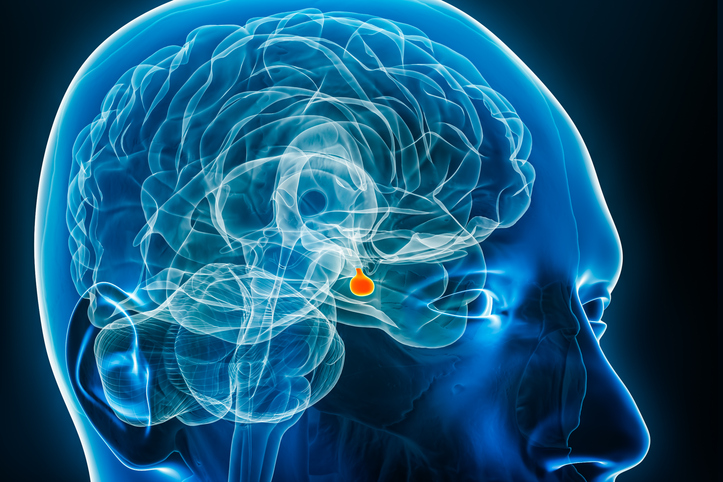
This leaflet gives a brief overview of the pituitary gland et le hormones it makes. The pituitary gland is found at the base of the brain and is 'pea-sized'. The pituitary gland is an overall controller of a number of other glands in the body, overseeing the function of these organs through hormones. Some of the pituitary gland disorders.

Patient information leaflet
Thrombophilie
It increases your risk of having a blood clot in a vein to twice the normal risk. This is a relatively low risk, so most people with prothrombin 20210 do not develop a blood clot. Protein C deficiency Protein C is a natural anticoagulant chemical in the blood. The deficiency can be genetic, or due to other conditions such as kidney disease. With.

Patient information leaflet
Maladies de stockage du glycogène
Maladies de stockage du glycogène are a group of inherited diseases. Newer treatment possibilities provide hope for an improved outlook (prognosis). Maladies de stockage du glycogène sont a group of inherited diseases that result from a lack of, or abnormal functioning of, one of the proteins (enzymes) involved in the conversion of glucose to glycogen or the.

Patient information leaflet
Déficit en alpha-1 antitrypsine
Déficit en alpha-1 antitrypsine est un inherited genetic condition. A genetic condition is one that can be passed on from parents through genes. In le déficit en alpha-1 antitrypsine le result of a genetic abnormality leads to lung and, in some people, liver damage. What is alpha-1 a... A1AT deficiency est an inherited genetic condition. A genetic.

Patient information leaflet
Syndrome des jambes sans repos
Around 30 - 50%. Most describe: A crawling sensation, or an electric feeling. For example, it occurs in some people who take antidepressants , antipsychotic... As a symptom of some other conditions - for example, severe kidney disease , Parkinson's disease , diabetes , and underactive thyroid gland. How common est restless legs syndrome. In the UK.
Lectures complémentaires et références
- CDKL5 deficiency disorder; MedlinePlus, National Library of Medicine.
- Bahi-Buisson N, Bienvenu T. CDKL5-Related Disorders: From Clinical Description to Molecular Genetics. Mol Syndromol. 2012 Apr;2(3-5):137-152. doi: 10.1159/000331333. Epub 2011 Sep 13.
- Bahi-Buisson N, Kaminska A, Boddaert N, Rio M, Afenjar A, Gerard M, Giuliano F, Motte J, Heron D, Morel MA, Plouin P, Richelme C, des Portes V, Dulac O, Philippe C, Chiron C, Nabbout R, Bienvenu T. The three stages of epilepsy in patients with CDKL5 mutations. Epilepsia. 2008 Jun;49(6):1027-37. doi: 10.1111/j.1528-1167.2007.01520.x. Epub 2008 Feb 7.
- Bahi-Buisson N, Villeneuve N, Caietta E, Jacquette A, Maurey H, Matthijs G, Van Esch H, Delahaye A, Moncla A, Milh M, Zufferey F, Diebold B, Bienvenu T. Recurrent mutations in the CDKL5 gene: genotype-phenotype relationships. Am J Med Genet A. 2012 Jul;158A(7):1612-9. doi: 10.1002/ajmg.a.35401. Epub 2012 Jun 7.
- Demarest ST, Olson HE, Moss A, Pestana-Knight E, Zhang X, Parikh S, Swanson LC, Riley KD, Bazin GA, Angione K, Niestroj LM, Lal D, Juarez-Colunga E, Benke TA. CDKL5 deficiency disorder: Relationship between genotype, epilepsy, cortical visual impairment, and development. Epilepsia. 2019 Aug;60(8):1733-1742. doi: 10.1111/epi.16285. Epub 2019 Jul 16.
- Fehr S, Downs J, Ho G, de Klerk N, Forbes D, Christodoulou J, Williams S, Leonard H. Functional abilities in children and adults with the CDKL5 disorder. Am J Med Genet A. 2016 Nov;170(11):2860-2869. doi: 10.1002/ajmg.a.37851. Epub 2016 Aug 16.
- Fehr S, Wilson M, Downs J, Williams S, Murgia A, Sartori S, Vecchi M, Ho G, Polli R, Psoni S, Bao X, de Klerk N, Leonard H, Christodoulou J. The CDKL5 disorder is an independent clinical entity associated with early-onset encephalopathy. Eur J Hum Genet. 2013 Mar;21(3):266-73. doi: 10.1038/ejhg.2012.156. Epub 2012 Aug 8.
- Hector RD, Kalscheuer VM, Hennig F, Leonard H, Downs J, Clarke A, Benke TA, Armstrong J, Pineda M, Bailey MES, Cobb SR. CDKL5 variants: Improving our understanding of a rare neurologic disorder. Neurol Genet. 2017 Dec 15;3(6):e200. doi: 10.1212/NXG.0000000000000200. eCollection 2017 Dec.
- Jahn J, Caliebe A, von Spiczak S, Boor R, Stefanova I, Stephani U, Helbig I, Muhle H. CDKL5 mutations as a cause of severe epilepsy in infancy: clinical and electroencephalographic long-term course in 4 patients. J Child Neurol. 2013 Jul;28(7):937-41. doi: 10.1177/0883073812451497. Epub 2012 Jul 25.
- Leonard H, Downs J, Benke TA, Swanson L, Olson H, Demarest S. CDKL5 deficiency disorder: clinical features, diagnosis, and management. Lancet Neurol. 2022 Jun;21(6):563-576. doi: 10.1016/S1474-4422(22)00035-7. Epub 2022 Apr 25.
- Mangatt M, Wong K, Anderson B, Epstein A, Hodgetts S, Leonard H, Downs J. Prevalence and onset of comorbidities in the CDKL5 disorder differ from Rett syndrome. Orphanet J Rare Dis. 2016 Apr 14;11:39. doi: 10.1186/s13023-016-0418-y.
- Mori Y, Downs J, Wong K, Anderson B, Epstein A, Leonard H. Impacts of caring for a child with the CDKL5 disorder on parental wellbeing and family quality of life. Orphanet J Rare Dis. 2017 Jan 19;12(1):16. doi: 10.1186/s13023-016-0563-3.
- Moseley BD, Dhamija R, Wirrell EC, Nickels KC. Historic, clinical, and prognostic features of epileptic encephalopathies caused by CDKL5 mutations. Pediatr Neurol. 2012 Feb;46(2):101-5. doi: 10.1016/j.pediatrneurol.2011.11.007.
- Muller A, Helbig I, Jansen C, Bast T, Guerrini R, Jahn J, Muhle H, Auvin S, Korenke GC, Philip S, Keimer R, Striano P, Wolf NI, Pust B, Thiels Ch, Fogarasi A, Waltz S, Kurlemann G, Kovacevic-Preradovic T, Ceulemans B, Schmitt B, Philippi H, Tarquinio D, Buerki S, von Stulpnagel C, Kluger G. Retrospective evaluation of low long-term efficacy of antiepileptic drugs and ketogenic diet in 39 patients with CDKL5-related epilepsy. Eur J Paediatr Neurol. 2016 Jan;20(1):147-51. doi: 10.1016/j.ejpn.2015.09.001. Epub 2015 Sep 10.
- Olson HE, Demarest ST, Pestana-Knight EM, Swanson LC, Iqbal S, Lal D, Leonard H, Cross JH, Devinsky O, Benke TA. Cyclin-Dependent Kinase-Like 5 Deficiency Disorder: Clinical Review. Pediatr Neurol. 2019 Aug;97:18-25. doi: 10.1016/j.pediatrneurol.2019.02.015. Epub 2019 Feb 23.
- Symonds JD, Zuberi SM, Stewart K, McLellan A, O'Regan M, MacLeod S, Jollands A, Joss S, Kirkpatrick M, Brunklaus A, Pilz DT, Shetty J, Dorris L, Abu-Arafeh I, Andrew J, Brink P, Callaghan M, Cruden J, Diver LA, Findlay C, Gardiner S, Grattan R, Lang B, MacDonnell J, McKnight J, Morrison CA, Nairn L, Slean MM, Stephen E, Webb A, Vincent A, Wilson M. Incidence and phenotypes of childhood-onset genetic epilepsies: a prospective population-based national cohort. Brain. 2019 Aug 1;142(8):2303-2318. doi: 10.1093/brain/awz195.
- Zhu YC, Xiong ZQ. Molecular and Synaptic Bases of CDKL5 Disorder. Dev Neurobiol. 2019 Jan;79(1):8-19. doi: 10.1002/dneu.22639. Epub 2018 Oct 19.
Historique de l'article
Article également disponible en Anglais, Allemand, Espagnol, Français, Italien, Portugais, Hindi, Hébreu, Arabe, and Suédois.
19 juil. 2024 | Dernière version
1 Nov 2017 | Publié à l'origine
Participez à la conversation
Partagez vos pensées ou expériences avec les autres dans notre communautés de patients.

Demandez, partagez, connectez-vous.
Parcourez les discussions, posez des questions et partagez vos expériences sur des centaines de sujets de santé.
Inscrivez-vous à la newsletter Patient
Votre dose hebdomadaire de conseils de santé clairs et fiables - rédigés pour vous aider à vous sentir informé, confiant et maître de la situation.
En vous abonnant, vous acceptez notre Politique de confidentialité. Vous pouvez vous désabonner à tout moment. Nous ne vendons jamais vos données.