Dopamine beta-hydroxylase deficiency
Dernière mise à jour 31 juil. 2024
Respecte les directives éditoriales
- TéléchargerTélécharger
- Partager
- Language
- Discussion
- Ask Patient
- Version audio
- Ajouter aux sources préférées sur Google
Dopamine beta-hydroxylase deficiency is a condition that affects the autonomic nervous system, which controls involuntary body processes such as the regulation of blood pressure and body temperature. The signs and symptoms of dopamine beta-hydroxylase deficiency are caused by a lack of norepinephrine, one of the main chemical messengers (neurotransmitters) of the autonomic nervous system.
Sélections vidéo pour Conditions génétiquesBibliothèque vidéo
Description
Dopamine beta-hydroxylase deficiency is a condition that affects the autonomic nervous system, which controls involuntary body processes such as the regulation of blood pressure and body temperature. The signs and symptoms of dopamine beta-hydroxylase deficiency are caused by a lack of norepinephrine, one of the main chemical messengers (neurotransmitters) of the autonomic nervous system.
Although the signs and symptoms of dopamine beta-hydroxylase deficiency can appear during infancy, people often do not receive a diagnosis until their symptoms worsen during adolescence. Early signs and symptoms may include droopy eyelids (ptosis) and low blood pressure (hypotension). Infants with dopamine beta-hydroxylase deficiency may also experience vomiting, dehydration, decreased body temperature, and low blood glucose (hypoglycemia), which may lead to frequent hospitalizations.
By adolescence or early adulthood, people with dopamine beta-hydroxylase deficiency often have a sharp drop in blood pressure upon standing (orthostatic hypotension), which can cause dizziness, blurred vision, or fainting. Affected individuals typically experience extreme fatigue during exercise (exercise intolerance) due to their problems maintaining a normal blood pressure.
Other features of dopamine beta-hydroxylase deficiency include nasal congestion, an inability to stand for a prolonged period of time, and retrograde ejaculation, which is a discharge of semen backwards into the bladder.
Symptoms of dopamine beta-hydroxylase deficiency may improve with treatment. If the condition is not treated, symptoms often worsen during adolescence.
Inheritance patterns
The source lists the following possible inheritance patterns: Autosomal recessive. More than one pattern can apply in different cases.
Related genes
Other names
DBH deficiency
Dopamine β-hydroxylase deficiency
Related patient information and medicines

Patient information leaflet
Syndrome des jambes sans repos
Restless legs syndrome (RLS) is sometimes called Willis-Ekbom disease after the doctors who first described it. Symptoms tend to become slowly worse over the years. It is thought that the cause may be a slight lack of, or imbalance of, some brain chemicals (neurotransmitters), especially one called dopamine. Dopamine agonists These are a group of.

Patient information leaflet
maladie de Parkinson
What is Parkinson's disease. Parkinson's disease is a progressive neurological degeneration of certain cells (called dopaminergic cells) within a specific part of the brain (substantia nigra). The deficiency of dopamine leads to a movement disorder avec médicaments pour la maladie de Parkinson disease symptoms. Parkinson's disease symptoms The brain cells and nerves affected.

Patient information leaflet
Prolactinome
A prolactinoma is a non-cancerous growth in the pituitary gland that makes a hormone called prolactin. Tucked away deep inside your brain is a gland called your pituitary gland. The medication is a type called dopamine agonists. These act on the pituitary gland to reduce the amount of prolactin it makes, and they can ... Dopamine agonists can be.

Patient information leaflet
Puis-je prendre Royal sun et Shiitake ensemble ?
Both Royal Sun (Agaricus blazei) and Shiitake (Lentinula edodes) mushrooms contain high levels of beta-glucans, which are substances that stimulate the immune system. Taking them together may cause your immune system to become overactive. Both mushrooms can lower blood sugar levels and thin the blood. Taking them together might increase the risk.
Patient information leaflet
Cétones dans l'urine
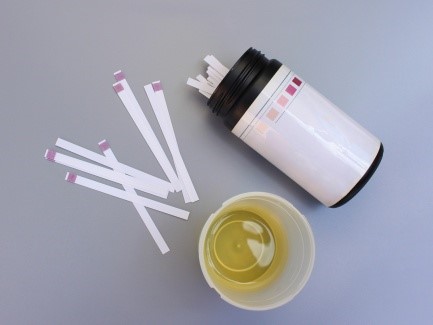
High levels of ketones in your body can cause: Tummy (abdominal) pain. Feeling sick (nausea). Being sick (vomiting). Diarrhoea. The ketones that most often appear in the urine when fat instead of glucose for energy is used are called acetoacetate and beta-hydroxybutyric acid. What are the causes of ketones in urine. The causes of high levels of.

Patient information leaflet
Thalassémie
Thalassémie est an inherited condition affecting le blood. There are different types, which vary from a mild condition to a serious or life-threatening condition. For the more severe forms of thalassaemia, modern treatment gives a good outlook, but lifelong monitoring and treatment are needed. There are different types of thalassaemia. Depending.
Lectures complémentaires et références
- Dopamine beta-hydroxylase deficiency; MedlinePlus, National Library of Medicine.
- Biaggioni I. Dopamine Beta-Hydroxylase Deficiency. 2003 Sep 4 [updated 2024 Sep 26]. In: Adam MP, Bick S, Mirzaa GM, Wallace SE, Amemiya A, editors. GeneReviews(R) [Internet]. Seattle (WA): University of Washington, Seattle; 1993-2026. Available from http://www.ncbi.nlm.nih.gov/books/NBK1474/
- Kim CH, Zabetian CP, Cubells JF, Cho S, Biaggioni I, Cohen BM, Robertson D, Kim KS; New Collective Author. Mutations in the dopamine beta-hydroxylase gene are associated with human norepinephrine deficiency. Am J Med Genet. 2002 Mar 1;108(2):140-7.
- Robertson D. The pathophysiology and diagnosis of orthostatic hypotension. Clin Auton Res. 2008 Mar;18 Suppl 1:2-7. doi: 10.1007/s10286-007-1004-0. Epub 2008 Mar 27.
- Senard JM, Rouet P. Dopamine beta-hydroxylase deficiency. Orphanet J Rare Dis. 2006 Mar 30;1:7. doi: 10.1186/1750-1172-1-7.
- Vincent S, Robertson D. The broader view: catecholamine abnormalities. Clin Auton Res. 2002 May;12 Suppl 1:I44-9. doi: 10.1007/s102860200018.
- Wassenberg T, Deinum J, van Ittersum FJ, Kamsteeg EJ, Pennings M, Verbeek MM, Wevers RA, van Albada ME, Kema IP, Versmissen J, van den Meiracker T, Lenders JWM, Monnens L, Willemsen MA. Clinical presentation and long-term follow-up of dopamine beta hydroxylase deficiency. J Inherit Metab Dis. 2021 May;44(3):554-565. doi: 10.1002/jimd.12321. Epub 2020 Oct 15.
Historique de l'article
Article également disponible en Anglais, Allemand, Espagnol, Français, Italien, Portugais, Hindi, Hébreu, Arabe, and Suédois.
31 juil. 2024 | Dernière version
1 Jul 2024 | Publié à l'origine
Partagez vos pensées ou expériences avec les autres dans notre communautés de patients.
Accès simple à des traitements fiables et à des services de santé en ligne.
Common conditions
Get help with common conditions through the NHS, without a GP appointment.





Inscrivez-vous à la newsletter Patient
Votre dose hebdomadaire de conseils de santé clairs et fiables - rédigés pour vous aider à vous sentir informé, confiant et maître de la situation.
En vous abonnant, vous acceptez notre Politique de confidentialité. Vous pouvez vous désabonner à tout moment. Nous ne vendons jamais vos données.