Familial focal epilepsy with variable foci
Dernière mise à jour 18 Aug 2020
Respecte les directives éditoriales
- TéléchargerTélécharger
- Partager
- Language
- Discussion
- Version audio
- Ajouter aux sources préférées sur Google
Familial focal epilepsy with variable foci (FFEVF) is an uncommon form of recurrent seizures (epilepsy) that runs in families. Seizures associated with FFEVF can begin at any time from infancy to adulthood. The seizures are described as focal or partial, which means they begin in one region of the brain and do not cause a loss of consciousness. In more than 70 percent of affected individuals, these seizures begin in one of two areas of the brain, either the temporal lobe or the frontal lobe. The region of the brain where the seizures start tends to stay the same over time. In rare instances, seizure activity that starts in one area spreads to affect the entire brain and causes a loss of consciousness, muscle stiffening, and rhythmic jerking. Episodes that begin as partial seizures and spread throughout the brain are known as secondarily generalized seizures.
Description
Familial focal epilepsy with variable foci (FFEVF) is an uncommon form of recurrent seizures (epilepsy) that runs in families. Seizures associated with FFEVF can begin at any time from infancy to adulthood. The seizures are described as focal or partial, which means they begin in one region of the brain and do not cause a loss of consciousness. In more than 70 percent of affected individuals, these seizures begin in one of two areas of the brain, either the temporal lobe or the frontal lobe. The region of the brain where the seizures start tends to stay the same over time. In rare instances, seizure activity that starts in one area spreads to affect the entire brain and causes a loss of consciousness, muscle stiffening, and rhythmic jerking. Episodes that begin as partial seizures and spread throughout the brain are known as secondarily generalized seizures.
Among family members with FFEVF, individuals may not have the same brain region affected (variable foci), meaning that one person's seizures may not begin in the same part of the brain as their affected relative.
Some individuals with FFEVF also have a brain malformation called focal cortical dysplasia. Seizures in these individuals are typically not well-controlled with medication.
Most people with FFEVF are intellectually normal, and there are no problems with their brain function between seizures. However, some people with FFEVF have developed psychiatric disorders (such as schizophrenia), behavioural problems, or intellectual disability. It is unclear whether these additional features are directly related to epilepsy in these individuals.
Inheritance patterns
The source lists the following possible inheritance patterns: Autosomal dominant. More than one pattern can apply in different cases.
Related genes
Other names
Familial partial epilepsy with variable foci
FFEVF
Partial epilepsy with variable foci
Related patient information and medicines
Patient information leaflet
Types de crises
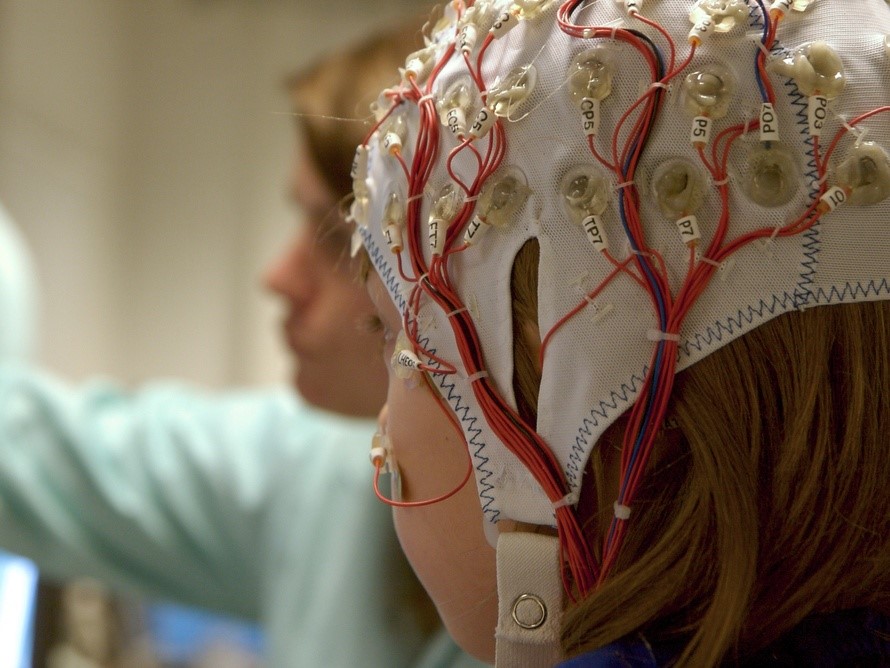
For more information, see the separate leaflet called Epilepsy and seizures. Types of epileptic seizures Seizures are divided into two main types - generalised and focal (used to be called partial). This is probably the reason for crises in in most people who have epilepsy; they have likely inherited a combination of different gene variants that.

Patient information leaflet
Convulsion fébrile
A febrile seizure is a convulsion that occurs in some children with a high temperature (fever). Febrile seizures are more common in children who have had a previous febrile seizure (3-5 out of 10 children who have had one febrile seizure will go on to have another one). They are also more common in children avec a family history of febrile.
Patient information leaflet
Crises focales
Il y a différents types de l'épilepsie, et different types of seizures. This leaflet is about focal seizures, which used to be called partial seizures. What is a focal seizure. A seizure is a problem caused by a sudden burst of electrical activity in the brain. With a focal seizure, the burst of electrical activity stays in one part of the brain..

Patient information leaflet
Lésions du lobe temporal
Temporal lobe epilepsy Seizures which begin in the crise du lobe temporal can cause a wide variety of symptoms. These symptoms may include... The seizure may also cause nice sensations and be enjoyable. Temporal lobe épilepsie can be treated with medicines that are used for l'épilepsie, but treatment will also depend on any underlying temporal lobe lesion. See.
Patient information leaflet
Vivre avec une maladie chronique
A long-term condition cannot be cured but its symptoms and complications may be controlled with treatment. Examples are arthritis, asthma, diabetes, epilepsy and high blood pressure. Long-term condition... What is a long-term condition. A long-term condition est an illness that cannot be cured mais can usually be controlled with medicines or other.

Patient information leaflet
Épilepsie
About 1 in 30 people in the UK develop epilepsy at some stage in their lives. However, epilepsy can begin at any age. What is epilepsy. Epilepsy is a long-lasting brain condition that causes people to have repeated seizures. It can cause different symptoms, from someone becoming unconscious and shaking, to someone behaving unusually for a short.
Lectures complémentaires et références
- Familial focal epilepsy with variable foci; MedlinePlus, National Library of Medicine.
- Baldassari S, Licchetta L, Tinuper P, Bisulli F, Pippucci T. GATOR1 complex: the common genetic actor in focal epilepsies. J Med Genet. 2016 Aug;53(8):503-10. doi: 10.1136/jmedgenet-2016-103883. Epub 2016 May 19.
- Baulac S, Ishida S, Marsan E, Miquel C, Biraben A, Nguyen DK, Nordli D, Cossette P, Nguyen S, Lambrecq V, Vlaicu M, Daniau M, Bielle F, Andermann E, Andermann F, Leguern E, Chassoux F, Picard F. Familial focal epilepsy with focal cortical dysplasia due to DEPDC5 mutations. Ann Neurol. 2015 Apr;77(4):675-83. doi: 10.1002/ana.24368. Epub 2015 Mar 13.
- Baulac S. Genetics advances in autosomal dominant focal epilepsies: focus on DEPDC5. Prog Brain Res. 2014;213:123-39. doi: 10.1016/B978-0-444-63326-2.00007-7.
- Baulac S. mTOR signaling pathway genes in focal epilepsies. Prog Brain Res. 2016;226:61-79. doi: 10.1016/bs.pbr.2016.04.013. Epub 2016 Jun 7.
- Dibbens LM, de Vries B, Donatello S, Heron SE, Hodgson BL, Chintawar S, Crompton DE, Hughes JN, Bellows ST, Klein KM, Callenbach PM, Corbett MA, Gardner AE, Kivity S, Iona X, Regan BM, Weller CM, Crimmins D, O'Brien TJ, Guerrero-Lopez R, Mulley JC, Dubeau F, Licchetta L, Bisulli F, Cossette P, Thomas PQ, Gecz J, Serratosa J, Brouwer OF, Andermann F, Andermann E, van den Maagdenberg AM, Pandolfo M, Berkovic SF, Scheffer IE. Mutations in DEPDC5 cause familial focal epilepsy with variable foci. Nat Genet. 2013 May;45(5):546-51. doi: 10.1038/ng.2599. Epub 2013 Mar 31.
- Ishida S, Picard F, Rudolf G, Noe E, Achaz G, Thomas P, Genton P, Mundwiller E, Wolff M, Marescaux C, Miles R, Baulac M, Hirsch E, Leguern E, Baulac S. Mutations of DEPDC5 cause autosomal dominant focal epilepsies. Nat Genet. 2013 May;45(5):552-5. doi: 10.1038/ng.2601. Epub 2013 Mar 31.
- Scheffer IE, Heron SE, Regan BM, Mandelstam S, Crompton DE, Hodgson BL, Licchetta L, Provini F, Bisulli F, Vadlamudi L, Gecz J, Connelly A, Tinuper P, Ricos MG, Berkovic SF, Dibbens LM. Mutations in mammalian target of rapamycin regulator DEPDC5 cause focal epilepsy with brain malformations. Ann Neurol. 2014 May;75(5):782-7. doi: 10.1002/ana.24126. Epub 2014 Apr 14.
- Sim JC, Scerri T, Fanjul-Fernandez M, Riseley JR, Gillies G, Pope K, van Roozendaal H, Heng JI, Mandelstam SA, McGillivray G, MacGregor D, Kannan L, Maixner W, Harvey AS, Amor DJ, Delatycki MB, Crino PB, Bahlo M, Lockhart PJ, Leventer RJ. Familial cortical dysplasia caused by mutation in the mammalian target of rapamycin regulator NPRL3. Ann Neurol. 2016 Jan;79(1):132-7. doi: 10.1002/ana.24502. Epub 2015 Dec 12.
- van Kranenburg M, Hoogeveen-Westerveld M, Nellist M. Preliminary functional assessment and classification of DEPDC5 variants associated with focal epilepsy. Hum Mutat. 2015 Feb;36(2):200-9. doi: 10.1002/humu.22723. Epub 2014 Nov 27.
- Weckhuysen S, Marsan E, Lambrecq V, Marchal C, Morin-Brureau M, An-Gourfinkel I, Baulac M, Fohlen M, Kallay Zetchi C, Seeck M, de la Grange P, Dermaut B, Meurs A, Thomas P, Chassoux F, Leguern E, Picard F, Baulac S. Involvement of GATOR complex genes in familial focal epilepsies and focal cortical dysplasia. Epilepsia. 2016 Jun;57(6):994-1003. doi: 10.1111/epi.13391. Epub 2016 May 13.
Participez à la conversation
Partagez vos pensées ou expériences avec les autres dans notre communautés de patients.

Demandez, partagez, connectez-vous.
Parcourez les discussions, posez des questions et partagez vos expériences sur des centaines de sujets de santé.
Inscrivez-vous à la newsletter Patient
Votre dose hebdomadaire de conseils de santé clairs et fiables - rédigés pour vous aider à vous sentir informé, confiant et maître de la situation.
En vous abonnant, vous acceptez notre Politique de confidentialité. Vous pouvez vous désabonner à tout moment. Nous ne vendons jamais vos données.