la maladie de Kawasaki
Dernière mise à jour 18 Aug 2020
Respecte les directives éditoriales
- TéléchargerTélécharger
- Partager
- Language
- Discussion
- Ask Patient
- Version audio
- Ajouter aux sources préférées sur Google
Kawasaki disease is a sudden and time-limited (acute) illness that affects infants and young children. Affected children develop a prolonged fever lasting several days, a skin rash, and swollen lymph nodes in the neck (cervical lymphadenopathy). They also develop redness in the whites of the eyes (conjunctivitis) and redness (erythema) of the lips, lining of the mouth (oral mucosa), tongue, palms of the hands, and soles of the feet.
Sélections vidéo pour Conditions génétiquesBibliothèque vidéo
Description
Kawasaki disease is a sudden and time-limited (acute) illness that affects infants and young children. Affected children develop a prolonged fever lasting several days, a skin rash, and swollen lymph nodes in the neck (cervical lymphadenopathy). They also develop redness in the whites of the eyes (conjunctivitis) and redness (erythema) of the lips, lining of the mouth (oral mucosa), tongue, palms of the hands, and soles of the feet.
Without treatment, 15 to 25 percent of individuals with Kawasaki disease develop bulging and thinning of the walls of the arteries that supply blood to the heart muscle (coronary artery aneurysms) or other damage to the coronary arteries, which can be life-threatening.
Inheritance patterns
The source lists the following possible inheritance patterns: Pattern unknown. More than one pattern can apply in different cases.
Related genes
Other names
Acute febrile mucocutaneous lymph node syndrome
Syndrome de Kawasaki
KD
Mucocutaneous lymph node syndrome
Related patient information and medicines

Patient information leaflet
la maladie de Kawasaki
Kawasaki disease is a rare condition that affects small to medium-sized blood vessels in the body. Kawasaki disease causes the the walls of the blood vessels to become inflamed and swollen (vasculitis). Kawasaki disease mainly affects children less than 5 years old. The ex... Kawasaki disease causes a high temperature (fever), a rash, and other.

Patient information leaflet
Maladie du foie et alcool
Abus d'alcool can lead to three main types of liver diseases: fatty liver , hepatitis and 'scarring' of the liver ( cirrhosis ). It can also lead to other health problems. This leaflet also includes information about non-alcoho... What is alcoholic liver disease. Dr Sarah Jarvis MBE, GP and Clinical Director at Patient.info Drinking too much.
Patient information leaflet
Stéatose hépatique non alcoolique
Stéatose hépatique non alcoolique (NAFLD) describes a range of conditions caused by a build-up de la graisse within liver cells. It is very common and in many cases is linked to being obese or overweight. Most people with NAFLD do not develop serious liver problems. In some people, the build-up of fat in the liver can lead to serious liver disease..
Patient information leaflet
Maladie rénale chronique
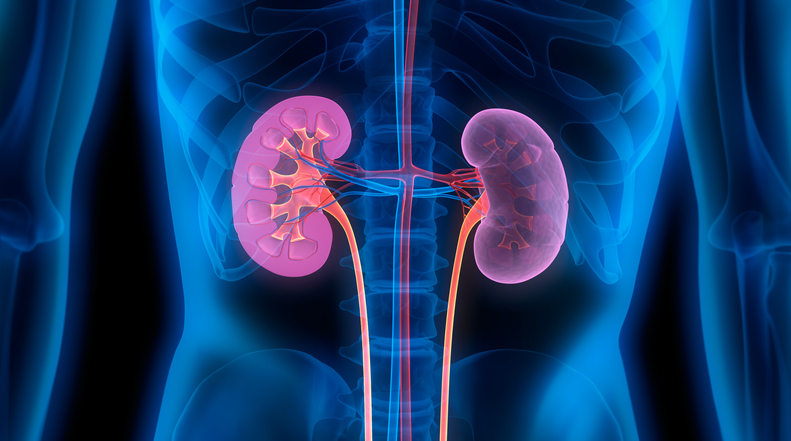
Maladie rénale chronique means that the kidneys are not working as well as would be expected. Various conditions can cause chronic kidney disease. Severity can vary but most cases are mild or moderate, occur in older people and do not cause symptoms. Chronic kidney disease tends to become worse gradually over months or years. What is chronic kidney.

Patient information leaflet
Maladie main-pied-bouche
Hand, foot and mouth disease is usually a short mild illness cela mainly affects children. Most children fully recover within ten days, and usually less. Serious complications occur rarely. This disease is not ... What is hand, foot and mouth disease. Hand, foot and mouth disease (HFMD) est due to an infection that usually causes a typical illness,.

Patient information leaflet
Régurgitation mitrale
The mitral valve is a heart valve that lies between the left atrium and left ventricle. The heart - mitral valve incompetence i88_l.jpg What is mitral regurgitation. Mitral regurgitation is sometimes called mitral insufficiency or mitral incompetence. In mitral regurgitation the valve does not close properly. This causes blood to leak back.
Lectures complémentaires et références
- la maladie de Kawasaki; MedlinePlus, National Library of Medicine.
- Burns JC. Kawasaki Disease update. Indian J Pediatr. 2009 Jan;76(1):71-6. doi: 10.1007/s12098-009-0031-3. Epub 2009 Apr 18.
- Harnden A, Takahashi M, Burgner D. Kawasaki disease. BMJ. 2009 May 5;338:b1514. doi: 10.1136/bmj.b1514. No abstract available.
- Hata A, Onouchi Y. Susceptibility genes for Kawasaki disease: toward implementation of personalized medicine. J Hum Genet. 2009 Feb;54(2):67-73. doi: 10.1038/jhg.2008.9. Epub 2009 Jan 16.
- Kuo HC, Yang KD, Juo SH, Liang CD, Chen WC, Wang YS, Lee CH, Hsi E, Yu HR, Woon PY, Lin IC, Huang CF, Hwang DY, Lee CP, Lin LY, Chang WP, Chang WC. ITPKC single nucleotide polymorphism associated with the Kawasaki disease in a Taiwanese population. PLoS One. 2011 Apr 14;6(4):e17370. doi: 10.1371/journal.pone.0017370.
- Lin MT, Wang JK, Yeh JI, Sun LC, Chen PL, Wu JF, Chang CC, Lee WL, Shen CT, Wang NK, Wu CS, Yeh SZ, Chen CA, Chiu SN, Wu MH. Clinical Implication of the C Allele of the ITPKC Gene SNP rs28493229 in Kawasaki Disease: Association With Disease Susceptibility and BCG Scar Reactivation. Pediatr Infect Dis J. 2011 Feb;30(2):148-52. doi: 10.1097/INF.0b013e3181f43a4e.
- Onouchi Y, Gunji T, Burns JC, Shimizu C, Newburger JW, Yashiro M, Nakamura Y, Yanagawa H, Wakui K, Fukushima Y, Kishi F, Hamamoto K, Terai M, Sato Y, Ouchi K, Saji T, Nariai A, Kaburagi Y, Yoshikawa T, Suzuki K, Tanaka T, Nagai T, Cho H, Fujino A, Sekine A, Nakamichi R, Tsunoda T, Kawasaki T, Nakamura Y, Hata A. ITPKC functional polymorphism associated with Kawasaki disease susceptibility and formation of coronary artery aneurysms. Nat Genet. 2008 Jan;40(1):35-42. doi: 10.1038/ng.2007.59. Epub 2007 Dec 16.
- Onouchi Y. Molecular genetics of Kawasaki disease. Pediatr Res. 2009 May;65(5 Pt 2):46R-54R. doi: 10.1203/PDR.0b013e31819dba60.
- Rowley AH, Shulman ST. Pathogenesis and management of Kawasaki disease. Expert Rev Anti Infect Ther. 2010 Feb;8(2):197-203. doi: 10.1586/eri.09.109.
- Yeung RS. Kawasaki disease: update on pathogenesis. Curr Opin Rheumatol. 2010 Sep;22(5):551-60. doi: 10.1097/BOR.0b013e32833cf051.
Partagez vos pensées ou expériences avec les autres dans notre communautés de patients.
Accès simple à des traitements fiables et à des services de santé en ligne.
Common conditions
Get help with common conditions through the NHS, without a GP appointment.





Inscrivez-vous à la newsletter Patient
Votre dose hebdomadaire de conseils de santé clairs et fiables - rédigés pour vous aider à vous sentir informé, confiant et maître de la situation.
En vous abonnant, vous acceptez notre Politique de confidentialité. Vous pouvez vous désabonner à tout moment. Nous ne vendons jamais vos données.