Milroy disease
Dernière mise à jour 2 Oct 2024
Respecte les directives éditoriales
- TéléchargerTélécharger
- Partager
- Language
- Discussion
- Ask Patient
- Version audio
- Ajouter aux sources préférées sur Google
Milroy disease is a condition that affects the normal function of the lymphatic system. The lymphatic system produces and transports fluids and immune cells throughout the body. Impaired transport with accumulation of lymph fluid can cause swelling (lymphedema). Individuals with Milroy disease typically have lymphedema in their lower legs and feet at birth or develop it in infancy. The lymphedema typically occurs on both sides of the body and may worsen over time.
Sélections vidéo pour Conditions génétiquesBibliothèque vidéo
Description
Milroy disease is a condition that affects the normal function of the lymphatic system. The lymphatic system produces and transports fluids and immune cells throughout the body. Impaired transport with accumulation of lymph fluid can cause swelling (lymphedema). Individuals with Milroy disease typically have lymphedema in their lower legs and feet at birth or develop it in infancy. The lymphedema typically occurs on both sides of the body and may worsen over time.
Milroy disease is associated with other features in addition to lymphedema. Males with Milroy disease are sometimes born with an accumulation of fluid in the scrotum (hydrocele). Males and females may have upslanting toenails, deep creases in the toes, wart-like growths (papillomas), and prominent leg veins. Some individuals develop non-contagious skin infections called cellulitis that can damage the thin tubes that carry lymph fluid (lymphatic vessels). Episodes of cellulitis can cause further swelling in the lower limbs.
Inheritance patterns
The source lists the following possible inheritance patterns: Autosomal dominant. More than one pattern can apply in different cases.
Related genes
Other names
Congenital familial lymphedema
Hereditary lymphedema type I
Milroy's disease
Nonne-Milroy lymphedema
Related patient information and medicines

Patient information leaflet
Maladie du légionnaire
Legionnaires' disease is a serious lung infection (pneumonia) with chills, high temperature (fever) and muscle pains. You get the infection by breathing in droplets of water which contain legionella germs (bacteria) from contaminated water systems. Legionnaires' disease (also called legionellosis) is an uncommon infection caused by a germ.

Patient information leaflet
Maladie des valves cardiaques
Heart valves sit in between the chambers of the heart and control the blood flow through the heart. There are four common types of valve cardiaque problem - mitral stenosis, mitral regurgitation , aortic stenosis and aortic regurgitation. The leaflet called Anatomy of the heart includes details about the function of the heart and how the heart beats..

Patient information leaflet
Régurgitation mitrale
The mitral valve est a heart valve that lies between the left atrium and left ventricle. The heart - mitral valve incompetence i88_l.jpg What is mitral regurgitation. Mitral regurgitation is sometimes called mitral insufficiency or mitral incompetence. In mitral regurgitation the valve does not close properly. This causes blood to leak back.

Patient information leaflet
Plaque dentaire et maladie des gencives
A build-up of plaque and tartar can lead to inflamed and infected gums. Mild gum disease is called gingivitis and is not usually serious. More severe gum disease (periodontitis), can lead to teeth falling out. Good oral hygiene includes regul... These three tissues are collectively called the peridontium. Gum disease (periodontal disease) is a.

Patient information leaflet
Maladie de La Peyronie
Peyronie's disease causes a curved or bent penis. It is caused by scar tissue forming along the shaft of the penis. This causes painful erections and a bend or curve, usually about halfway along the penis. The change in shape is usually only obvious when the penis is erect. Peyronie's disease symptoms Initial symptoms of Peyronie's disease.
Patient information leaflet
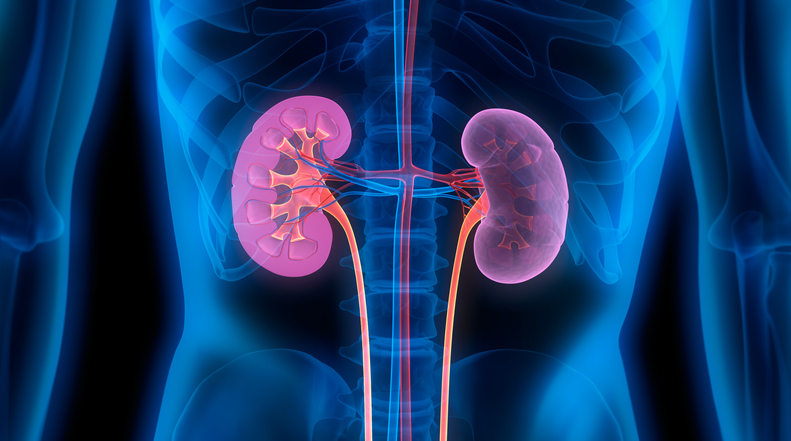
Maladie rénale chronique
Maladie rénale chronique means that the kidneys are not working as well as would be expected. Various conditions can cause chronic kidney disease. Severity can vary but most cases are mild or moderate, occur in older people and do not cause symptoms. Chronic kidney disease tends to become worse gradually over months or years. What is chronic kidney.
Lectures complémentaires et références
- Milroy disease; MedlinePlus, National Library of Medicine.
- Brice G, Child AH, Evans A, Bell R, Mansour S, Burnand K, Sarfarazi M, Jeffery S, Mortimer P. Milroy disease and the VEGFR-3 mutation phenotype. J Med Genet. 2005 Feb;42(2):98-102. doi: 10.1136/jmg.2004.024802.
- Butler MG, Dagenais SL, Rockson SG, Glover TW. A novel VEGFR3 mutation causes Milroy disease. Am J Med Genet A. 2007 Jun 1;143A(11):1212-7. doi: 10.1002/ajmg.a.31703.
- Evans AL, Bell R, Brice G, Comeglio P, Lipede C, Jeffery S, Mortimer P, Sarfarazi M, Child AH. Identification of eight novel VEGFR-3 mutations in families with primary congenital lymphoedema. J Med Genet. 2003 Sep;40(9):697-703. doi: 10.1136/jmg.40.9.697. No abstract available.
- Ghalamkarpour A, Morlot S, Raas-Rothschild A, Utkus A, Mulliken JB, Boon LM, Vikkula M. Hereditary lymphedema type I associated with VEGFR3 mutation: the first de novo case and atypical presentations. Clin Genet. 2006 Oct;70(4):330-5. doi: 10.1111/j.1399-0004.2006.00687.x.
- Irrthum A, Karkkainen MJ, Devriendt K, Alitalo K, Vikkula M. Congenital hereditary lymphedema caused by a mutation that inactivates VEGFR3 tyrosine kinase. Am J Hum Genet. 2000 Aug;67(2):295-301. doi: 10.1086/303019. Epub 2000 Jun 9.
- Karkkainen MJ, Ferrell RE, Lawrence EC, Kimak MA, Levinson KL, McTigue MA, Alitalo K, Finegold DN. Missense mutations interfere with VEGFR-3 signalling in primary lymphoedema. Nat Genet. 2000 Jun;25(2):153-9. doi: 10.1038/75997.
- Levinson KL, Feingold E, Ferrell RE, Glover TW, Traboulsi EI, Finegold DN. Age of onset in hereditary lymphedema. J Pediatr. 2003 Jun;142(6):704-8. doi: 10.1067/mpd.2003.235.
- Van Zanten M, Mansour S, Ostergaard P, Mortimer P, Gordon K. Milroy Disease. 2006 Apr 27 [updated 2021 Feb 18]. In: Adam MP, Bick S, Mirzaa GM, Wallace SE, Amemiya A, editors. GeneReviews(R) [Internet]. Seattle (WA): University of Washington, Seattle; 1993-2026. Available from http://www.ncbi.nlm.nih.gov/books/NBK1239/
Partagez vos pensées ou expériences avec les autres dans notre communautés de patients.
Accès simple à des traitements fiables et à des services de santé en ligne.
Common conditions
Get help with common conditions through the NHS, without a GP appointment.





Inscrivez-vous à la newsletter Patient
Votre dose hebdomadaire de conseils de santé clairs et fiables - rédigés pour vous aider à vous sentir informé, confiant et maître de la situation.
En vous abonnant, vous acceptez notre Politique de confidentialité. Vous pouvez vous désabonner à tout moment. Nous ne vendons jamais vos données.