Müllerian aplasia and hyperandrogenism
Dernière mise à jour 13 nov. 2023
Respecte les directives éditoriales
- TéléchargerTélécharger
- Partager
- Language
- Discussion
- Version audio
- Ajouter aux sources préférées sur Google
Müllerian aplasia and hyperandrogenism is a condition that affects the reproductive system in females. This condition is caused by abnormal development of the Müllerian ducts, which are structures in the embryo that develop into the uterus, fallopian tubes, cervix, and the upper part of the vagina. Individuals with Müllerian aplasia and hyperandrogenism typically have an underdeveloped or absent uterus and may also have abnormalities of other reproductive organs. Women with this condition have normal female external genitalia, and they develop breasts and pubic hair normally at puberty; however, they do not begin menstruation by age 16 (primary amenorrhea) and will likely never have a menstrual period. Affected women are unable to have children (infertile).
Description
Müllerian aplasia and hyperandrogenism is a condition that affects the reproductive system in females. This condition is caused by abnormal development of the Müllerian ducts, which are structures in the embryo that develop into the uterus, fallopian tubes, cervix, and the upper part of the vagina. Individuals with Müllerian aplasia and hyperandrogenism typically have an underdeveloped or absent uterus and may also have abnormalities of other reproductive organs. Women with this condition have normal female external genitalia, and they develop breasts and pubic hair normally at puberty; however, they do not begin menstruation by age 16 (primary amenorrhea) and will likely never have a menstrual period. Affected women are unable to have children (infertile).
Women with Müllerian aplasia and hyperandrogenism have higher-than-normal levels of male sex hormones called androgens in their blood (hyperandrogenism), which can cause acne and excessive facial hair (facial hirsutism). Kidney abnormalities may be present in some affected individuals.
Inheritance patterns
The source lists the following possible inheritance patterns: Autosomal dominant. More than one pattern can apply in different cases.
Related genes
Other names
Biason-Lauber syndrome
Mayer-Rokitansky-Küster-Hauser-Biason-Lauber syndrome
Mayer-Rokitansky-Küster-Hauser-like syndrome
Mullerian aplasia and hyperandrogenism
Müllerian duct failure
WNT4 deficiency
WNT4 Müllerian aplasia
WNT4 Müllerian aplasia and ovarian dysfunction
Related patient information and medicines

Patient information leaflet
Ménopause
La ménopause is the time when your ovaries stop working to make an egg each month - it occurs 12 months after your last period. The test done in primary care is usually fol... Anti-Müllerian hormone is not tested for the diagnostic du ménopause and is mainly used in secondary care fertility clinics; GPs cannot usually request this blood test..

Patient information leaflet
scanner CT
Note : the information below is a general guide only. The arrangements, and the way tests are performed, may vary between different hospitals. Always follow the instructions given by your doctor or local hospital. What is a CT scan. A CT scan is a specialised X-ray test. It can give quite clear pictures of the inside of your body. In particular,.

Patient information leaflet
Douleur au dos et à la colonne vertébrale
Back pain is extremely common; most of us will have des douleurs dorsales at some point. Children can get back pain but it is more common in adults. This leaflet gives some general information about the back and back pain. It will also direct you to pages with more detailed information on the different conditions that can cause back pain. Understanding the.
Patient information leaflet
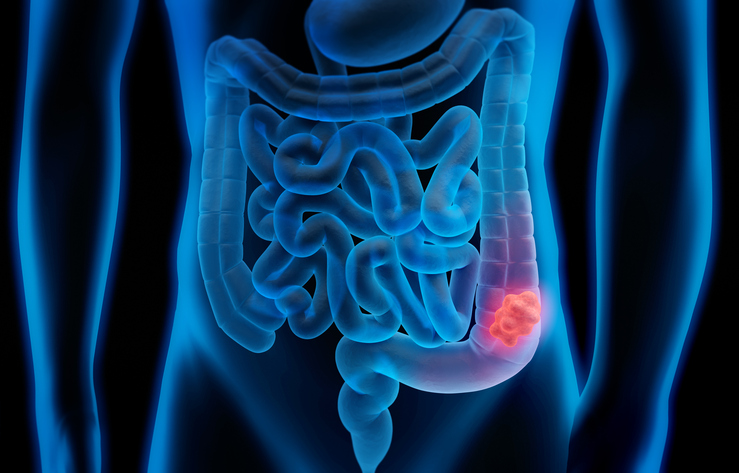
Cancer du côlon
Colon cancer and rectal cancer (also called colorectal cancer) are common in the UK. The colon and rectum are parts of your bowel. Most cases occur in people aged over 50. If bowel cancer is diagnosed at an early stage, there is a good chance of a cure. In general, the more advanced the cancer (the more it has grown and spread), the less chance.

Patient information leaflet
Vérifiez vos médicaments pour les interactions
Use this vérificateur d'interactions médicamenteuses à see whether votre medicines, supplements, vitamins, foods, or certain health conditions may interact with each other. It can help you understand potential risks, avoid unwanted side effects, and decide when it’s important to speak to a pharmacist, GP, or other healthcare professional. The tool is.

Patient information leaflet
Laparoscopie et chirurgie laparoscopique
Laparoscopy est a surgical procedure which uses a special surgical instrument called a laparoscope to look inside the body or to perform certain operations. When compared with traditional surgery, laparoscopic surgery usually has: Less pain following the procedure. A sho... A much smaller scar. Note : the information below is a general guide only..
Lectures complémentaires et références
- Müllerian aplasia and hyperandrogenism; MedlinePlus, National Library of Medicine.
- Bernard P, Harley VR. Wnt4 action in gonadal development and sex determination. Int J Biochem Cell Biol. 2007;39(1):31-43. doi: 10.1016/j.biocel.2006.06.007. Epub 2006 Jul 5.
- Biason-Lauber A, De Filippo G, Konrad D, Scarano G, Nazzaro A, Schoenle EJ. WNT4 deficiency--a clinical phenotype distinct from the classic Mayer-Rokitansky-Kuster-Hauser syndrome: a case report. Hum Reprod. 2007 Jan;22(1):224-9. doi: 10.1093/humrep/del360. Epub 2006 Sep 7.
- Biason-Lauber A, Konrad D, Navratil F, Schoenle EJ. A WNT4 mutation associated with Mullerian-duct regression and virilization in a 46,XX woman. N Engl J Med. 2004 Aug 19;351(8):792-8. doi: 10.1056/NEJMoa040533.
- Biason-Lauber A, Konrad D. WNT4 and sex development. Sex Dev. 2008;2(4-5):210-8. doi: 10.1159/000152037. Epub 2008 Nov 5.
- Biason-Lauber A. WNT4, RSPO1, and FOXL2 in sex development. Semin Reprod Med. 2012 Oct;30(5):387-95. doi: 10.1055/s-0032-1324722. Epub 2012 Oct 8.
- Philibert P, Biason-Lauber A, Gueorguieva I, Stuckens C, Pienkowski C, Lebon-Labich B, Paris F, Sultan C. Molecular analysis of WNT4 gene in four adolescent girls with mullerian duct abnormality and hyperandrogenism (atypical Mayer-Rokitansky-Kuster-Hauser syndrome). Fertil Steril. 2011 Jun 30;95(8):2683-6. doi: 10.1016/j.fertnstert.2011.01.152. Epub 2011 Mar 5.
- Philibert P, Biason-Lauber A, Rouzier R, Pienkowski C, Paris F, Konrad D, Schoenle E, Sultan C. Identification and functional analysis of a new WNT4 gene mutation among 28 adolescent girls with primary amenorrhea and mullerian duct abnormalities: a French collaborative study. J Clin Endocrinol Metab. 2008 Mar;93(3):895-900. doi: 10.1210/jc.2007-2023. Epub 2008 Jan 8.
- Prunskaite-Hyyrylainen R, Shan J, Railo A, Heinonen KM, Miinalainen I, Yan W, Shen B, Perreault C, Vainio SJ. Wnt4, a pleiotropic signal for controlling cell polarity, basement membrane integrity, and antimullerian hormone expression during oocyte maturation in the female follicle. FASEB J. 2014 Apr;28(4):1568-81. doi: 10.1096/fj.13-233247. Epub 2013 Dec 26.
Participez à la conversation
Partagez vos pensées ou expériences avec les autres dans notre communautés de patients.

Demandez, partagez, connectez-vous.
Parcourez les discussions, posez des questions et partagez vos expériences sur des centaines de sujets de santé.
Inscrivez-vous à la newsletter Patient
Votre dose hebdomadaire de conseils de santé clairs et fiables - rédigés pour vous aider à vous sentir informé, confiant et maître de la situation.
En vous abonnant, vous acceptez notre Politique de confidentialité. Vous pouvez vous désabonner à tout moment. Nous ne vendons jamais vos données.