glypican 3
Dernière mise à jour 18 Aug 2020
Respecte les directives éditoriales
- TéléchargerTélécharger
- Partager
- Language
- Discussion
- Version audio
- Ajouter aux sources préférées sur Google
La GPC3 gene provides instructions for making a protein called glypican 3. This protein is one of several glypicans in humans, each of which consists of a core protein attached to long sugar molecules called heparan sulfate chains. Glypicans are anchored to the outer cell membrane, where they interact with a variety of other proteins outside the cell. Glypicans appear to play important roles in development before birth. These proteins are involved in numerous cell functions, including regulating cell growth and division (cell proliferation) and cell survival.
Normal function
La GPC3 gene provides instructions for making a protein called glypican 3. This protein is one of several glypicans in humans, each of which consists of a core protein attached to long sugar molecules called heparan sulfate chains. Glypicans are anchored to the outer cell membrane, where they interact with a variety of other proteins outside the cell. Glypicans appear to play important roles in development before birth. These proteins are involved in numerous cell functions, including regulating cell growth and division (cell proliferation) and cell survival.
Several studies have found that glypican 3 interacts with other proteins at the surface of cells to restrain cell proliferation. Specifically, glypican 3 blocks (inhibits) a developmental pathway called the hedgehog signaling pathway. This pathway is critical for cell proliferation, cell specialization, and the normal shaping (patterning) of many parts of the body during embryonic development.
Researchers believe that in some cell types, glypican 3 may act as a tumour suppressor, which is a protein that prevents cells from growing and dividing in an uncontrolled way to form a cancerous tumour. Glypican 3 may also cause some types of cells to self-destruct (undergo apoptosis) when they are no longer needed, which can help keep growth in check.
Although glypican 3 is known primarily as an inhibitor of cell growth and cell division, in some tissues it appears to have the opposite effect. Research suggests that in certain types of cells, such as cells in the liver, glypican 3 may interact with proteins called growth factors to promote cell growth and cell division.
Conditions referring to this gene or chromosome
Other names
DGSX
glypican proteoglycan 3
glypican-3
GPC3_HUMAN
GTR2-2
Intestinal protein OCI-5
MXR7
OCI-5
SGBS1
Related patient information and medicines

Patient information leaflet
Rougeole
And, if necessary, you may be offered immediate immunisation or a protecting injection of antibody (immunoglobulin). This is called 'post-exposure prophylaxis'. See the guidelines from the UK Health Security Agency (UKHSA) cited at the end under 'Further Reading and References'. How do you diagnose measles. Your doctor will usually be able to.

Patient information leaflet
Effluvium télogène
Telogen effluvium (hair loss) is a condition where more than normal amounts of hair fall out. There is a general 'thinning' of the hair. Many other medications have been linked to telogen effluvium, but some of the most common are beta-blockers; retinoids, including excess vitamin A (often used for skin problems); anticoagulants (often called.

Patient information leaflet
Hématome sous-dural
A subdural haematoma is a collection of clotting blood that forms in the subdural space. This is the space between two of the meninges, which form the protective lining that covers the brain. It usually occurs because of a head injury. It is a serious condition and emergency treatment may be needed. A CT scan can show a subdural haematoma. An.

Patient information leaflet
Névralgie post-herpétique
Névralgie post-herpétique est a pain that persists in some people who have had shingles. It often eases and goes over time. Medication can often ease the pain. What is postherpetic neuralgia. Postherpetic neuralgia (PHN) is a nerve pain (neuralgia) that persists after the shingles rash has cleared. If the pain from shingles goes but then returns at a.
Patient information leaflet
Maladie rénale chronique
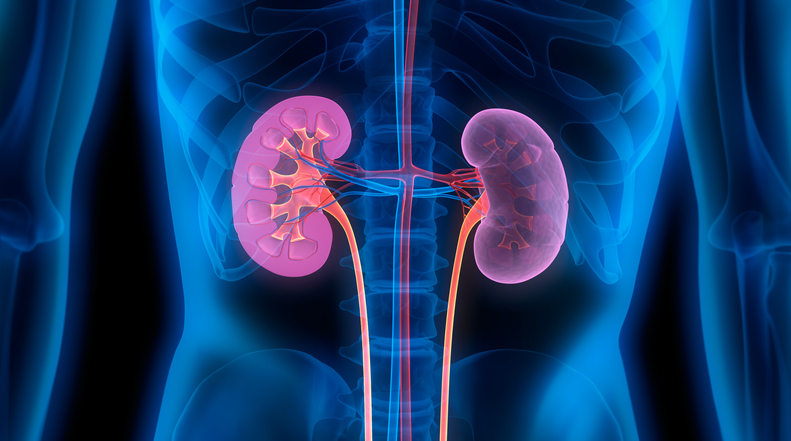
After an acute rein injury, blood tests should be done regularly for at least three years to check the kidney function. Having only one functioning kidney. Even though most people with a single kidney do not have any problems, the kidney function should be monitored once a year. This list is not complete and there are many other causes. What are.

Patient information leaflet
maladie de Lyme
maladie de Lyme est un infection caused by being bitten by an infected tick. The first and most common symptom is a rash that spreads out from the site of the tick bite. Left untreated, the germs (bacteria) can spread to other areas of the body. In some cases this can cause serious symptoms - often months after the initial tick bite. A course of.
Lectures complémentaires et références
- glypican 3; MedlinePlus, National Library of Medicine.
- Capurro MI, Xu P, Shi W, Li F, Jia A, Filmus J. Glypican-3 inhibits Hedgehog signaling during development by competing with patched for Hedgehog binding. Dev Cell. 2008 May;14(5):700-11. doi: 10.1016/j.devcel.2008.03.006.
- Cottereau E, Mortemousque I, Moizard MP, Burglen L, Lacombe D, Gilbert-Dussardier B, Sigaudy S, Boute O, David A, Faivre L, Amiel J, Robertson R, Viana Ramos F, Bieth E, Odent S, Demeer B, Mathieu M, Gaillard D, Van Maldergem L, Baujat G, Maystadt I, Heron D, Verloes A, Philip N, Cormier-Daire V, Froute MF, Pinson L, Blanchet P, Sarda P, Willems M, Jacquinet A, Ratbi I, Van Den Ende J, Lackmy-Port Lis M, Goldenberg A, Bonneau D, Rossignol S, Toutain A. Phenotypic spectrum of Simpson-Golabi-Behmel syndrome in a series of 42 cases with a mutation in GPC3 and review of the literature. Am J Med Genet C Semin Med Genet. 2013 May;163C(2):92-105. doi: 10.1002/ajmg.c.31360. Epub 2013 Apr 18.
- Davoodi J, Kelly J, Gendron NH, MacKenzie AE. The Simpson-Golabi-Behmel syndrome causative glypican-3, binds to and inhibits the dipeptidyl peptidase activity of CD26. Proteomics. 2007 Jun;7(13):2300-10. doi: 10.1002/pmic.200600654.
- Nisbet AF, Hathaway ER, Kalish JM. Simpson-Golabi-Behmel Syndrome Type 1. 2006 Dec 19 [updated 2024 Nov 14]. In: Adam MP, Bick S, Mirzaa GM, Wallace SE, Amemiya A, editors. GeneReviews(R) [Internet]. Seattle (WA): University of Washington, Seattle; 1993-2026. Available from http://www.ncbi.nlm.nih.gov/books/NBK1219/
- Sakazume S, Okamoto N, Yamamoto T, Kurosawa K, Numabe H, Ohashi Y, Kako Y, Nagai T, Ohashi H. GPC3 mutations in seven patients with Simpson-Golabi-Behmel syndrome. Am J Med Genet A. 2007 Aug 1;143A(15):1703-7. doi: 10.1002/ajmg.a.31822.
- Schmidt J, Hollstein R, Kaiser FJ, Gillessen-Kaesbach G. Molecular analysis of a novel intragenic deletion in GPC3 in three cousins with Simpson-Golabi-Behmel syndrome. Am J Med Genet A. 2017 May;173(5):1400-1405. doi: 10.1002/ajmg.a.38188. Epub 2017 Mar 29.
- Veugelers M, Cat BD, Muyldermans SY, Reekmans G, Delande N, Frints S, Legius E, Fryns JP, Schrander-Stumpel C, Weidle B, Magdalena N, David G. Mutational analysis of the GPC3/GPC4 glypican gene cluster on Xq26 in patients with Simpson-Golabi-Behmel syndrome: identification of loss-of-function mutations in the GPC3 gene. Hum Mol Genet. 2000 May 22;9(9):1321-8. doi: 10.1093/hmg/9.9.1321.
Participez à la conversation
Partagez vos pensées ou expériences avec les autres dans notre communautés de patients.

Demandez, partagez, connectez-vous.
Parcourez les discussions, posez des questions et partagez vos expériences sur des centaines de sujets de santé.
Inscrivez-vous à la newsletter Patient
Votre dose hebdomadaire de conseils de santé clairs et fiables - rédigés pour vous aider à vous sentir informé, confiant et maître de la situation.
En vous abonnant, vous acceptez notre Politique de confidentialité. Vous pouvez vous désabonner à tout moment. Nous ne vendons jamais vos données.