Measles
Peer reviewed by Dr Philippa Vincent, MRCGPLast updated by Dr Toni Hazell, FRCGPLast updated 26 Mar 2023
Meets Patient’s editorial guidelines
- DownloadDownload
- Share
- Language
- Discussion
- Audio Version
- Add to preferred sources on Google
In this series:Viral rashesChickenpox in childrenChickenpox in adults and teenagersScarlet feverHand, foot and mouth diseaseSchool exclusion for infections
Measles is an infection that mainly affects children but can occur at any age. It is rare in the UK, due to immunisation. The illness is unpleasant but most children fully recover. However, some children develop serious complications.
At a glance
Measles is a highly infectious illness caused by a virus.
Symptoms often begin with a high temperature, sore eyes, runny nose, and a harsh dry cough.
A red, blotchy rash typically develops 3-4 days after initial symptoms, starting on the head and neck.
Most people recover within 7-10 days, but complications can occur.
Measles is spread by coughing and sneezing, and an infected person is contagious for several days.
If you suspect measles, contact your doctor, but phone ahead first due to its highly contagious nature.
The MMR vaccine offers excellent protection against measles.
What is measles?
Measles is a highly infectious illness caused by a virus. The virus lives in the mucus of the nose and throat of people with this infection. Physical contact, coughing and sneezing can spread the infection. In addition, infected droplets of mucus can remain active and can be passed on by touching (they are contagious) for around two hours. This means that the virus can live outside the body - for example, on surfaces and door handles.
Measles symptoms
Once you are infected with the virus, the virus multiples in the back of your throat and in your lungs. It then spreads throughout your body. The following are the most common symptoms of measles:
A high temperature (fever), sore eyes (conjunctivitis) and a runny nose usually occur first.
Small white spots usually develop inside the mouth a day or so later. These can persist for several days.
A harsh dry cough is usual.
Going off food, tiredness and aches and pains are usual.
Diarrhoea and/or being sick (vomiting) are common.
A red blotchy rash normally develops about 3-4 days after the first symptoms. It usually starts on the head and neck and spreads down the body. It takes 2-3 days to cover most of the body. The rash often turns a brownish colour and gradually fades over a few days.
Children are usually quite unwell and miserable for 3-5 days. After this, the fever tends to ease and then the rash fades. The other symptoms gradually ease and go.
Most children are better within 7-10 days. An irritating cough may persist for several days after other symptoms have gone. The immune system makes antibodies during the infection. These fight off the virus and then provide lifelong immunity. It is therefore rare to have more than one bout of measles.
Some people mistake rashes caused by other viruses for measles. Measles is not just a mild red rash that soon goes. The measles virus causes an unpleasant and sometimes serious illness. The rash is just one part of this illness.
How is measles spread?
Measles is very infectious. It is passed on by coughing and sneezing the virus into the air. It takes between 7 and 21 days (most commonly 10-12 days) to develop symptoms after being infected. (This is the incubation period.) An infected person can pass it on to others from four days before to four days after the onset of the rash. Therefore, children with measles should not mix with others and should stay off school.
What if I come into contact with someone with measles?
Some people have not been immunised against measles and therefore are at greater risk of catching measles. Also, some people are more prone to complications if they get measles. In particular:
Pregnant women
Young babies under the age of 12 months
People with a poor immune system - for example:
Those on chemotherapy.
People taking steroid medication.
People who have certain illnesses which affect their immune system, such as HIV.
If you or your child come into contact with someone with measles and you are in one of the groups listed above, or you have never been vaccinated against measles, you should see your doctor as soon as possible. You may be advised to have a blood test to check on your immunity to measles.
And, if necessary, you may be offered immediate immunisation or a protecting injection of antibody (immunoglobulin). This is called 'post-exposure prophylaxis'. See the guidelines from the UK Health Security Agency (UKHSA) cited at the end under 'Further Reading and References'.
How do you diagnose measles?
Your doctor will usually be able to diagnose measles from the combination of your symptoms, especially the characteristic rash and the small spots inside your mouth. However, a simple saliva test is usually done to confirm the diagnosis.
In the UK, measles is a 'notifiable illness', which means your doctor is obliged to inform the local Health Protection Team (HPT) for the UK Health Security Agency (UKHSA). This is so that they can find out where you were exposed to someone with measles, so that spread of infection can be contained. The HPT may call you to arrange testing of other people with whom you have been in contact.
What are the possible complications of measles?
Complications are more likely in children with weakened immune systems (such as those with leukaemia or HIV), those who are malnourished, children aged under 5 years and adults. Many malnourished children in the world die when they get measles, usually from a secondary lung infection (pneumonia). There are still occasional reports of children in the UK who die from complications of measles. These children have usually not been immunised.
More common complications include:
Infections of the airways, such as bronchitis and croup, which can be common.
Although these are distressing, they are not usually serious.
Less common complications of measles are listed below:
A febrile fit (convulsion) occurs in about 1 in 200 cases. This can be alarming, but full recovery is usual.
Brain inflammation (encephalitis). This is a rare but very serious complication. It occurs in about 1 in 5,000 cases. It typically causes drowsiness, headache and being sick (vomiting) which start about 7-10 days after the onset of the measles rash. Encephalitis may cause brain damage. Some children die from this complication.
Liver infection (hepatitis).
Pneumonia. This is a serious complication that sometimes develops. Typical symptoms include fast or difficult breathing, chest pains and generally becoming more ill.
Squint is more common in children who have had measles. The virus may affect the nerve or muscles to the eye.
A very rare brain disease called subacute sclerosing panencephalitis can develop years later in a very small number of people who have had measles. This can sometimes occur several years after getting measles. This condition is always fatal.
Measles treatment
There is no specific medicine that kills the measles virus. Treatment aims to ease symptoms until the body's immune system clears the infection. For most cases, rest and simple measures to reduce a high temperature (fever) are all that are needed for a full recovery. Symptoms will usually disappear within 7-10 days.
The following measures are often useful:
Children should drink as much as possible to prevent lack of fluid in the body (dehydration). Ice lollies are a useful way of giving extra fluid and keeping cool.
Paracetamol or ibuprofen can be taken to ease fever and aches and pains. You should keep the child cool (but not cold).
Antibiotics do not kill the measles virus and so are not normally given. They may be prescribed if a complication develops, such as a secondary bacterial ear infection or secondary bacterial lung infection (pneumonia).
Cough remedies have little benefit on any coughs.
Vitamin A supplements
Vitamin A supplements have been shown to help prevent serious complications arising from a measles infection. Supplements are generally recommended for children living in a country with a high prevalence of a vitamin A deficiency. This is rare in the UK but common in the developing world. Treatment with vitamin A may be offered to people with measles.
Measles vaccine
Immunisation is routine in the UK as part of the measles, mumps and rubella (MMR) vaccine. Two doses are usual - the first for children aged between 12 and 13 months and the second usually given at age 3 years and 4 months to 5 years. Immunisation gives excellent protection to prevent measles and so measles is now rare in the UK.
However, unfortunately, measles is becoming more common again in children in some areas of the UK. This is due to some children not being vaccinated against measles as they have not receiveding the MMR vaccine. Measles immunisation can be given at any age and is sometimes offered to older children during outbreaks. Parents often refuse the measles vaccine because they mistakenly think that the MMR vaccine can cause their child to have autism. This suggestion, first made in 1998, has been categorically disproved and the doctor who suggested it was removed from the medical register and found to have significant financial interests in single vaccines, which had not been declared. It is very important that parents understand that if a child is not vaccinated against measles and they catch it, their life may be at risk.
When to see a doctor?
If you think you or your child may have measles, see a doctor to confirm the diagnosis. You should phone first because measles is so catching - the surgery may make arrangements so that your child doesn't wait in the waiting room and risk infecting other people. Most children recover fully with no complications or treatment. However, you should see a doctor again if symptoms get worse, or if you suspect a complication (see above).
The main serious symptoms to look out for are:
Drowsiness.
Lack of fluid in the body (dehydration). This may be developing if the child drinks little, passes little urine, has a dry mouth and tongue or becomes drowsy.
Breathing difficulties.
A fit (convulsion).
Patient picks for Skin infections
Infections
Molluscum contagiosum
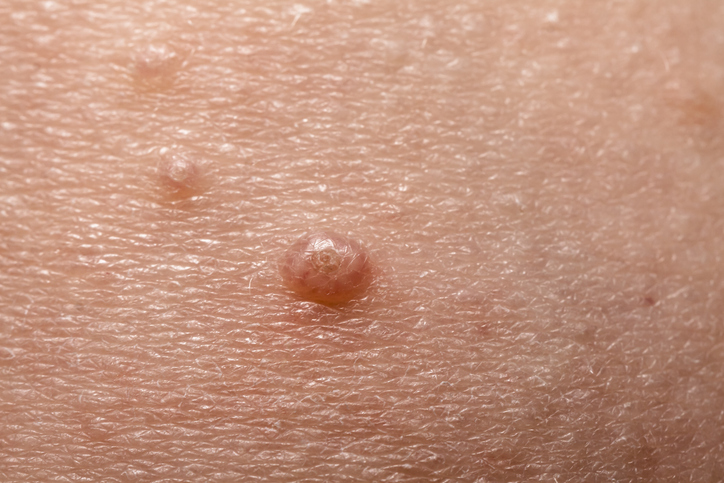
Molluscum contagiosum is a common condition where small warty bumps (mollusca) appear on the skin. It is caused by a virus that can be passed on by skin contact or from contaminated towels, flannels, soft toys, etc. It is not serious and usually clears within 12-18 months without any treatment.
by Dr Doug McKechnie, MRCGP
Infections
Infected wounds
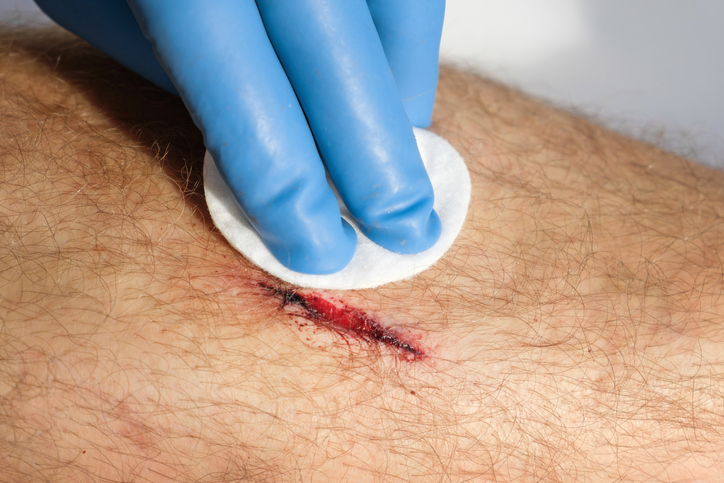
Infection can happen to any type of wound - whether that's a small cut, from a surgical procedure, or an accidental injury. Signs a wound is infected include worsening pain, swelling, and redness that spreads, increased heat around the wound, and pus. This leaflet discusses symptoms you should look out for, treatments, and when to seek medical help.
by Dr Philippa Vincent, MRCGP
Frequently asked questions
Is measles an itchy rash?
The article mentions that a red blotchy rash develops about 3-4 days after the first symptoms, starting on the head and neck and spreading down the body. It often turns brownish and fades, but it does not specify if the rash is itchy.
How long can the measles virus survive outside the body?
Measles droplets containing the virus can remain active and contagious for about two hours on surfaces like door handles.
Is it possible to get measles more than once?
Once you have had measles, your immune system develops antibodies that provide lifelong immunity. Because of this, it is rare to have measles more than once.
Why is it important for a doctor to be informed about a measles diagnosis?
Measles is a 'notifiable illness' in the UK. Doctors are required to inform the local Health Protection Team (HPT) so they can investigate how the person was exposed and help contain the spread of the infection. The HPT may also contact you to arrange testing for others you have been in contact with.
What is the typical recovery time for measles symptoms?
Most children recover from measles within 7-10 days, with the fever easing and the rash fading after 3-5 days. An irritating cough may persist for several days after other symptoms have cleared up.
Are there any natural remedies or specific diets that can help treat measles?
The article states there is no specific medicine to kill the measles virus, and treatment focuses on easing symptoms. It does not mention any natural remedies or specific diets, but emphasizes hydration and using paracetamol or ibuprofen for fever and pain.
Further reading and references
- Measles: post-exposure prophylaxis; Public Health England (May 2009 - last updated July 2019)
- Measles: the green book, chapter 21; Public Health England (last updated December 2019)
- Kabra SK, Lodha R; Antibiotics for preventing complications in children with measles. Cochrane Database Syst Rev. 2013 Aug 14;8:CD001477. doi: 10.1002/14651858.CD001477.pub4.
- PHE National Measles Guidelines; Public Health England (Aug 2017, updated 2019)
- Measles; NICE CKS, January 2024 (UK access only)
About the authorView full bio

Dr Toni Hazell, FRCGP
MBBS, BSc, FRCGP, DFSRH, Dip GU med, DRCOG, DCH (London, UK, 2000)
Dr. Toni Hazell qualified from St. Mary’s Hospital Medical School and did her VTS at Northwick Park Hospital.
About the reviewerView full bio

Dr Philippa Vincent, MRCGP
General Practitioner, Medical Author
MB BS, Bsc, MRCGP (2000), DCH, DFSRH, DRCOG
Dr Philippa Vincent is an NHS GP working in North London.
Article history
The information on this page is written and peer reviewed by qualified clinicians.
Article also available in English, German, Spanish, French, Italian, Portuguese, Hindi, Hebrew, Arabic, and Swedish.
Next review due: 14 Mar 2028
26 Mar 2023 | Latest version
Join the conversation
Share your thoughts or experiences with others in our patient communities.

Ask, share, connect.
Browse discussions, ask questions, and share experiences across hundreds of health topics.

Feeling unwell?
Assess your symptoms online for free
Sign up to the Patient newsletter
Your weekly dose of clear, trustworthy health advice - written to help you feel informed, confident and in control.
By subscribing you accept our Privacy Policy. You can unsubscribe at any time. We never sell your data.