neutrophil cytosolic factor 4
Dernière mise à jour 18 Aug 2020
Respecte les directives éditoriales
- TéléchargerTélécharger
- Partager
- Language
- Discussion
- Version audio
- Ajouter aux sources préférées sur Google
La NCF4 gene provides instructions for making a protein called neutrophil cytosolic factor 4 (also known as p40-phox). This protein is one part (subunit) of a group of proteins that forms an enzyme complex called NADPH oxidase, which plays an essential role in the immune system. Specifically, NADPH oxidase is primarily active in immune system cells called phagocytes. These cells catch and destroy foreign invaders such as bacteria and fungi. NADPH oxidase is also thought to regulate the activity of immune cells called neutrophils. These cells play a role in adjusting the inflammatory response to optimize healing and reduce injury to the body.
Normal function
La NCF4 gene provides instructions for making a protein called neutrophil cytosolic factor 4 (also known as p40-phox). This protein is one part (subunit) of a group of proteins that forms an enzyme complex called NADPH oxidase, which plays an essential role in the immune system. Specifically, NADPH oxidase is primarily active in immune system cells called phagocytes. These cells catch and destroy foreign invaders such as bacteria and fungi. NADPH oxidase is also thought to regulate the activity of immune cells called neutrophils. These cells play a role in adjusting the inflammatory response to optimize healing and reduce injury to the body.
The presence of foreign invaders stimulates phagocytes and triggers the assembly of NADPH oxidase. This enzyme participates in a chemical reaction that converts oxygen to a toxic molecule called superoxide. Superoxide is used to generate several other compounds, including hydrogen peroxide (a strong disinfectant) and hypochlorous acid (the active ingredient in bleach). These highly reactive, toxic substances are known as reactive oxygen species. Phagocytes use these substances to kill foreign invaders, preventing them from reproducing in the body and causing illness.
Conditions referring to this gene or chromosome
Other names
NCF
NCF-4
NCF4_HUMAN
neutrophil cytosol factor 4
neutrophil cytosolic factor 4, 40kDa
neutrophil NADPH oxidase factor 4
p40-phox
P40PHOX
Related patient information and medicines
Patient information leaflet
Analyses de sang
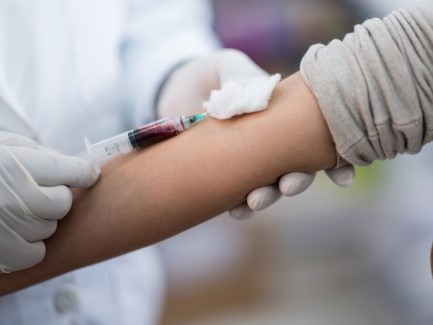
Millions of red blood cells are made each day. Red cells contain a chemical called haemoglobin. This binds to oxygen and takes oxygen from the lungs to all parts of the body. White cells (leukocytes) There are different types of white cells which are called neutrophiles (polymorphs), lymphocytes, eosinophils, monocytes and basophils. They are part.
Patient information leaflet
Polycythémie rubra vera
One drop of blood contains about five million re... Red cells contain a chemical called haemoglobin. This binds to oxygen and takes oxygen from the lungs to all parts of the body. White cells (leukocytes). There are different types of white cells, which are called neutrophiles (polymorphs), lymphocytes, eosinophils, monocytes and basophils. They.

Patient information leaflet
Le système immunitaire
This leaflet gives a brief overview of système immunitaire and how it works. A person with a weak immune system might have difficulty fighting off infections. In autoimmun... If pathogens manage to get through these barriers, they encounter special white blood cells present in your bloodstream. There are different types of white cells, called.

Patient information leaflet
Leucémie myéloïde chronique
Chronic myeloid leukaemia (CML) is sometimes called chronic myelogenous leukaemia, chronic granulocytic leukaemia, ou chronic myelocytic leukaemia. What is chronic myeloid leukaemia. CML develo... The abnormal stem cell multiplies and the cells that are made from the abnormal stem cells mature and develop into near-normal white cells - mainly.

Patient information leaflet
Leucémies infantiles
Blood cells. Blood cells are divided into three main types: Red cells (erythrocytes). These make blood a red colour. Red cells contain a chemical called haemoglobinThis binds to oxygen and takes oxygen from the lungs to all parts of the body. White cells (leukocytes). There are different types of white cells, which are called neutrophils.

Patient information leaflet
Tests de coagulation sanguine
Tests de coagulation sanguine are used to diagnose and assess saignement problems and to monitor people who take warfarin or other anticoagulant medicines. You may be advised to have blood clotting tests: If you have a suspected bleeding disorder. For example, if you bleed a lot after cuts, or if you bruise easily. If you have certain liver diseases that can.
Lectures complémentaires et références
- neutrophil cytosolic factor 4; MedlinePlus, National Library of Medicine.
- Matute JD, Arias AA, Wright NA, Wrobel I, Waterhouse CC, Li XJ, Marchal CC, Stull ND, Lewis DB, Steele M, Kellner JD, Yu W, Meroueh SO, Nauseef WM, Dinauer MC. A new genetic subgroup of chronic granulomatous disease with autosomal recessive mutations in p40 phox and selective defects in neutrophil NADPH oxidase activity. Blood. 2009 Oct 8;114(15):3309-15. doi: 10.1182/blood-2009-07-231498. Epub 2009 Aug 19.
- Roos D, Kuhns DB, Maddalena A, Bustamante J, Kannengiesser C, de Boer M, van Leeuwen K, Koker MY, Wolach B, Roesler J, Malech HL, Holland SM, Gallin JI, Stasia MJ. Hematologically important mutations: the autosomal recessive forms of chronic granulomatous disease (second update). Blood Cells Mol Dis. 2010 Apr 15;44(4):291-9. doi: 10.1016/j.bcmd.2010.01.009. Epub 2010 Feb 18.
- Sumimoto H. Structure, regulation and evolution of Nox-family NADPH oxidases that produce reactive oxygen species. FEBS J. 2008 Jul;275(13):3249-77. doi: 10.1111/j.1742-4658.2008.06488.x. Epub 2008 May 30.
Participez à la conversation
Partagez vos pensées ou expériences avec les autres dans notre communautés de patients.

Demandez, partagez, connectez-vous.
Parcourez les discussions, posez des questions et partagez vos expériences sur des centaines de sujets de santé.
Inscrivez-vous à la newsletter Patient
Votre dose hebdomadaire de conseils de santé clairs et fiables - rédigés pour vous aider à vous sentir informé, confiant et maître de la situation.
En vous abonnant, vous acceptez notre Politique de confidentialité. Vous pouvez vous désabonner à tout moment. Nous ne vendons jamais vos données.