Enregistrement de la pression artérielle à domicile et ambulatoire
Évalué par des pairs Dr Philippa Vincent, MRCGPDernière mise à jour par Dr Colin Tidy, MRCGPDernière mise à jour 17 nov. 2024
Respecte les directives éditoriales
- TéléchargerTélécharger
- Partager
- Language
- Discussion
- Version audio
- Ajouter aux sources préférées sur Google
Blood pressure recording outside of the doctor's surgery is recommended in most people who are suspected of having high blood pressure. This is because readings taken while people are going about their daily lives are more accurate than those taken in a doctor's surgery. They may also be used to give the doctor information about how well a blood pressure medicine is working.
The ideal method is ambulatory blood pressure monitoring, which uses a portable recorder. If this is inconvenient or uncomfortable, readings can be taken using a traditional blood pressure machine at home.
En un coup d'œil
La surveillance de la pression artérielle vérifie votre tension artérielle en dehors du cabinet médical.
Il aide à déterminer si l'hypertension artérielle est due au stress ou si elle est constamment élevée.
An ambulatory monitor checks your blood pressure frequently over 24 hours.
A home blood pressure monitor can be used as an alternative.
Pour la surveillance à domicile, prenez deux mesures deux fois par jour pendant 4 à 7 jours.
Sponsorisé
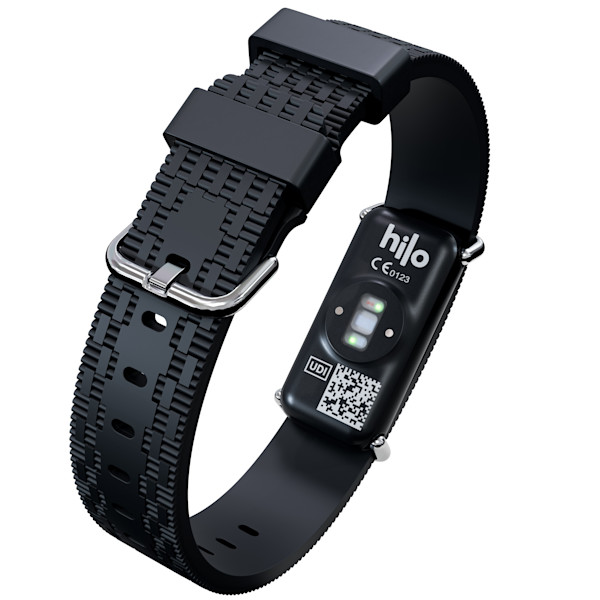
Le patient recommande... Hilo
Surveillez votre tension artérielle en continu, jour et nuit - sans brassard gonflable. Les brassards traditionnels capturent juste un moment, si vous pensez à les utiliser. Hilo effectue environ 25 relevés par jour, révélant comment le stress, les repas et l'activité affectent votre tension artérielle afin que vous puissiez faire des choix éclairés pour votre bien-être.
Why is it important for you to monitor your blood pressure?
Some people find it a bit stressful to have their blood pressure checked in a doctor's surgery. This can then cause their blood pressure to go up in that situation. This is known as white coat syndrome.
If your blood pressure is raised, the doctor will not know if this is because of the stress of being in the surgery (white coat high blood pressure) or because your blood pressure is usually and persistently high, even when relaxed at home. A persistently high blood pressure is known as hypertension. Voir la brochure séparée intitulée Hypertension artérielle (Hypertension). This leaflet is just about ways of recording your blood pressure.
The unit for measuring blood pressure is known as millimetres of mercury, or mm Hg for short. The National Institute for Health and Care Excellence (NICE) recommends that if your blood pressure is found to be 140/90 mm Hg or above, you should check it at home and during your normal day-to-day activities.
The best way to do this is using an ambulatory blood pressure monitor which can be worn for 24 hours a day. But, if you find this uncomfortable or inconvenient, a home blood pressure monitor can be used.
Ambulatory blood pressure monitoring is also sometimes used to check how well medicine used to treat hypertension is working.
Surveillance ambulatoire de la pression artérielle
The ambulatory blood pressure monitor checks your blood pressure at frequent intervals throughout one day and one night. It consists of a cuff which wraps around your arm. The cuff is attached to a small electric recording device on a belt or strap worn on your body.
The doctor or nurse who supplies the device should make sure the cuff is the right size for your arm. You should keep the device safe and dry and not have a bath or shower whilst wearing it. From time to time you will feel a tightening sensation in your arm. This is whilst the cuff is inflating to take your blood pressure.
It will not last very long and most people will not be worried by it. Try not to move your arm whilst the cuff is inflating. If the device cannot record your blood pressure it will try to repeat the process up to three times. The machine is usually set to record twice an hour whilst you are awake and hourly at night.
The ambulatory monitor can be worn whilst you go about your everyday activities. So, it will give an accurate impression about how your blood pressure behaves under normal circumstances. The doctor will look at multiple readings spread throughout the day. (The minimum number is 14 but it may be many more than that.) The results will help them decide whether or not you have high blood pressure (hypertension).
Home blood pressure monitoring
This is an alternative to ambulatory blood pressure monitoring. The process for doing this will be exactly the same as that used by the doctor or nurse in the surgery. You will be given a blood pressure monitor to use at home.
Wrap the cuff around your arm just above the level of the elbow. (Check the instructions with the monitor to make sure the tubing is in the right position.) You should be seated comfortably with your arm supported (for example, on a table) at the level of your heart. Press the button to inflate the machine and then make a note of the reading.
You should measure your blood pressure twice a day, once in the morning and once in the evening. On each occasion you should take two readings, one minute apart. You should take readings for at least four days and ideally for seven days. The doctor should use all the readings, apart from those taken on the first day, to calculate your average blood pressure.
What your readings mean
If your blood pressure is below 140/90 mm Hg at the surgery, it will be considered normal.
If your blood pressure is above 140/90 mm Hg at the surgery but your average ambulatory or home reading is below 135/85 mm Hg, it will be considered normal.
If your blood pressure at the surgery is 140/90 mm Hg or above and your average ambulatory or home reading is 135/85 mm Hg or higher, it will be considered high.
Sélections des patients pour Pression artérielle

Santé cardiaque et vaisseaux sanguins
Hypertension artérielle
High blood pressure (hypertension) happens when the force on the walls of blood vessels (caused by the blood within them) is more than normal. This means the heart has to work harder and the blood vessels are under more strain, making it a major risk factor for heart disease, stroke and other serious conditions.
par Dr Doug McKechnie, MRCGP

Santé cardiaque et vaisseaux sanguins
Vivre avec l'hypertension
About 3 in 10 adults in the UK are living with high blood pressure. There are things that you can do to try and reduce your blood pressure. This will reduce the risks of complications from high blood pressure - which can include kidney damage, stroke, heart disease, dementia, and problems with the blood vessels.
par Dr Philippa Vincent, MRCGP
Questions fréquemment posées
Quelle est la lecture typique de la pression artérielle qui inciterait mon médecin à suggérer une surveillance supplémentaire ?
Si votre tension artérielle mesurée au cabinet du médecin est constamment de 140/90 mm Hg ou plus, votre médecin vous recommandera probablement de la vérifier à domicile pour obtenir une image plus claire de votre tension artérielle habituelle pendant vos activités quotidiennes.
Y a-t-il des moments spécifiques à éviter pour prendre ma tension artérielle avec un tensiomètre à domicile ?
L'article ne précise pas les moments à éviter, mais il conseille de prendre des mesures deux fois par jour, une fois le matin et une fois le soir. Chaque fois, vous devez prendre deux mesures, à une minute d'intervalle, pendant au moins quatre jours et idéalement pendant sept jours.
Combien de temps dure une période typique de surveillance ambulatoire de la pression artérielle ?
Un tensiomètre ambulatoire est porté pendant 24 heures par jour. Pendant cette période, il vérifie votre tension artérielle à intervalles fréquents tout au long de la journée et de la nuit.
Que dois-je faire si le tensiomètre à domicile me demande d'ajuster la position du brassard ?
Vous devez toujours vérifier les instructions fournies avec votre tensiomètre domestique spécifique pour vous assurer que le tube et le brassard sont placés dans la position correcte. En général, le brassard est enroulé autour de votre bras juste au-dessus du coude.
Combien de relevés le médecin utilise-t-il pour déterminer si j'ai de l'hypertension artérielle lors de l'utilisation d'un moniteur ambulatoire ?
Lors de l'utilisation d'un moniteur ambulatoire, le médecin examinera plusieurs relevés répartis tout au long de la journée. Bien que le nombre minimum soit de 14, il peut y avoir beaucoup plus de relevés effectués sur une période de 24 heures pour les aider à déterminer si vous souffrez d'hypertension.
Lectures complémentaires et références
- Hypertension chez les adultes : diagnostic et gestion; NICE (août 2019 - dernière mise à jour novembre 2023)
- CKS Hypertension; NICE CKS, décembre 2023 (accès réservé au Royaume-Uni)
- Huang QF, Yang WY, Asayama K, et al; Ambulatory Blood Pressure Monitoring to Diagnose and Manage Hypertension. Hypertension. 2021 Feb;77(2):254-264. doi: 10.1161/HYPERTENSIONAHA.120.14591. Epub 2021 Jan 4.
- Camafort M, Chung WJ, Shin JH; Role of ambulatory blood pressure monitoring in elderly hypertensive patients. Clin Hypertens. 2022 Jul 1;28(1):22. doi: 10.1186/s40885-022-00205-6.
- O'Brien E, White WB, Parati G, et al; Ambulatory blood pressure monitoring in the 21st century. J Clin Hypertens (Greenwich). 2018 Jul;20(7):1108-1111. doi: 10.1111/jch.13275.
À propos de l'auteurVoir la biographie complète

Dr Colin Tidy, MRCGP
Médecin généraliste, Auteur médical
MBBS, MRCGP, MRCP (Paediatrics), DCH
Le Dr Colin Tidy est un médecin du NHS, basé dans l'Oxfordshire.
À propos du critiqueVoir la biographie complète

Dr Philippa Vincent, MRCGP
Médecin généraliste, Auteur médical
MB BS, Bsc, MRCGP (2000), DCH, DFSRH, DRCOG
Dr Philippa Vincent est un médecin généraliste du NHS travaillant dans le nord de Londres.
Historique de l'article
Les informations sur cette page sont rédigées et examinées par des cliniciens qualifiés.
Article également disponible en Anglais, Allemand, Espagnol, Français, Italien, Portugais, Hindi, Hébreu, Arabe, and Suédois.
Prochaine révision prévue : 16 nov. 2027
17 nov. 2024 | Dernière version

Demandez, partagez, connectez-vous.
Parcourez les discussions, posez des questions et partagez vos expériences sur des centaines de sujets de santé.

Vous ne vous sentez pas bien ?
Évaluez vos symptômes en ligne gratuitement
Inscrivez-vous à la newsletter Patient
Votre dose hebdomadaire de conseils de santé clairs et fiables - rédigés pour vous aider à vous sentir informé, confiant et maître de la situation.
En vous abonnant, vous acceptez notre Politique de confidentialité. Vous pouvez vous désabonner à tout moment. Nous ne vendons jamais vos données.