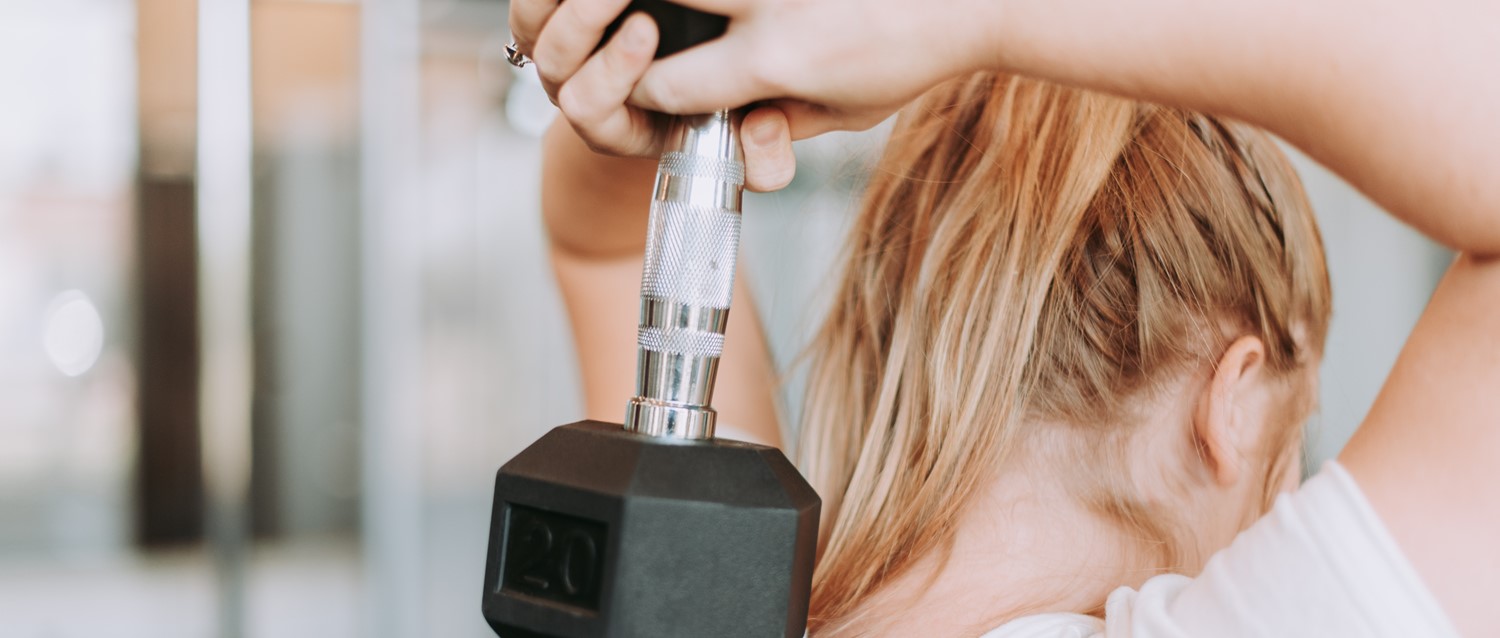
Votre routine d'exercice vous donne-t-elle de l'acné ?
Revu par Dr Sarah JarvisRédigé par Andrea DowneyPublié à l'origine 21 Oct 2019
Respecte les directives éditoriales
- TéléchargerTélécharger
- Partager
- Language
- Discussion
- Ask Patient
- Version audio
- Ajouter aux sources préférées sur Google
Nous nous attendons tous à avoir un ou deux muscles endoloris après une séance d'entraînement intense, mais il y a un effet secondaire de l'exercice dont vous n'avez probablement pas entendu parler - l'acné. Oui, c'est vrai, l'exercice peut provoquer de l'acné et cela peut se produire sur tout votre corps. La dermatologue Dr Anjali Mahto explique pourquoi votre entraînement pourrait causer des éruptions cutanées.
Explore acne treatment options
Get expert healthcare advice from the comfort of home. Complete a quick online consultation, available 24/7, with your request reviewed by a UK-registered clinician. Next day delivery available on eligible treatments.

Have you ever noticed you're getting spots more often than usual when you faire de l'exercice? Perhaps those spots are in places you wouldn't expect, like your back, bra line and bum.
It's quite possible it's caused by exercise. Specifically, the clothes you wear when working out.
"Acné due to physical activity can be related to repetitive pressure from tight clothing when exercising," says Dr Mahto, of the British Association of Dermatologists.
"This type of acne can occur anywhere on the body, although it is most common on areas that are more frequently subjected to rubbing, such as the back, shoulders, buttocks and, if a tight hat or hairband is being worn, the forehead.
"Tight fabrics, sweat and heat can block hair follicles and create a warm, moist environment for bacteria to multiply in. This combination of blocked hair follicles and multiplying bacteria can lead to acne forming."
Spot of bother ... should I quit exercise?
As tempting as it might be to sit back on the couch in front of the telly as soon as you notice a breakout, we all know exercise is part of a healthy lifestyle so giving up on it isn't the answer.
You just need to take steps to manage what might be causing the spots. Unfortunately, that might mean re-evaluating your workout wardrobe.
"To reduce the chances of acne forming due to exercise, try to avoid exposing your skin to prolonged periods of friction and wearing tight-fitting items of clothing and accessories," Dr Mahto says.
"If you are doing an activity where you are likely to sweat, wear loose, breathable fabrics. Where possible, change out of exercise wear and shower soon after you finish working out."
It's also a good idea to exfoliate your skin regularly, especially in areas that get rubbed by tight clothing. This will prevent a build-up of dead skin cells which can also block your pores and hair follicles, leading to spots.
What is acne?
To understand why you're getting breakouts, it's important to understand what actually causes acne, whether it's made worse by exercise or not.
Many people mistake acne with uncleanliness, when actually the condition has nothing to do with how often a person washes and everything to do with hormones.
"Acne starts in hair follicles, which are made up of a follicle shaft, a hair and an oil-producing gland, known as the sebaceous gland," Dr Mahto explained.
"The sebaceous glands of people who get acne are sensitive to normal blood levels of certain hormones. These cause the glands to produce an excess of oil.
"At the same time, the dead skin cells lining the pores are not shed properly and clog up the follicles. These two effects result in a build-up of oil, producing blackheads and whiteheads."
L'aide est disponible
Luckily, there is a myriad of treatments available for acne, ranging from over-the-counter washes and creams to prescription retinoids.
If you have breakouts you've probably already Googled natural acne treatments, but there is no proven natural remedy that works. In fact, they're likely to cause further skin irritation so it's best to steer clear of those altogether.
"Over-the-counter treatments include benzoyl peroxide, salicylic acid, azelaic acid, nicotinamide and some retinols. Some of these can be irritating to the skin, so it may be advised that the treatment is initially used on a small area of affected skin for a few applications before being applied to the entire affected area," Dr Mahto says.
"It may then be recommended to gradually increase the use of the treatment - for example, using it once or twice weekly - gradually building to regular daily use."
Speak with a pharmacist if you're unsure which treatment is best for you. And remember, you won't see results overnight - it takes at least eight weeks before you will start to see a difference, depending on how severe your acne is.
If you've tried over-the-counter treatments and nothing is working, then you can speak with your pharmacist, who may be able to offer medications usually only available on prescription. If all else fails, a GP or dermatologist may be able to offer other prescription treatments.
Explore acne treatment options
Get expert healthcare advice from the comfort of home. Complete a quick online consultation, available 24/7, with your request reviewed by a UK-registered clinician. Next day delivery available on eligible treatments.
Sélections des patients pour Acné
Santé de la peau, des ongles et des cheveux
Le maquillage provoque-t-il de l'acné ?
"Le maquillage provoque-t-il de l'acné ?" est une question ancienne. Cependant, la réponse n'est peut-être pas aussi simple qu'un oui ou un non. Il est compréhensible que ceux qui ont de l'acné veuillent la dissimuler avec du maquillage, mais que pouvez-vous faire pour vous assurer de bien prendre soin de votre peau, et quand devriez-vous consulter un professionnel pour votre traitement de l'acné ?
par Emily Jane Bashforth
Santé de la peau, des ongles et des cheveux
Les remèdes naturels sont-ils vraiment efficaces contre l'acné ?
Les traitements naturels pour la peau que vous pouvez trouver chez vous deviennent de plus en plus populaires, mais existe-t-il des preuves qu'ils peuvent guérir l'acné ? La réponse pour la plupart des gens est non, selon le Dr Anjali Mahto de l'Association britannique de dermatologie, qui affirme que les traitements naturels pourraient même provoquer une irritation supplémentaire de la peau.
par Andrea Downey
À propos de l'auteur
Rédigé par

Andrea Downey
À propos du critiqueVoir la biographie complète

Dr Sarah Jarvis
Consultant Clinique
MA (Cantab), BM, BCh (Oxon), DRCOG, FRCGP, MBE
Après avoir suivi une formation en médecine à Cambridge et Oxford, le Dr Sarah Jarvis MBE est devenue médecin généraliste.
Historique de l'article
Article également disponible en Anglais, Allemand, Espagnol, Français, Italien, Portugais, Hindi, Hébreu, Arabe, and Suédois.
21 Oct 2019 | Publié à l'origine
Écrit par :
Andrea Downey
Revu par
Dr Sarah Jarvis
Partagez vos pensées ou expériences avec les autres dans notre communautés de patients.
Accès simple à des traitements fiables et à des services de santé en ligne.
Common conditions
Get help with common conditions through the NHS, without a GP appointment.





Inscrivez-vous à la newsletter Patient
Votre dose hebdomadaire de conseils de santé clairs et fiables - rédigés pour vous aider à vous sentir informé, confiant et maître de la situation.
En vous abonnant, vous acceptez notre Politique de confidentialité. Vous pouvez vous désabonner à tout moment. Nous ne vendons jamais vos données.