Ce que c'est vraiment de vivre avec la rosacée
Revu par Dr Sarah JarvisRédigé par Abi MillarPublié à l'origine 22 juin 2018
Respecte les directives éditoriales
- TéléchargerTélécharger
- Partager
- Language
- Discussion
- Ask Patient
- Version audio
- Ajouter aux sources préférées sur Google
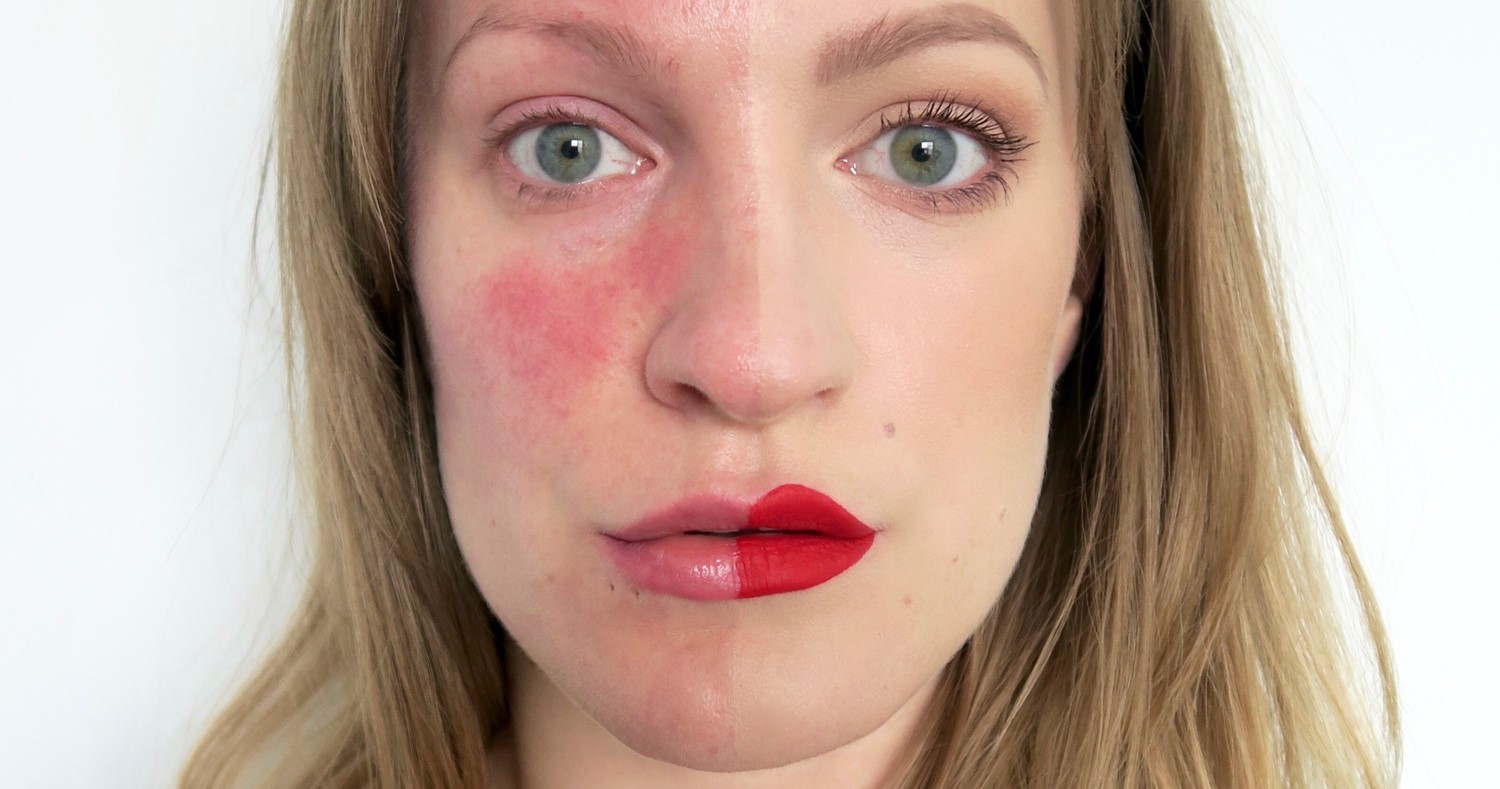
Lorsque Lex Gillies avait 21 ans, elle est allée chez le médecin avec des symptômes qu'elle décrit comme « insupportables ». Au cours des trois années précédentes, sa peau, toujours sensible, était devenue de plus en plus sujette aux rougeurs, et ces rougeurs mettaient de plus en plus de temps à disparaître.
Explore rosacea treatments
Get expert healthcare advice from the comfort of home. Complete a quick online consultation, available 24/7, with your request reviewed by a UK-registered clinician. Next day delivery available on eligible treatments.

Sélections vidéo pour Éruptions cutanéesBibliothèque vidéo
"I began to get pustules wherever the redness appeared and my skin became so dry that it would flake and crack," she says. "The doctor knew as soon as I walked in that I had la rosacée - a word I had never even heard before - and he prescribed a métronidazole cream, which my skin hated, and a thick emollient cream."
Lex was suffering with a common inflammatory skin condition, characterised by facial skin sensitivity, redness, burning sensations and small red bumps known as papules. While rosacea can affect anybody, it is most commonly seen in fair-skinned individuals between 30 and 60 years old.
Women are more likely to develop the condition than men (one UK étude placed the proportion of female sufferers at 61.5%) but men may be affected more severely. Men are more prone, for instance, to rhinophyma - a thickening of the skin of the nose.
For Lex, who was young to be dealing with rosacea, the diagnosis came as a serious blow.
"I think I was quite unlucky with my first doctor: he was dismissive of the way that my rosacea made me feel and told me that if I was serious about treating my rosacea I would remove every potential trigger immediately," she says. "Telling a young girl at university that she should stop drinking alcohol, eat healthily, stop wearing make-up, get eight hours of sleep a night, and avoid stressful situations is not realistic! I wish that I'd known that I could ask for another doctor if I didn't feel that the current one was working out for me. Later experiences with doctors showed me that they could be empathetic, understanding and really helpful."
Lex Gillies
Gérer la condition
Now 33, Lex is an ambassador for the British Skin Foundation and writes about living with rosacea (and nail art) in her blog Talonted Lex. Although she is not 'cured' - rosacea, unfortunately, is a chronic condition - she has made a number of lifestyle changes and has learnt what exacerbates her symptoms.
"I have drastically altered my diet, my drinking habits, my skincare and make-up routine, and made impactful changes to my everyday habits," she says. "The biggest change for me was finding my triggers. It can be a laborious and seemingly endless task, but once you know what your skin loves and hates, you can start to make sensible and realistic choices."
Although the cause of rosacea is unknown, it is thought to stem from a number of factors: genetic predisposition, coupled with undefined environmental and inflammatory triggers that cause the blood vessels in the face to readily dilate. The exact triggers vary from person to person, but can include alcohol, stress, temperature, hot drinks and spicy foods.
Selon Dr Anjali Mahto, consultant dermatologist and British Skin Foundation spokesperson, there are various ways of reducing symptom severity.
"Oral antibiotics, topical treatments, anti-flushing medication and laser therapies can all treat rosacea but must be used under the guidance of your dermatologist or doctor," she says. "It's extremely important to use sunscreen daily to help manage your rosacea, as UV radiation is one of the common triggers. Ideally, an SPF of 50 should be worn that provides broad-spectrum UVA and UVB protection. Avoid using perfumed soaps and use an emollient as an alternative. It's best to stick to unperfumed moisturiser too."
Lex found it helpful to take photos to compare the severity of flare-ups, cross-referencing these with a list of everything that may have had an impact on her skin.
"It can be overwhelming to see a list of potential triggers, but remember that you do not have to completely eliminate these things," she says. "For example, now that I know how my skin reacts to using hair straighteners, I make sure that I leave enough time between doing my hair and leaving the house so that my redness has a chance to calm down. There are ways to work around most of your triggers so you don't see them as completely forbidden."
"It does not define you"
Despite managing her condition well, she adds that rosacea has profoundly affected her psychologically. She is not the only one in this position: one American enquête found that 75% of respondents with rosacea had seen a knock-on effect on their l'estime de soi, and 56% reported that they had felt robbed of pleasure or happiness.
"I used to be a very confident person who was thrilled to be the centre of attention. Rosacea destroyed my self-confidence and changed me into someone I didn't recognise when I look in the mirror," says Lex. "It can be difficult to explain to other people how much a condition like rosacea can affect your psychological well-being but, for me, this has been the biggest obstacle to overcome and one I still struggle with."
Lex now endeavours to help others in her position, through writing information, advice, recommendations and reviews. Her blog also includes links for those who wish to ask her further questions, or just want to vent to someone who understands.
"The most important piece of advice I always give to others is that rosacea does not define you," she says. "Although it feels all-encompassing, it is not the most interesting or important thing about you. You are still the person you were before rosacea - you just look a little different."
Sélections des patients pour Éruptions cutanées
Santé de la peau, des ongles et des cheveux
Que faire lorsque votre enfant a une éruption cutanée
En tant que parent, il est difficile de ne pas paniquer lorsque votre enfant développe une éruption cutanée. Mais ces poussées cutanées inquiétantes ne sont souvent pas préoccupantes. Suivez notre guide de dépannage pour savoir quoi faire face à l'éruption cutanée de votre enfant.
par Gillian Harvey
Santé de la peau, des ongles et des cheveux
Scarlatine : les conseils d'un médecin
Avec une augmentation des cas de scarlatine, le médecin généraliste et maman, Dr Krishna Vakharia, notre directrice clinique ici chez Patient.info, parle de ce que vous devez savoir et de ce que vous devez faire si vous êtes inquiet.
par Dr Krishna Vakharia, MRCGP
À propos de l'auteurVoir la biographie complète
Rédigé par

Abi Millar
Journaliste indépendant
BA (Hons), MA
Abi est une journaliste indépendante avec un intérêt particulier pour l'écriture sur la santé et la médecine.
À propos du critiqueVoir la biographie complète

Dr Sarah Jarvis
Consultant Clinique
MA (Cantab), BM, BCh (Oxon), DRCOG, FRCGP, MBE
Après avoir suivi une formation en médecine à Cambridge et Oxford, le Dr Sarah Jarvis MBE est devenue médecin généraliste.
Historique de l'article
Article également disponible en Anglais, Allemand, Espagnol, Français, Italien, Portugais, Hindi, Hébreu, Arabe, and Suédois.
22 juin 2018 | Publié à l'origine
Écrit par :
Abi MillarRevu par
Dr Sarah Jarvis
Partagez vos pensées ou expériences avec les autres dans notre communautés de patients.
Inscrivez-vous à la newsletter Patient
Votre dose hebdomadaire de conseils de santé clairs et fiables - rédigés pour vous aider à vous sentir informé, confiant et maître de la situation.
En vous abonnant, vous acceptez notre Politique de confidentialité. Vous pouvez vous désabonner à tout moment. Nous ne vendons jamais vos données.