Comprendre la perte de cheveux chez les femmes
Revu par Dr Hayley Willacy, FRCGP Rédigé par Dr Sarah JarvisPublié à l'origine 18 Sept 2017
Respecte les directives éditoriales
- TéléchargerTélécharger
- Partager
- Language
- Discussion
- Ask Patient
- Version audio
- Ajouter aux sources préférées sur Google
Nous, les femmes, avons des douleurs menstruelles, l'accouchement et la ménopause. Mais au moins, contrairement aux hommes, nous n'avons pas à nous soucier de devenir chauves. Ou est-ce le cas ? Cela peut être moins fréquent chez les femmes, mais l'amincissement des cheveux n'est pas entièrement réservé aux hommes.
Explore hair loss treatment for women
Get expert healthcare advice from the comfort of home. Complete a quick online consultation, available 24/7, with your request reviewed by a UK-registered clinician. Next day delivery available on eligible treatments.

Sélections vidéo pour Cheveux et cuir cheveluBibliothèque vidéo
How our hair goes through three ‘lifetime’ phases
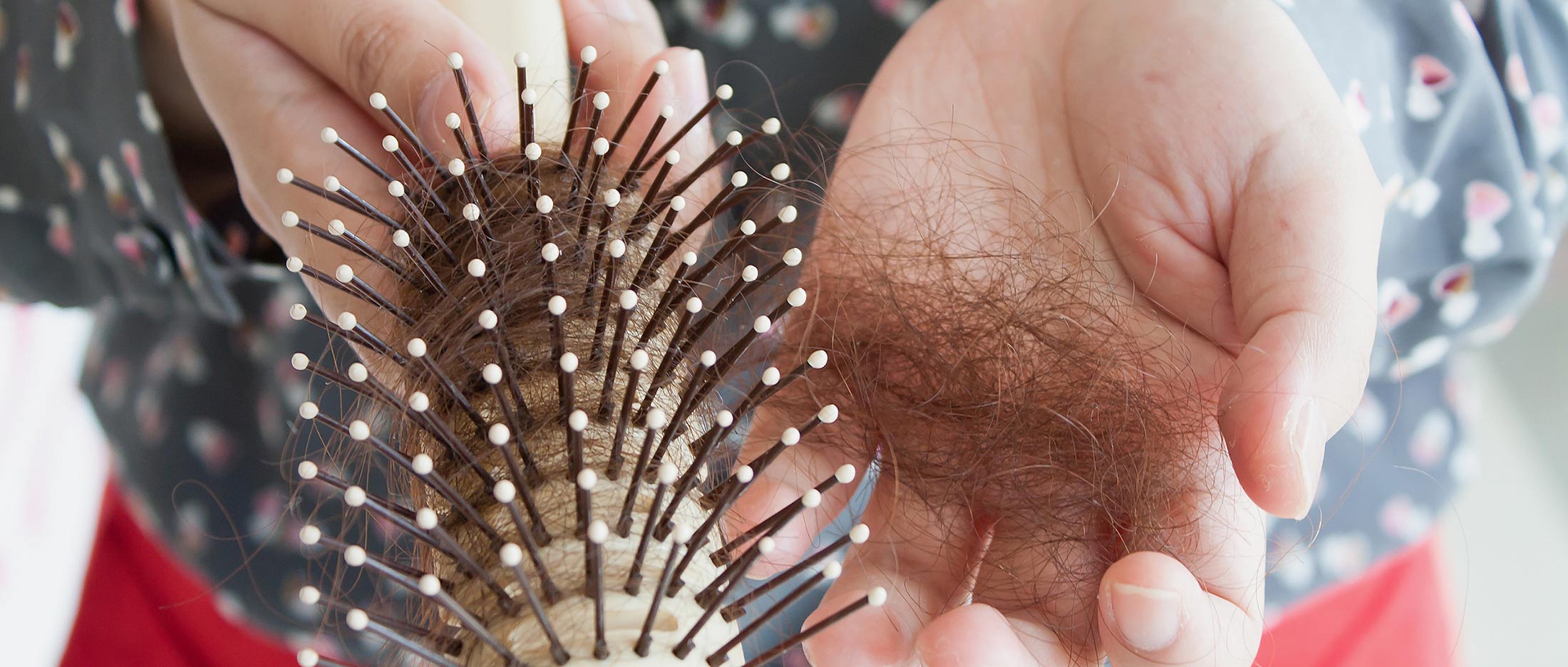
I never cease to be amazed at how often women consult me about hair loss – mostly because when I check their hair, I can’t find anything wrong. But your crowning glory has a huge effect on your self-esteem. That means it’s hardly surprising that panic sets in when you start waking up with hair all over your pillow. In fact, if you’re a woman, it virtually never means you’re going to lose all your hair.
Your hair naturally goes through three phases in its ‘lifetime’:
The first is the growing phase, which lasts for three to five years.
Next comes the ‘shrinking’ phase, which lasts just a couple of weeks
Then the resting phase for three months or so. Towards the end of this, the hair follicle starts a new growing phase and pushes the old hair out if it hasn’t fallen out or come out on your hairbrush.
In some animals these phases happen at around the same time, which is why some dogs moult in summer, leaving your house covered in hair. Most humans lose a few hairs every day, although it can be more in times of stress.
Some kinds of cancer chimiothérapie can stop the hair growing phase, which is why hair loss is an issue. Wearing a cold cap (literally an ice cap for your head) before treatment starts cuts the risk of this happening – if you are due to start chemotherapy, your cancer nurse can advise.
Causes of thinning hair in women
Some of the causes of female hair loss can include:
Stress, childbirth and crash diets, which can push your hair suddenly into the resting phase.
Certaines médicaments.
Going through ménopause.
Having an underactive glande thyroïde.
Being short of iron (even if you’re not anaemic).
Not enough high quality protein in your diet.
Your doctor may suggest a blood test to check your thyroid and iron levels if you are concerned about hair thinning.
What is alopecia?
The medical term for hair loss is l'alopécie. One kind – alopecia areata – causes patches of total hair loss with completely normal hair around. These patches can vary from small spots, less than the size of a 10 pence piece, to the whole scalp. Much less often, eyebrows, eyelashes, the beard area and even pubic hair can be affected. Alopecia areata is an autoimmune disease – your body’s immune system recognises part of your body as an enemy and attacks it. It only affects your hair and won’t affect your general health in any way. However, you are at slightly higher risk of other autoimmune conditions like hypothyroïdie ou arthrite rhumatoïde. It can run in families, with men and women equally affected.
Does alopecia cause permanent hair loss?
The good news is that in alopecia areata, the hair follicles your hairs grow from aren’t permanently damaged, and many people regain a full head of hair within months. In fact, as long as less than half your scalp is affected, you have a four in five chance of full recovery within a year. The older you are when it starts, the less hair tends to be lost and the better the chance of regaining a full head of hair.
What are the treatments for hair loss?
Because alopecia areata doesn’t cause any other symptoms, treatment isn’t always necessary, especially if only small patches are affected and a change in hairstyle will hide the problem. For more extensive hair loss, steroid injections into your scalp may help. Steroid cream might also be tried, although it’s less effective.
In men, hair loss is often thought to be related to male hormone levels. In fact, men who go bald usually have normal testosterone levels, but the hair follicles become super-sensitive to testosterone, making the hair follicles shrink. Don’t forget the skin where hair has been lost is sensitive to sunlight and burns easily. That means hats and sunscreen from spring to autumn, even if you don’t think it’s sunny enough to burn!
Women also get hormone related, but it’s almost always general thinning rather than receding hairline or bald patch, and it does not lead to total baldness. For general thinning hair, you can buy a solution called ‘minoxidil’ from pharmacists – it’s not available on the NHS.
It is worth seeing your doctor if your hair starts thinning. Sometimes medications can be to blame. If underactive thyroid or iron deficiency are the cause, these can be treated.
Avec remerciements au magazine ‘My Weekly’ où cet article a été initialement publié.
Sélections des patients pour Cheveux et cuir chevelu
Santé de la peau, des ongles et des cheveux
À quelle fréquence devriez-vous vous laver les cheveux ?
Bien que vous ayez probablement une routine capillaire qui fonctionne pour vous et votre mode de vie, pouvez-vous être sûr de vous laver les cheveux au bon moment et d'utiliser les meilleurs produits pour votre type de cheveux ? Explorons à quelle fréquence vous devriez vous laver les cheveux (c'est probablement moins souvent que vous ne le pensez) et les méthodes simples que vous pouvez utiliser pour découvrir quel type de cheveux vous avez.
par Emily Jane Bashforth
Santé de la peau, des ongles et des cheveux
4 problèmes capillaires courants en hiver - et comment les traiter
En hiver, nous passons constamment du froid extérieur au chauffage central intérieur. Ces deux conditions peuvent être agressives pour nos cheveux, les privant de l'humidité dont ils ont besoin pour rester en bonne santé et pleins de vitalité. Nous avons demandé à un spécialiste des cheveux des conseils pour prévenir les problèmes capillaires les plus courants en hiver, et explorer d'autres problèmes de santé qui pourraient être liés à vos soucis capillaires.
par Victoria Raw
À propos de l'auteurVoir la biographie complète
Rédigé par

Dr Sarah Jarvis
Consultant Clinique
MA (Cantab), BM, BCh (Oxon), DRCOG, FRCGP, MBE
Après avoir suivi une formation en médecine à Cambridge et Oxford, le Dr Sarah Jarvis MBE est devenue médecin généraliste.
À propos du critiqueVoir la biographie complète

Dr Hayley Willacy, FRCGP
Médecin généraliste, Auteur médical
MBChB (1992), DRCOG, DFFP, MRCOG (Part 1) MRCGP (2007), DFSRH (2013), MSc - medical education (2020)
Le Dr Hayley Willacy était médecin généraliste au NHS travaillant dans le nord-ouest de l'Angleterre, qui a pris sa retraite de la pratique clinique en 2022 après 30 ans.
Historique de l'article
Article également disponible en Anglais, Allemand, Espagnol, Français, Italien, Portugais, Hindi, Hébreu, Arabe, and Suédois.
18 Sept 2017 | Publié à l'origine
Écrit par :
Dr Sarah JarvisRevu par
Dr Hayley Willacy, FRCGP
Partagez vos pensées ou expériences avec les autres dans notre communautés de patients.
Inscrivez-vous à la newsletter Patient
Votre dose hebdomadaire de conseils de santé clairs et fiables - rédigés pour vous aider à vous sentir informé, confiant et maître de la situation.
En vous abonnant, vous acceptez notre Politique de confidentialité. Vous pouvez vous désabonner à tout moment. Nous ne vendons jamais vos données.