Hypertension
Dernière mise à jour 8 nov. 2023
Respecte les directives éditoriales
- TéléchargerTélécharger
- Partager
- Language
- Discussion
- Ask Patient
- Version audio
- Ajouter aux sources préférées sur Google
Hypertension is abnormally high blood pressure in the arteries, which are the blood vessels that carry blood from the heart to the rest of the body. As the heart beats, it forces blood through the arteries to deliver nutrients and oxygen to the rest of the body. The strength of the blood pushing against the artery walls is blood pressure, which is measured in units called millimeters of mercury (mmHg). The top number in a blood pressure reading is the pressure when the heart pumps (systolic blood pressure), and the bottom number is the pressure between heart beats (diastolic blood pressure). In adults, a normal blood pressure measurement is about 120/80 mmHg. Blood pressure is considered high when the measurement is 130/80 mmHg or greater.
Sélections vidéo pour Conditions génétiquesBibliothèque vidéo
Description
Hypertension is abnormally high blood pressure in the arteries, which are the blood vessels that carry blood from the heart to the rest of the body. As the heart beats, it forces blood through the arteries to deliver nutrients and oxygen to the rest of the body. The strength of the blood pushing against the artery walls is blood pressure, which is measured in units called millimeters of mercury (mmHg). The top number in a blood pressure reading is the pressure when the heart pumps (systolic blood pressure), and the bottom number is the pressure between heart beats (diastolic blood pressure). In adults, a normal blood pressure measurement is about 120/80 mmHg. Blood pressure is considered high when the measurement is 130/80 mmHg or greater.
Hypertension usually has no symptoms, and many affected individuals do not know they have the condition. However, hypertension is a major risk factor for heart disease, stroke, kidney failure, and eye problems. When blood pressure is elevated, the heart and arteries have to work harder than normal to pump blood through the body. The extra work thickens the muscles of the heart and arteries and hardens or damages artery walls. As a result, the flow of blood and oxygen to the heart and other organs is reduced. Damage to the heart caused by the extra work and a lack of oxygen causes heart disease. In addition, damage to the arteries increases the risk of blood clots that block the flow of blood to the heart, causing a heart attack, or to the brain, causing a type of stroke known as an ischemic stroke. Another type of stroke, called a hemorrhagic stroke, can occur when a weakened blood vessel in the brain bursts. Damage to blood vessels in the kidneys impairs their ability to filter waste and remove fluid, leading to kidney failure. Problems with blood flow in the arteries of the eyes can lead to vision loss.
In rare cases, dangerously high blood pressure can cause severe headaches, confusion, shortness of breath, chest pain, or nosebleeds.
In about 95 percent of cases, the cause of hypertension is unknown. These cases are classified as essential hypertension. When hypertension results from an underlying condition, such as blood vessel defects that reduce blood flow; kidney disorders, which alter the amount of fluids and salts in the body; or problems with hormone-producing glands called the adrenal glands or the thyroid gland, it is classified as secondary hypertension. Hypertension is a key feature of some rare genetic disorders, including familial hyperaldosteronism, pseudohypoaldosteronism type 2, Liddle syndrome, and tumours known as paragangliomas.
Inheritance patterns
The source lists the following possible inheritance patterns: Pattern unknown. More than one pattern can apply in different cases.
Related genes
Other names
Hypertension essentielle
Hypertension artérielle
Primary hypertension
Related patient information and medicines
Patient information leaflet
Hypertension artérielle
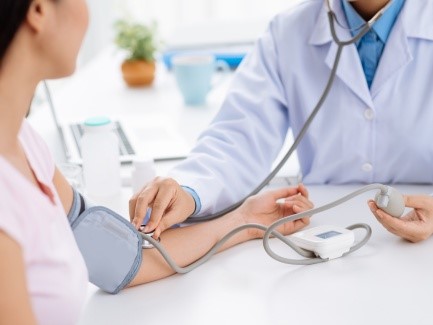
High blood pressure (hypertension) happens when the force on the walls of blood vessels (caused by the blood within them) is more than normal. This means the heart has to work harder and the blood vessels are under more strain, making it a major risk factor for heart disease , stroke and other serious conditions. High blood pressure is a blood.

Patient information leaflet
Vivre avec l'hypertension
About 3 in 10 adults in the UK are living with high blood pressure. This will reduce the risks of complications from high blood pressure - which can include kidney damage , stroke , heart disease , dementia , and problems with the blood vessels. What is high blood pressure. High blood pressure is when the blood pressure (a measure of how.
Patient information leaflet
Diabète et hypertension artérielle
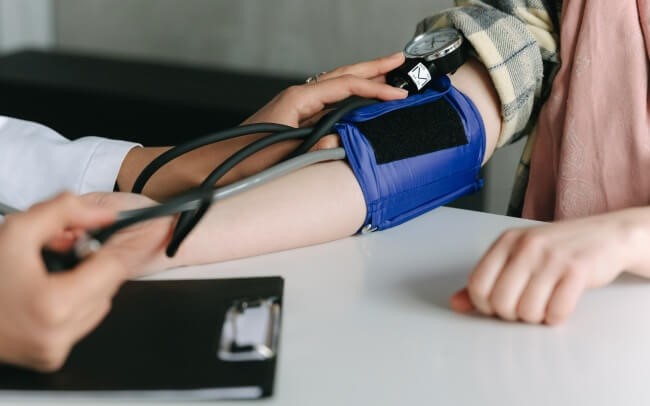
C'est important to keep your blood pressure under control if you have diabetes. Keeping your blood pressure well controlled is important for everyone, but is especially import... High blood pressure (hypertension) High blood pressure increases the risk of developing heart disease and stroke, and in people with diabetes it also increases the risk.

Patient information leaflet
Problèmes oculaires
Rarely, it can be associated with high blood pressure ( hypertension High blood pressure ). Glaucoma... Ocular hypertension is a condition in which the pression in the eyeball is raised but douleur and gradual loss of vision do not occur. Ocular hypertension affects around 5 in 100 people over the age of 40 years. Normal-tension glaucoma This is.
Patient information leaflet
Diurétiques épargneurs de potassium
Diuretics are medicines which increase the amount of fluid removed from the body when we pass urine. Thiazide diuretics (for example, bendroflumethiazide). These are mainly used for treating hypertension artérielle (hypertension) and fluid on the legs (oedema). This can happen due to various con... In treating high blood pressure (hypertension) High.

Patient information leaflet
Diurétiques thiazidiques
Diurétiques thiazidiques are mainly used to treat high blood pressure (hypertension). They are occasionally also used for heart failure. Diurétiques thiazidiques are a common treatment for high blood pressure (hypertension) High sang pressure. They are also occasionally used to clear fluid from the body in conditions where your body accumulates too much....
Lectures complémentaires et références
- Hypertension; MedlinePlus, National Library of Medicine.
- Dodoo SN, Benjamin IJ. Genomic Approaches to Hypertension. Cardiol Clin. 2017 May;35(2):185-196. doi: 10.1016/j.ccl.2016.12.001.
- Gkaliagkousi E, Douma S, Zamboulis C, Ferro A. Nitric oxide dysfunction in vascular endothelium and platelets: role in essential hypertension. J Hypertens. 2009 Dec;27(12):2310-20. doi: 10.1097/HJH.0b013e328330e89a.
- Padmanabhan S, Aman A, Dominiczak AF. Genomics of hypertension. Pharmacol Res. 2017 Jul;121:219-229. doi: 10.1016/j.phrs.2017.04.031. Epub 2017 May 8.
- Saxena T, Ali AO, Saxena M. Pathophysiology of essential hypertension: an update. Expert Rev Cardiovasc Ther. 2018 Dec;16(12):879-887. doi: 10.1080/14779072.2018.1540301.
- Singh M, Singh AK, Pandey P, Chandra S, Singh KA, Gambhir IS. Molecular genetics of essential hypertension. Clin Exp Hypertens. 2016;38(3):268-77. doi: 10.3109/10641963.2015.1116543. Epub 2016 Mar 30.
- Whelton PK, Carey RM, Aronow WS, Casey DE Jr, Collins KJ, Dennison Himmelfarb C, DePalma SM, Gidding S, Jamerson KA, Jones DW, MacLaughlin EJ, Muntner P, Ovbiagele B, Smith SC Jr, Spencer CC, Stafford RS, Taler SJ, Thomas RJ, Williams KA Sr, Williamson JD, Wright JT Jr. 2017 ACC/AHA/AAPA/ABC/ACPM/AGS/APhA/ASH/ASPC/NMA/PCNA Guideline for the Prevention, Detection, Evaluation, and Management of High Blood Pressure in Adults: A Report of the American College of Cardiology/American Heart Association Task Force on Clinical Practice Guidelines. Circulation. 2018 Oct 23;138(17):e484-e594. doi: 10.1161/CIR.0000000000000596. No abstract available.
- Wise IA, Charchar FJ. Epigenetic Modifications in Essential Hypertension. Int J Mol Sci. 2016 Mar 25;17(4):451. doi: 10.3390/ijms17040451.
- Wright JM, Musini VM, Gill R. First-line drugs for hypertension. Cochrane Database Syst Rev. 2018 Apr 18;4(4):CD001841. doi: 10.1002/14651858.CD001841.pub3.
Partagez vos pensées ou expériences avec les autres dans notre communautés de patients.
Accès simple à des traitements fiables et à des services de santé en ligne.
Common conditions
Get help with common conditions through the NHS, without a GP appointment.





Inscrivez-vous à la newsletter Patient
Votre dose hebdomadaire de conseils de santé clairs et fiables - rédigés pour vous aider à vous sentir informé, confiant et maître de la situation.
En vous abonnant, vous acceptez notre Politique de confidentialité. Vous pouvez vous désabonner à tout moment. Nous ne vendons jamais vos données.