Inherited thyroxine-binding globulin deficiency
Dernière mise à jour 13 Mar 2025
Respecte les directives éditoriales
- TéléchargerTélécharger
- Partager
- Language
- Discussion
- Ask Patient
- Version audio
- Ajouter aux sources préférées sur Google
Inherited thyroxine-binding globulin deficiency is a genetic condition that typically does not cause health problems.
Sélections vidéo pour Conditions génétiquesBibliothèque vidéo
Description
Inherited thyroxine-binding globulin deficiency is a genetic condition that typically does not cause health problems.
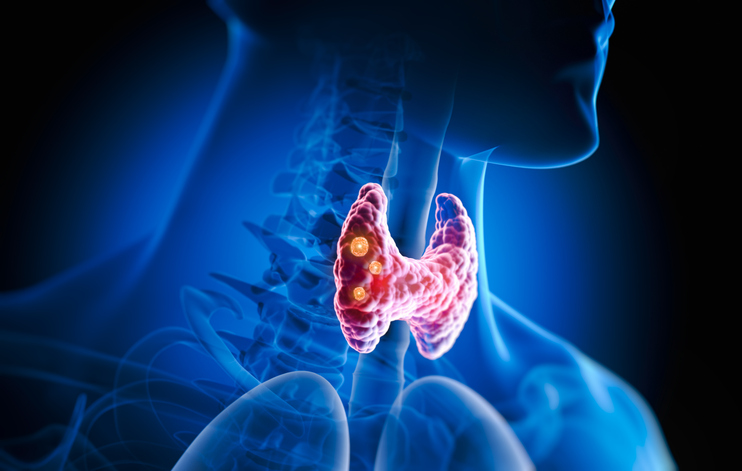
Thyroxine-binding globulin is one of three major proteins in the bloodstream that carries hormones made by the thyroid gland, a butterfly-shaped tissue in the lower neck. Thyroid hormones play an important role in regulating growth, brain development, and the rate of chemical reactions in the body (metabolism). Thyroxine is the primary hormone produced by the thyroid gland. In the bloodstream, thyroxine and other thyroid hormones are typically attached (bound) to thyroxine-binding globulin and similar proteins. A shortage (deficiency) of thyroxine-binding globulin reduces the total amount of thyroxine in the blood.
Researchers have identified two forms of inherited thyroxine-binding globulin deficiency: the partial form and the complete form. The partial form reduces the amount of functioning thyroxine-binding globulin. The complete form causes a more significant loss of functioning thyroxine-binding globulin. These conditions typically do not cause problems with thyroid function and are usually identified when bloodwork is performed to rule out other conditions.
Although inherited thyroxine-binding globulin deficiency typically does not cause health problems, it can be mistaken for more serious thyroid disorders, such as hypothyroidism. Therefore, it is important to correctly diagnose the condition to avoid unnecessary treatments.
Inheritance patterns
The source lists the following possible inheritance patterns: X-linked. More than one pattern can apply in different cases.
Related genes
Other names
TBG deficiency
TBGQTL
Thyroxine-binding globulin quantitative trait locus
Related patient information and medicines
Patient information leaflet
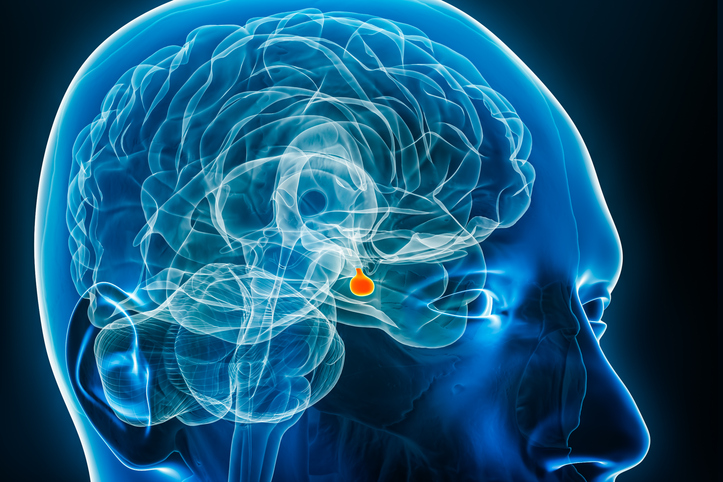
Troubles de l'hypophyse
This leaflet gives a brief overview of the pituitary gland and the hormones it makes. The pituitary gland is found at the base of the brain and is 'pea-sized'. The pituitary gland is a... Men also have prolactin but its function is not understood well. Thyroid-stimulating hormone (TSH) Thyroid gland TSH stimulates the thyroid gland to produce its.
Patient information leaflet
Traiter les problèmes de santé des nouveau-nés
Treatments include medicines, early antibiotics for infections, physiotherapy and special diets. Hypothyroidism Underactive thyroid gland : babies with this condition do not produce enough of the thyroxine hormone and this can damage their development. If picked up early they can be treated with a medicine form of thyroxine hormone so that they.
Patient information leaflet
Goitre
A goitre (pronounced goy-ter, sometimes spelt as 'goiter') is an enlarged thyroid gland. This gives you a lump at the front of your neck. The thyroid gland makes thyroid hormones - called thyroxine (T4) and triiodothyronine (T3). These hormones are ca... For example: Graves' disease Overactive thyroid gland - an autoimmune disease which causes the.
Patient information leaflet
Tests de la fonction thyroïdienne
Tests de la fonction thyroïdienne sont analyses de sang which help to check the function of your thyroid gland. They are mainly used to detect an underactive thyroid gland (hypothyroidism) and an overactive thyroid gland (hyperthyroidism). Lots of basic information about the thyroid gland can be found in the separate leaflet called Thyroid Problems (also including.
Patient information leaflet
Hypothyroïdie
Dans hypothyroidism, there is a reduced level of thyroid hormone dans le body. Treatment usually involves taking a daily tablet of thyroid hormone to replace the missing thyroxine. Neck cross-section showing the thyroid gland Cross section of neck showing the thyroid gland The thyroid gland is located in the neck and produces thyroid hormones. These.

Patient information leaflet
Test de dépistage néonatal
Mothers of all newborn babies are offered testing for certain rare but serious health conditions by testing blood taken from the baby's heel. Conditions which the heel prick test can screen for are as follows: Sickle cell disease Sickle cell disease (SCD) - this is an hérité sang disorder. Medium-chain acyl-Co-A dehydrogenase deficiency.
Lectures complémentaires et références
- Inherited thyroxine-binding globulin deficiency; MedlinePlus, National Library of Medicine.
- Chakravarthy V, Ejaz S. Thyroxine-Binding Globulin Deficiency. 2023 Jul 4. In: StatPearls [Internet]. Treasure Island (FL): StatPearls Publishing; 2023 Jan-. Available from http://www.ncbi.nlm.nih.gov/books/NBK544274/
- Fang Y, Chen H, Chen Q, Wang C, Liang L. Compound hemizygous variants in SERPINA7 gene cause thyroxine-binding globulin deficiency. Mol Genet Genomic Med. 2021 Feb;9(2):e1571. doi: 10.1002/mgg3.1571. Epub 2021 Feb 7.
- Knobel M, Medeiros-Neto G. An outline of inherited disorders of the thyroid hormone generating system. Thyroid. 2003 Aug;13(8):771-801. doi: 10.1089/105072503768499671.
- Mandel S, Hanna C, Boston B, Sesser D, LaFranchi S. Thyroxine-binding globulin deficiency detected by newborn screening. J Pediatr. 1993 Feb;122(2):227-30. doi: 10.1016/s0022-3476(06)80117-4.
- Okamoto H, Mori Y, Tani Y, Nakagomi Y, Sano T, Ohyama K, Saito H, Oiso Y. Molecular analysis of females manifesting thyroxine-binding globulin (TBG) deficiency: selective X-chromosome inactivation responsible for the difference between phenotype and genotype in TBG-deficient females. J Clin Endocrinol Metab. 1996 Jun;81(6):2204-8. doi: 10.1210/jcem.81.6.8964852.
- Pappa T, Ferrara AM, Refetoff S. Inherited defects of thyroxine-binding proteins. Best Pract Res Clin Endocrinol Metab. 2015 Oct;29(5):735-47. doi: 10.1016/j.beem.2015.09.002. Epub 2015 Sep 30.
- Schussler GC. The thyroxine-binding proteins. Thyroid. 2000 Feb;10(2):141-9. doi: 10.1089/thy.2000.10.141.
Partagez vos pensées ou expériences avec les autres dans notre communautés de patients.
Accès simple à des traitements fiables et à des services de santé en ligne.
Common conditions
Get help with common conditions through the NHS, without a GP appointment.





Inscrivez-vous à la newsletter Patient
Votre dose hebdomadaire de conseils de santé clairs et fiables - rédigés pour vous aider à vous sentir informé, confiant et maître de la situation.
En vous abonnant, vous acceptez notre Politique de confidentialité. Vous pouvez vous désabonner à tout moment. Nous ne vendons jamais vos données.