Leukocyte adhesion deficiency type 1
Dernière mise à jour 18 Aug 2020
Respecte les directives éditoriales
- TéléchargerTélécharger
- Partager
- Language
- Discussion
- Ask Patient
- Version audio
- Ajouter aux sources préférées sur Google
Leukocyte adhesion deficiency type 1 is a disorder that causes the immune system to malfunction, resulting in a form of immunodeficiency. Immunodeficiencies are conditions in which the immune system is not able to protect the body effectively from foreign invaders such as viruses, bacteria, and fungi. Starting from birth, people with leukocyte adhesion deficiency type 1 develop serious bacterial and fungal infections.
Sélections vidéo pour Conditions génétiquesBibliothèque vidéo
Description
Leukocyte adhesion deficiency type 1 is a disorder that causes the immune system to malfunction, resulting in a form of immunodeficiency. Immunodeficiencies are conditions in which the immune system is not able to protect the body effectively from foreign invaders such as viruses, bacteria, and fungi. Starting from birth, people with leukocyte adhesion deficiency type 1 develop serious bacterial and fungal infections.
One of the first signs of leukocyte adhesion deficiency type 1 is a delay in the detachment of the umbilical cord stump after birth. In newborns, the stump normally falls off within the first two weeks of life; but, in infants with leukocyte adhesion deficiency type 1, this separation usually occurs at three weeks or later. In addition, affected infants often have inflammation of the umbilical cord stump (omphalitis) due to a bacterial infection.
In leukocyte adhesion deficiency type 1, bacterial and fungal infections most commonly occur on the skin and mucous membranes such as the moist lining of the nose and mouth. In childhood, people with this condition develop severe inflammation of the gums (gingivitis) and other tissue around the teeth (periodontitis), which often results in the loss of both primary and permanent teeth. These infections often spread to cover a large area. A hallmark of leukocyte adhesion deficiency type 1 is the lack of pus formation at the sites of infection. In people with this condition, wounds are slow to heal, which can lead to additional infection.
Life expectancy in individuals with leukocyte adhesion deficiency type 1 is often severely shortened. Due to repeat infections, affected individuals may not survive past infancy.
Inheritance patterns
The source lists the following possible inheritance patterns: Autosomal recessive. More than one pattern can apply in different cases.
Related genes
Other names
LAD1
Leucocyte adhesion deficiency type 1
Leukocyte adhesion molecule deficiency type 1
Related patient information and medicines

Patient information leaflet
Complications postopératoires courantes
Postoperative complications are problems which arise as a result of you having had surgery, which were not an intentional effect of the surgery. Complication is a term used by health professionals to refer to something which was not intended to happen. However, some complications are common and occur frequently despite precautions. Acute kidney.

Patient information leaflet
Leucémie lymphoblastique aiguë
Aiguë lymphoblastic leukaemia (ALL) is a condition where the bone marrow makes large numbers de abnormal immature lymphocytes. What is acute lymphoblastic leukaemia. Leucémie lymphoblastique aiguë (ALL) is a condition where the bone marrow makes large numbers of abnormal immature lymphocytes. The immature cells are called lymphoblasts. There are.
Patient information leaflet
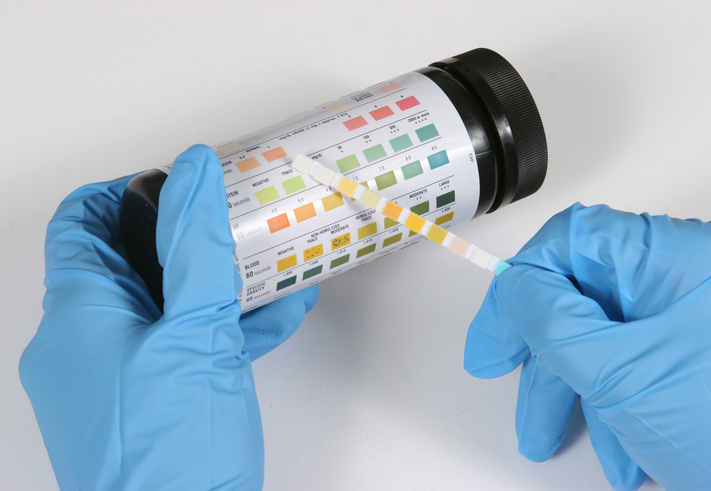
Test de bandelette urinaire
A urine dipstick test tests le urine using a special strip of paper that is dipped into a sample of urine. The result is available almost immediately. It is sometimes called a rapid urine test. Urine contains waste chemicals from all of the millions of chemical reactions that go on in the body all the time. However, in some conditions, chemicals.

Patient information leaflet
Cancer primitif des os
Cancer primitif des os occurs where a le cancer originates in a bone. It is a rare type of cancer. There are several different types. Treatments which may be considered include surgery, chemotherapy and radiotherapy. The type of treatment used and the outlook depend on various factors including the type, site and stage of the cancer. Understanding bone.

Patient information leaflet
Groupes sanguins et types
ABO et rhesus are both types of antigens found on the surface of red blood cells. There are lots of other types but these are the most important. The main reasons to know your blood group are if you need to have a blood transfusion or if you are pregnant. What is a blood group. Red blood cells (erythrocytes) have certain proteins on their.

Patient information leaflet
Cancer de la bouche
Diagnosing mouth cancer Your healthcare professional may suspect mouth cancer if you have a lesion in your mouth (such as a sore, an ulcer or a lump) which has not healed for 3 wee... Dr Krishna Vakharia , 16th October 2023 The National Institute for Health and Care Excellence (NICE) has recommended that a person should receive a diagnosis or.
Lectures complémentaires et références
- Leukocyte adhesion deficiency type 1; MedlinePlus, National Library of Medicine.
- Cox DP, Weathers DR. Leukocyte adhesion deficiency type 1: an important consideration in the clinical differential diagnosis of prepubertal periodontitis. A case report and review of the literature. Oral Surg Oral Med Oral Pathol Oral Radiol Endod. 2008 Jan;105(1):86-90. doi: 10.1016/j.tripleo.2007.02.026. Epub 2007 Jul 6.
- Hanna S, Etzioni A. Leukocyte adhesion deficiencies. Ann N Y Acad Sci. 2012 Feb;1250:50-5. doi: 10.1111/j.1749-6632.2011.06389.x. Epub 2012 Jan 25.
- Harris ES, Weyrich AS, Zimmerman GA. Lessons from rare maladies: leukocyte adhesion deficiency syndromes. Curr Opin Hematol. 2013 Jan;20(1):16-25. doi: 10.1097/MOH.0b013e32835a0091.
- Madkaikar M, Currimbhoy Z, Gupta M, Desai M, Rao M. Clinical profile of leukocyte adhesion deficiency type I. Indian Pediatr. 2012 Jan;49(1):43-5. doi: 10.1007/s13312-012-0005-9. Epub 2011 May 30.
- Nagendran J, Prakash C, Anandakrishna L, Gaviappa D, Ganesh D. Leukocyte adhesion deficiency: a case report and review. J Dent Child (Chic). 2012 May-Aug;79(2):105-10.
- Parvaneh N, Mamishi S, Rezaei A, Rezaei N, Tamizifar B, Parvaneh L, Sherkat R, Ghalehbaghi B, Kashef S, Chavoshzadeh Z, Isaeian A, Ashrafi F, Aghamohammadi A. Characterization of 11 new cases of leukocyte adhesion deficiency type 1 with seven novel mutations in the ITGB2 gene. J Clin Immunol. 2010 Sep;30(5):756-60. doi: 10.1007/s10875-010-9433-2. Epub 2010 Jun 12.
- Schmidt S, Moser M, Sperandio M. The molecular basis of leukocyte recruitment and its deficiencies. Mol Immunol. 2013 Aug;55(1):49-58. doi: 10.1016/j.molimm.2012.11.006. Epub 2012 Dec 17.
- van de Vijver E, Maddalena A, Sanal O, Holland SM, Uzel G, Madkaikar M, de Boer M, van Leeuwen K, Koker MY, Parvaneh N, Fischer A, Law SK, Klein N, Tezcan FI, Unal E, Patiroglu T, Belohradsky BH, Schwartz K, Somech R, Kuijpers TW, Roos D. Hematologically important mutations: leukocyte adhesion deficiency (first update). Blood Cells Mol Dis. 2012 Jan 15;48(1):53-61. doi: 10.1016/j.bcmd.2011.10.004. Epub 2011 Nov 30.
Partagez vos pensées ou expériences avec les autres dans notre communautés de patients.
Accès simple à des traitements fiables et à des services de santé en ligne.
Common conditions
Get help with common conditions through the NHS, without a GP appointment.





Inscrivez-vous à la newsletter Patient
Votre dose hebdomadaire de conseils de santé clairs et fiables - rédigés pour vous aider à vous sentir informé, confiant et maître de la situation.
En vous abonnant, vous acceptez notre Politique de confidentialité. Vous pouvez vous désabonner à tout moment. Nous ne vendons jamais vos données.