Maladie de l'urine à odeur de sirop d'érable
Dernière mise à jour 3 Apr 2025
Respecte les directives éditoriales
- TéléchargerTélécharger
- Partager
- Language
- Discussion
- Ask Patient
- Version audio
- Ajouter aux sources préférées sur Google
Maple syrup urine disease is an inherited disorder in which the body is unable to process certain protein building blocks (amino acids) properly. The condition gets its name from the distinctive sweet odor of affected infants' urine. It is also characterised by poor feeding, vomiting, lack of energy (lethargy), abnormal movements, and delayed development. If untreated, maple syrup urine disease can lead to seizures, coma, and death.
Sélections vidéo pour Conditions génétiquesBibliothèque vidéo
Description
Maple syrup urine disease is an inherited disorder in which the body is unable to process certain protein building blocks (amino acids) properly. The condition gets its name from the distinctive sweet odor of affected infants' urine. It is also characterised by poor feeding, vomiting, lack of energy (lethargy), abnormal movements, and delayed development. If untreated, maple syrup urine disease can lead to seizures, coma, and death.
Maple syrup urine disease is often classified by its pattern of signs and symptoms. The most common and severe form of the disease is the classic type, which becomes apparent soon after birth. Variant forms of the disorder become apparent later in infancy or childhood and are typically milder, but they still lead to delayed development and other health problems if not treated.
Inheritance patterns
The source lists the following possible inheritance patterns: Autosomal recessive. More than one pattern can apply in different cases.
Related genes
Other names
BCKD deficiency
Branched-chain alpha-keto acid dehydrogenase deficiency
Branched-chain ketoaciduria
Ketoacidemia
MSUD
Related patient information and medicines
Patient information leaflet
Maladie rénale chronique
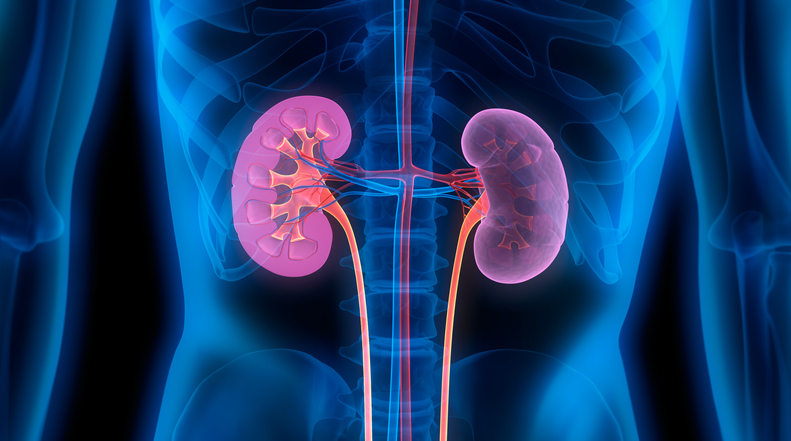
Maladie rénale chronique means that the kidneys are not working as well as would be expected. Various conditions can cause chronic kidney disease. Severity can vary but most cases are mild or moderate, occur in older people and do not cause symptoms. Chronic kidney disease tends to become worse gradually over months or years. What is chronic kidney.

Patient information leaflet
Maladie polykystique des reins
Polycystic kidney disease (PKD) causes many fluid-filled sacs (cysts) to develop in the kidneys. The most common type of PKD is an inherited condition called autosomal dominant polycystic kidney disease (ADPKD). With ADPKD, problems commonly do not develop until the age of 30-50, with some people never developing any problems. The two common.
Patient information leaflet
Échantillon d'urine en milieu de jet
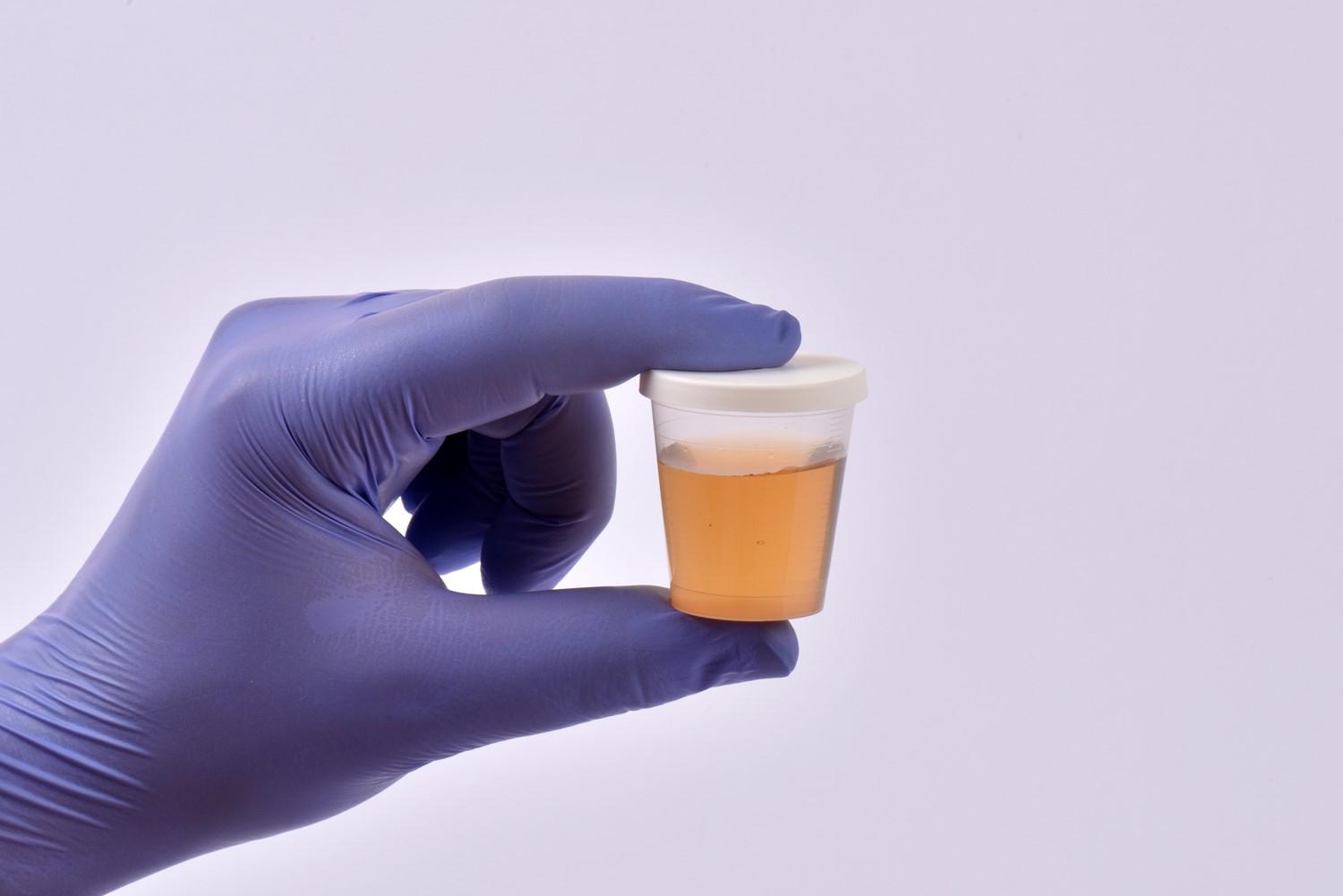
A midstream specimen of urine (MSU or MSSU) is usually tested to look for infection, although in some cases, illness other than infection might be diagnosed based partly on what is seen in an MSU. What is the purpose of a midstream specimen of urine test. To confirm the diagnosis of a urine infection The usual symptoms of a urine infection are.
Patient information leaflet
Infection urinaire chez les enfants
Urine infection in children is common. It can cause various symptoms. A course of medicines called antibiotics will usually clear the infection quickly. In most cases, a child with a urine infection will make a full recovery. Sometimes tests to check on the kidneys and/or bladder are advised after the infection has cleared. This depends on your.

Patient information leaflet
Infection urinaire pendant la grossesse
Urine infection is common in pregnancy. If left untreated some urine infections may progress to cause serious kidney infection. Treatment is with antibiotics. The aim is to cure the infection and to prevent possible complications. Understanding the urinary tract There are two kidneys, one on each side of the tummy (abdomen). They make urine which.
Patient information leaflet
Test de bandelette urinaire
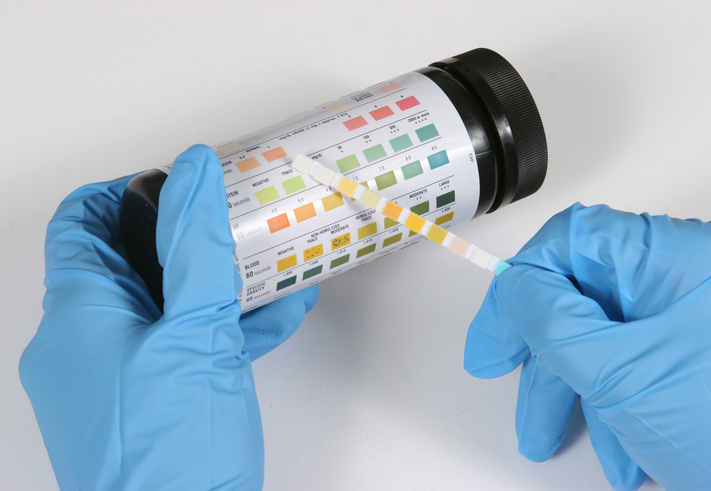
A urine dipstick test tests the urine using a special strip of paper that is dipped into a sample of urine. The result is available almost immediately. It is sometimes called a rapid urine test. Urine contains waste chemicals from all of the millions of chemical reactions that go on in the body all the time. However, in some conditions, chemicals.
Lectures complémentaires et références
- Maladie de l'urine à odeur de sirop d'érable; MedlinePlus, National Library of Medicine.
- Burrage LC, Nagamani SC, Campeau PM, Lee BH. Branched-chain amino acid metabolism: from rare Mendelian diseases to more common disorders. Hum Mol Genet. 2014 Sep 15;23(R1):R1-8. doi: 10.1093/hmg/ddu123. Epub 2014 Mar 20.
- Carleton SM, Peck DS, Grasela J, Dietiker KL, Phillips CL. DNA carrier testing and newborn screening for maple syrup urine disease in Old Order Mennonite communities. Genet Test Mol Biomarkers. 2010 Apr;14(2):205-8. doi: 10.1089/gtmb.2009.0107.
- Harris-Haman P, Brown L, Massey S, Ramamoorthy S. Implications of Maple Syrup Urine Disease in Newborns. Nurs Womens Health. 2017 Jun-Jul;21(3):196-206. doi: 10.1016/j.nwh.2017.04.009.
- Oyarzabal A, Martinez-Pardo M, Merinero B, Navarrete R, Desviat LR, Ugarte M, Rodriguez-Pombo P. A novel regulatory defect in the branched-chain alpha-keto acid dehydrogenase complex due to a mutation in the PPM1K gene causes a mild variant phenotype of maple syrup urine disease. Hum Mutat. 2013 Feb;34(2):355-62. doi: 10.1002/humu.22242. Epub 2012 Dec 12.
- Simon E, Flaschker N, Schadewaldt P, Langenbeck U, Wendel U. Variant maple syrup urine disease (MSUD)--the entire spectrum. J Inherit Metab Dis. 2006 Dec;29(6):716-24. doi: 10.1007/s10545-006-0276-1. Epub 2006 Oct 25.
- Strauss KA, Puffenberger EG, Carson VJ. Maple Syrup Urine Disease. 2006 Jan 30 [updated 2020 Apr 23]. In: Adam MP, Bick S, Mirzaa GM, Wallace SE, Amemiya A, editors. GeneReviews(R) [Internet]. Seattle (WA): University of Washington, Seattle; 1993-2026. Available from http://www.ncbi.nlm.nih.gov/books/NBK1319/
Partagez vos pensées ou expériences avec les autres dans notre communautés de patients.
Accès simple à des traitements fiables et à des services de santé en ligne.
Common conditions
Get help with common conditions through the NHS, without a GP appointment.





Inscrivez-vous à la newsletter Patient
Votre dose hebdomadaire de conseils de santé clairs et fiables - rédigés pour vous aider à vous sentir informé, confiant et maître de la situation.
En vous abonnant, vous acceptez notre Politique de confidentialité. Vous pouvez vous désabonner à tout moment. Nous ne vendons jamais vos données.