Nonsyndromic hearing loss
Dernière mise à jour 3 mars 2025
Respecte les directives éditoriales
- TéléchargerTélécharger
- Partager
- Language
- Discussion
- Version audio
- Ajouter aux sources préférées sur Google
Nonsyndromic hearing loss is a partial or total loss of hearing that is not associated with other signs and symptoms. In contrast, syndromic hearing loss occurs with signs and symptoms affecting other parts of the body.
Description
Nonsyndromic hearing loss is a partial or total loss of hearing that is not associated with other signs and symptoms. In contrast, syndromic hearing loss occurs with signs and symptoms affecting other parts of the body.
Nonsyndromic hearing loss can be classified in several different ways. One common way is by the condition's pattern of inheritance: autosomal dominant (DFNA), autosomal recessive (DFNB), X-linked (DFNX), or mitochondrial (which does not have a special designation). Each of these types of hearing loss includes multiple subtypes. DFNA, DFNB, and DFNX subtypes are numbered in the order in which they were first described. For example, DFNA1 was the first type of autosomal dominant nonsyndromic hearing loss to be identified.
The characteristics of nonsyndromic hearing loss vary among the different types. Hearing loss can affect one ear (unilateral) or both ears (bilateral). Degrees of hearing loss range from mild (difficulty understanding soft speech) to profound (inability to hear even very loud noises). The term "deafness" is often used to describe severe-to-profound hearing loss. Hearing loss can be stable, or it may be progressive, becoming more severe as a person gets older. Particular types of nonsyndromic hearing loss show distinctive patterns of hearing loss. For example, the loss may be more pronounced at high, middle, or low tones.
Most forms of nonsyndromic hearing loss are described as sensorineural, which means they are associated with a permanent loss of hearing caused by damage to structures in the inner ear. The inner ear processes sound and sends the information to the brain in the form of electrical nerve impulses. Less commonly, nonsyndromic hearing loss is described as conductive, meaning it results from changes in the middle ear. The middle ear contains three tiny bones that help transfer sound from the eardrum to the inner ear. Some forms of nonsyndromic hearing loss, particularly a type called DFNX2, involve changes in both the inner ear and the middle ear. This combination is called mixed hearing loss.
Depending on the type, nonsyndromic hearing loss can become apparent at any time from infancy to old age. Hearing loss that is present before a child learns to speak is classified as prelingual or congenital. Hearing loss that occurs after the development of speech is classified as postlingual.
Inheritance patterns
The source lists the following possible inheritance patterns: Autosomal recessive; Autosomal dominant; X-linked; mitochondrial. More than one pattern can apply in different cases.
Related genes
Other names
Isolated deafness
Nonsyndromic deafness
Nonsyndromic hearing impairment
Nonsyndromic hearing loss and deafness
Related patient information and medicines

Patient information leaflet
Mal d'oreille
Earache, or pain in the ear, is very common. It is particularly common in children. There are many causes of earache but the most common cause is infection. However, if it is not ... So, problems with the ear may cause other symptoms such as loss of hearing, dizziness or a ringing in the ear. This leaflet provides an overview of some of the more.

Patient information leaflet
Acouphènes
Acouphènes est a noise such as a ringing or buzzing that you can hear, but the noise is not caused by anything outside your ear. What is tinnitus. When you can hear sounds inside your head that are created by votre hearing system, not your environment, the condition is known as tinnitus. The most common situation is that it often comes as an unwanted.
Patient information leaflet
Audiologie
If you or a family member suspect that you have a tests d'audition problem, then an audiologist will usually provide an assessment and also may be involved in providing any treatment needed. What is audiology. Audiologie is an important part of the assessment and management de perte auditive , tinnitus and balance problems. An audiologist is a professional.
Patient information leaflet
Traiter les problèmes de santé des nouveau-nés
An operation to bring the testicles down to the scrotum and fix them there can prevent these complications happ... Hearing problems If the hearing test does not have a clearly normal result, your baby will be referred to a hearing specialist. This does not necessarily mean your baby has a hearing problem. Other things can interfere with the test.
Patient information leaflet
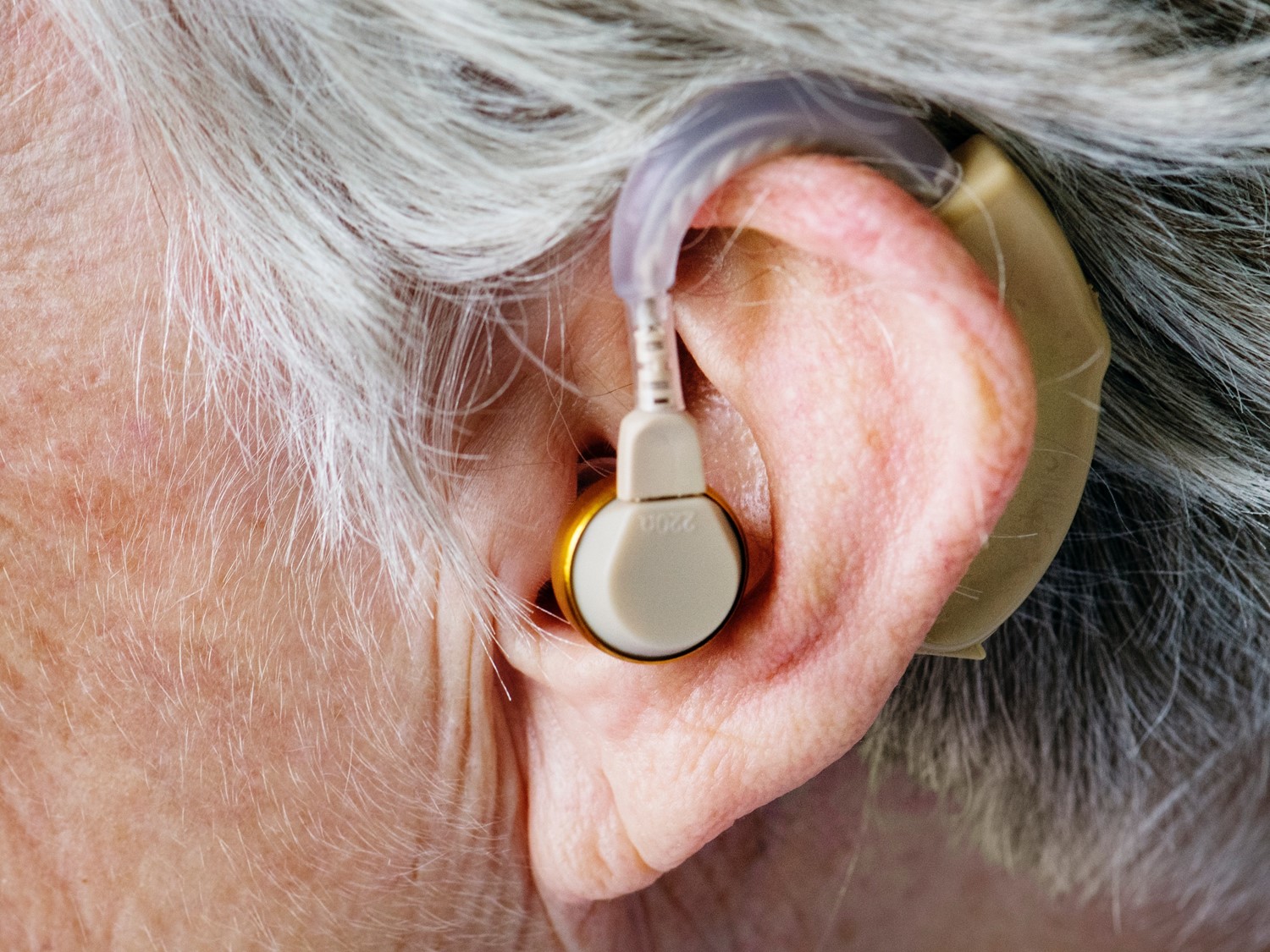
Perte auditive
In this article we talk about the different causes of hearing loss, their different characteristics and what you can do about them. Hearing loss is common. Everyone's hearing gets worse as they get older. However, there are many types of hearing loss and not all are restricted to older people. The vibration of the hair cells is turned into an.
Patient information leaflet
Neurinome acoustique
Une neurinome acoustique is a rare non-cancerous tumour in the brain. The tumour grows on a nerve in the brain near to the ear. Acoustic neuromas tend to grow very slowly and don't usually spread to any distant part of the body. People who develop these symptoms should see their doctor, but they are more likely to be due to conditions other than an.
Lectures complémentaires et références
- Nonsyndromic hearing loss; MedlinePlus, National Library of Medicine.
- Del Castillo I, Morin M, Dominguez-Ruiz M, Moreno-Pelayo MA. Genetic etiology of non-syndromic hearing loss in Europe. Hum Genet. 2022 Apr;141(3-4):683-696. doi: 10.1007/s00439-021-02425-6. Epub 2022 Jan 19.
- Ding Y, Leng J, Fan F, Xia B, Xu P. The role of mitochondrial DNA mutations in hearing loss. Biochem Genet. 2013 Aug;51(7-8):588-602. doi: 10.1007/s10528-013-9589-6. Epub 2013 Apr 21.
- Lezirovitz K, Mingroni-Netto RC. Genetic etiology of non-syndromic hearing loss in Latin America. Hum Genet. 2022 Apr;141(3-4):539-581. doi: 10.1007/s00439-021-02354-4. Epub 2021 Oct 15.
- Lieu JEC, Kenna M, Anne S, Davidson L. Hearing Loss in Children: A Review. JAMA. 2020 Dec 1;324(21):2195-2205. doi: 10.1001/jama.2020.17647.
- Morris JA, Gonzalez T, Blanton SH, Angeli SI, Liu XZ. GJB2-Related Hearing Loss: Genotype-Phenotype Correlations, Natural History, and Emerging Therapeutic Strategies. Int J Mol Sci. 2026 Jan 3;27(1):491. doi: 10.3390/ijms27010491.
- Ray M, Sarkar S, Sable MN. Comprehensive functional network analysis and screening of deleterious pathogenic variants in non-syndromic hearing loss causative genes. Biosci Rep. 2021 Oct 29;41(10):BSR20211865. doi: 10.1042/BSR20211865.
- Reda Del Barrio S, de Vergas Gutierrez J, Quesada-Espinosa JF, Sanchez-Calvin MT, Gomez-Manjon I, Sierra-Tomillo O, Juarez-Rufian A, Garcia Fernandez A. Diagnostic yield of genetic testing in adults with sensorineural hearing loss. Acta Otorrinolaringol Esp (Engl Ed). 2024 May-Jun;75(3):185-191. doi: 10.1016/j.otoeng.2023.10.007. Epub 2024 Feb 10.
- Redfield S, Shearer AE. STRC-Related Autosomal Recessive Hearing Loss. 2023 Dec 14. In: Adam MP, Bick S, Mirzaa GM, Wallace SE, Amemiya A, editors. GeneReviews(R) [Internet]. Seattle (WA): University of Washington, Seattle; 1993-2026. Available from http://www.ncbi.nlm.nih.gov/books/NBK598310/
- Rentas S, Rajagopalan R, Ayazseven T, Sarmady M, Raible SE, Krantz ID, Abou Tayoun AN. Whole Genome Sequencing Improves the Identification of Pathogenic and Novel Variation in Nonsyndromic Hearing Loss. Hum Mutat. 2025 Dec 1;2025:6371082. doi: 10.1155/humu/6371082. eCollection 2025.
- Sharma N, Kumari D, Panigrahi I, Khetarpal P. A systematic review of the monogenic causes of Non-Syndromic Hearing Loss (NSHL) and discussion of Current Diagnosis and Treatment options. Clin Genet. 2023 Jan;103(1):16-34. doi: 10.1111/cge.14228. Epub 2022 Sep 29.
- Shearer AE, Hildebrand MS, Odell AM, Smith RJH. Genetic Hearing Loss Overview. 1999 Feb 14 [updated 2026 Jun 2]. In: Adam MP, Bick S, Mirzaa GM, Wallace SE, Amemiya A, editors. GeneReviews(R) [Internet]. Seattle (WA): University of Washington, Seattle; 1993-2026. Available from http://www.ncbi.nlm.nih.gov/books/NBK1434/
- Smith RJH, Azaiez H, Booth K. GJB2-Related Autosomal Recessive Nonsyndromic Hearing Loss. 1998 Sep 28 [updated 2023 Jul 20]. In: Adam MP, Bick S, Mirzaa GM, Wallace SE, Amemiya A, editors. GeneReviews(R) [Internet]. Seattle (WA): University of Washington, Seattle; 1993-2026. Available from http://www.ncbi.nlm.nih.gov/books/NBK1272/
- Smith RJH, Hildebrand M. DFNA2 Nonsyndromic Hearing Loss. 2008 Apr 4 [updated 2018 May 10]. In: Adam MP, Bick S, Mirzaa GM, Wallace SE, Amemiya A, editors. GeneReviews(R) [Internet]. Seattle (WA): University of Washington, Seattle; 1993-2026. Available from http://www.ncbi.nlm.nih.gov/books/NBK1209/
- Usami SI, Nishio SY. Nonsyndromic Hearing Loss and Deafness, Mitochondrial. 2004 Oct 22 [updated 2018 Jun 14]. In: Adam MP, Bick S, Mirzaa GM, Wallace SE, Amemiya A, editors. GeneReviews(R) [Internet]. Seattle (WA): University of Washington, Seattle; 1993-2026. Available from http://www.ncbi.nlm.nih.gov/books/NBK1422/
- Young A, Ng M. Genetic Hearing Loss. 2023 Apr 17. In: StatPearls [Internet]. Treasure Island (FL): StatPearls Publishing; 2023 Jan-. Available from http://www.ncbi.nlm.nih.gov/books/NBK580517/
Participez à la conversation
Partagez vos pensées ou expériences avec les autres dans notre communautés de patients.

Demandez, partagez, connectez-vous.
Parcourez les discussions, posez des questions et partagez vos expériences sur des centaines de sujets de santé.
Inscrivez-vous à la newsletter Patient
Votre dose hebdomadaire de conseils de santé clairs et fiables - rédigés pour vous aider à vous sentir informé, confiant et maître de la situation.
En vous abonnant, vous acceptez notre Politique de confidentialité. Vous pouvez vous désabonner à tout moment. Nous ne vendons jamais vos données.