Progressive myoclonic epilepsy type 1
Dernière mise à jour 2 Apr 2024
Respecte les directives éditoriales
- TéléchargerTélécharger
- Partager
- Language
- Discussion
- Ask Patient
- Version audio
- Ajouter aux sources préférées sur Google
Progressive myoclonic epilepsy type 1 (also called Unverricht-Lundborg disease or ULD) is a rare inherited form of epilepsy. Early development is normal in affected individuals. Signs and symptoms of the disorder typically begin between 6 and 15 years of age.
Sélections vidéo pour Conditions génétiquesBibliothèque vidéo
Description
Progressive myoclonic epilepsy type 1 (also called Unverricht-Lundborg disease or ULD) is a rare inherited form of epilepsy. Early development is normal in affected individuals. Signs and symptoms of the disorder typically begin between 6 and 15 years of age.
People with progressive myoclonic epilepsy type 1 experience episodes of involuntary muscle jerking or twitching (myoclonus) that increase in frequency and severity over time. Episodes of myoclonus may be brought on by physical exertion, stress, light, or other stimuli. Within 5 to 10 years, the myoclonic episodes may become severe enough to interfere with walking and other everyday activities.
Affected individuals also usually have seizures that involve loss of consciousness, muscle rigidity, and convulsions (tonic-clonic or grand mal seizures). Like the myoclonic episodes, these may increase in frequency over several years. However, the seizures may be controlled with treatment. After several years of progression, the frequency of seizures may stabilize or decrease.
Eventually, people with progressive myoclonic epilepsy type 1 may develop problems with balance and coordination (ataxia) and speaking (dysarthria). They may also experience depression. Another feature of this condition is involuntary rhythmic shaking. This shaking is called intentional tremor because it worsens during intentional movements.
People with progressive myoclonic epilepsy type 1 may live into adulthood. Life expectancy depends on the severity of the condition and a person's response to treatment. The severity of the condition can vary, even among members of the same family.
Inheritance patterns
The source lists the following possible inheritance patterns: Autosomal recessive. More than one pattern can apply in different cases.
Related genes
Other names
Baltic myoclonic epilepsy
Baltic myoclonus
Baltic myoclonus epilepsy
EPM1
EPM1A
Myoclonic epilepsy of Unverricht and Lundborg
PME
Progressive myoclonic epilepsy 1A
Progressive myoclonus epilepsy type 1
ULD
Unverricht-Lundborg syndrome
Related patient information and medicines
Patient information leaflet
Types de crises
Typically, a seizure lasts from a few seconds to a few minutes. Seizures that last longer than 5 minutes, or that repeatedly happen without a recovery period in-between, are a medical emergency. This is also called status epilepticus. If you have epilepsy, it means that you have had repeated seizures. If you have a single seizure, it does not.

Patient information leaflet
Épilepsie
About 1 in 30 people in the UK develop epilepsy at some stage in their lives. However, epilepsy can begin at any age. Epilepsy is a long-lasting brain condition that causes people to have repeated seizures. PatientPicksPlaceholder Epilepsy symptoms The main symptom of epi... The most well-known type of seizure is a generalised tonic-clonic.

Patient information leaflet
Médicaments contre l'épilepsie et effets secondaires
Medicines that sont used to treat epilepsy work by stabilising the electrical activity of the brain. You need to take medication every day to control seizures. Surgery is an option in some cases. There are different types of epilepsy. There are separate leaflets on Epilepsy and Seizures , Types of Epilepsy and Seizures , Epilepsy and Contraception.

Patient information leaflet
Vivre avec l'épilepsie
This leaflet is a brief introduction to the practical considerations of living with epilepsy. For more general information about epilepsy and seizures, see the separate leaflets called Epilepsy and Seizures Epilepsy and Types of Epilepsy and Seizures Types of seizures. Dr Sarah Jarvis , 4th June 2021 Updated guidance on medications for epilepsy.

Patient information leaflet
Électroencéphalographe
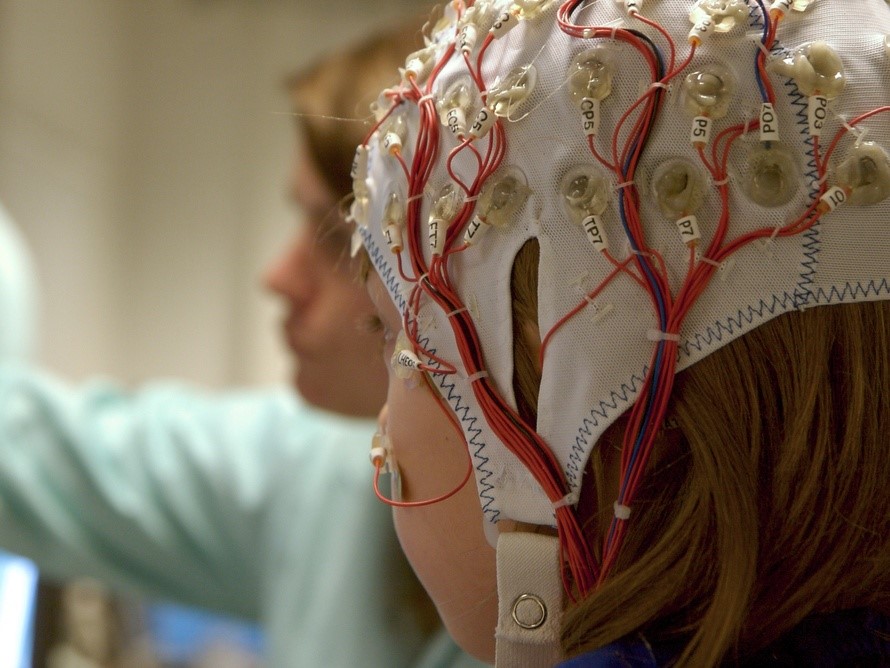
Une electroencephalograph is a useful test to help diagnose epilepsy. It records the electrical activity of the brain. However, a normal result does not rule out epilepsy. Note : the information below is a general guide only. The arrangements, and the way tests are performed, may vary between different hospitals. Always follow the instructions.

Patient information leaflet
Épilepsie et planification de la grossesse
It is essential that you seek expert advice from a doctor or epilepsy nurse specialist when you are considering starting a family. How will my epilepsy be treated if I become... Dr Sarah Jarvis , 1st April 2019 Sodium valproate and pregnancy Sodium valproate medicine is linked to a higher risk than some other epilepsy tablets of problems for your.
Lectures complémentaires et références
- Progressive myoclonic epilepsy type 1 ; MedlinePlus, National Library of Medicine.
- Alakurtti K, Virtaneva K, Joensuu T, Palvimo JJ, Lehesjoki AE. Characterization of the cystatin B gene promoter harboring the dodecamer repeat expanded in progressive myoclonus epilepsy, EPM1. Gene. 2000 Jan 25;242(1-2):65-73. doi: 10.1016/s0378-1119(99)00550-8.
- Alakurtti K, Weber E, Rinne R, Theil G, de Haan GJ, Lindhout D, Salmikangas P, Saukko P, Lahtinen U, Lehesjoki AE. Loss of lysosomal association of cystatin B proteins representing progressive myoclonus epilepsy, EPM1, mutations. Eur J Hum Genet. 2005 Feb;13(2):208-15. doi: 10.1038/sj.ejhg.5201300.
- Ceru S, Rabzelj S, Kopitar-Jerala N, Turk V, Zerovnik E. Protein aggregation as a possible cause for pathology in a subset of familial Unverricht-Lundborg disease. Med Hypotheses. 2005;64(5):955-9. doi: 10.1016/j.mehy.2004.11.038.
- Houseweart MK, Pennacchio LA, Vilaythong A, Peters C, Noebels JL, Myers RM. Cathepsin B but not cathepsins L or S contributes to the pathogenesis of Unverricht-Lundborg progressive myoclonus epilepsy (EPM1). J Neurobiol. 2003 Sep 15;56(4):315-27. doi: 10.1002/neu.10253.
- Joensuu T, Kuronen M, Alakurtti K, Tegelberg S, Hakala P, Aalto A, Huopaniemi L, Aula N, Michellucci R, Eriksson K, Lehesjoki AE. Cystatin B: mutation detection, alternative splicing and expression in progressive myclonus epilepsy of Unverricht-Lundborg type (EPM1) patients. Eur J Hum Genet. 2007 Feb;15(2):185-93. doi: 10.1038/sj.ejhg.5201723. Epub 2006 Sep 27.
- Lalioti MD, Antonarakis SE, Scott HS. The epilepsy, the protease inhibitor and the dodecamer: progressive myoclonus epilepsy, cystatin b and a 12-mer repeat expansion. Cytogenet Genome Res. 2003;100(1-4):213-23. doi: 10.1159/000072857.
- Lehesjoki AE, Kalviainen R. Progressive Myoclonic Epilepsy Type 1. 2004 Jun 24 [updated 2020 Jul 2]. In: Adam MP, Bick S, Mirzaa GM, Wallace SE, Amemiya A, editors. GeneReviews(R) [Internet]. Seattle (WA): University of Washington, Seattle; 1993-2026. Available from http://www.ncbi.nlm.nih.gov/books/NBK1142/
- Lehesjoki AE. Molecular background of progressive myoclonus epilepsy. EMBO J. 2003 Jul 15;22(14):3473-8. doi: 10.1093/emboj/cdg338.
- Magaudda A, Ferlazzo E, Nguyen VH, Genton P. Unverricht-Lundborg disease, a condition with self-limited progression: long-term follow-up of 20 patients. Epilepsia. 2006 May;47(5):860-6. doi: 10.1111/j.1528-1167.2006.00553.x.
- Moulard B, Darcel F, Mignard D, Jeanpierre M, Genton P, Cartault F, Yaouanq J, Roubertie A, Biraben A, Buresi C, Malafosse A. FOunder effect in patients with Unverricht-Lundborg disease on reunion island. Epilepsia. 2003 Oct;44(10):1357-60. doi: 10.1046/j.1528-1157.2003.03703.x.
- Moulard B, Genton P, Grid D, Jeanpierre M, Ouazzani R, Mrabet A, Morris M, LeGuern E, Dravet C, Mauguiere F, Utermann B, Baldy-Moulinier M, Belaidi H, Bertran F, Biraben A, Ali Cherif A, Chkili T, Crespel A, Darcel F, Dulac O, Geny C, Humbert-Claude V, Kassiotis P, Buresi C, Malafosse A. Haplotype study of West European and North African Unverricht-Lundborg chromosomes: evidence for a few founder mutations. Hum Genet. 2002 Sep;111(3):255-62. doi: 10.1007/s00439-002-0755-x. Epub 2002 Jul 23.
- Shahwan A, Farrell M, Delanty N. Progressive myoclonic epilepsies: a review of genetic and therapeutic aspects. Lancet Neurol. 2005 Apr;4(4):239-48. doi: 10.1016/S1474-4422(05)70043-0.
Partagez vos pensées ou expériences avec les autres dans notre communautés de patients.
Accès simple à des traitements fiables et à des services de santé en ligne.
Common conditions
Get help with common conditions through the NHS, without a GP appointment.





Inscrivez-vous à la newsletter Patient
Votre dose hebdomadaire de conseils de santé clairs et fiables - rédigés pour vous aider à vous sentir informé, confiant et maître de la situation.
En vous abonnant, vous acceptez notre Politique de confidentialité. Vous pouvez vous désabonner à tout moment. Nous ne vendons jamais vos données.