Rho GTPase activating protein 31
Dernière mise à jour 18 Aug 2020
Respecte les directives éditoriales
- TéléchargerTélécharger
- Partager
- Language
- Discussion
- Version audio
- Ajouter aux sources préférées sur Google
La ARHGAP31 gene provides instructions for making a protein classified as a Rho GTPase activating protein (GAP). GAPs turn off (inactivate) proteins called GTPases, which play an important role in chemical signaling within cells. Often referred to as molecular switches, GTPases can be turned on and off. They are turned on (active) when they are attached (bound) to a molecule called GTP and are turned off when they are bound to another molecule called GDP. The ARHGAP31 protein inactivates GTPases known as Cdc42 and Rac1 by stimulating a reaction that turns the attached GTP into GDP. When active, Cdc42 and Rac1 transmit signals that are critical for various aspects of embryonic development. The ARHGAP31 protein appears to regulate these GTPases specifically during development of the limbs, skull, and heart.
Normal function
La ARHGAP31 gene provides instructions for making a protein classified as a Rho GTPase activating protein (GAP). GAPs turn off (inactivate) proteins called GTPases, which play an important role in chemical signaling within cells. Often referred to as molecular switches, GTPases can be turned on and off. They are turned on (active) when they are attached (bound) to a molecule called GTP and are turned off when they are bound to another molecule called GDP. The ARHGAP31 protein inactivates GTPases known as Cdc42 and Rac1 by stimulating a reaction that turns the attached GTP into GDP. When active, Cdc42 and Rac1 transmit signals that are critical for various aspects of embryonic development. The ARHGAP31 protein appears to regulate these GTPases specifically during development of the limbs, skull, and heart.
Conditions referring to this gene or chromosome
Other names
AOS1
Cdc42 GTPase-activating protein
CDGAP
RHG31_HUMAN
rho GTPase-activating protein 31
Related patient information and medicines

Patient information leaflet
Tests de fonction hépatique
Tests de fonction hépatique are a set of analyses de sang commonly done to check on the health of your liver. Changes in liver function tests give a clue as to whether your liver is under strain, inflamed, infected or diseased, and how badly. The pattern of the liver function tests can give a clue to the cause and can allow early detection of unsuspected.

Patient information leaflet
Alimentation saine
What are the benefits of healthy eating. Healthy eating may help to prevent certain serious diseases such as heart disease , stroke and type 2 diabetes. In the ... A 2019 review by the SACN (The Scientific Advisory Committee on Nutrition) determined that reducing your intake of saturated fats lowers your risk of developing coronary heart disease,.

Patient information leaflet
Syndrome néphrotique
Nephrotic syndrome is a condition where the 'filters' in the kidney become 'leaky' and large amounts of protein leak from the blood into the urine. The main symptom is fluid retention (oedema) which is mainly due to the low protein level in the blood. Various diseases can cause nephrotic syndrome, some more serious than others. Nephrotic syndrome.
Patient information leaflet
Analyses de sang pour détecter l'inflammation
If you have inflammation in a part of your body then certain types of extra protein are often released from the site of inflammation and circulate in the bloodstream. Note : the information ci-dessous est a general guide only. The arrangem... Also the level increases with increasing age. C-reactive protein (CRP) blood test CRP is a protéines that is.
Patient information leaflet
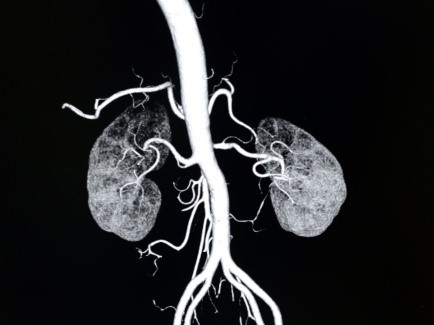
Glomérulonéphrite
The glomeruli become damaged, commonly because of a problem with the body's immune system. The kidney consists of small units (nephrons) which produce urine. 'Glomerulo' refers to the glomeruli and 'nephritis' means inflammation of the kidney. But, strictly speaking, there is not always inflammation present in some types of glomerulonephritis..
Patient information leaflet
Tests d'anticorps et d'antigènes
Antibodies are part of the body's defence (immune) system. Antigens are the particles that cause the body to create an antibody. Tests to detect antibodies and antigens help to identify certain infections and some other medical conditions. What is the difference between antibodies and antigens. Antibodies are small proteins that circulate in the.
Lectures complémentaires et références
- Rho GTPase activating protein 31; MedlinePlus, National Library of Medicine.
- Isrie M, Wuyts W, Van Esch H, Devriendt K. Isolated terminal limb reduction defects: extending the clinical spectrum of Adams-Oliver syndrome and ARHGAP31 mutations. Am J Med Genet A. 2014 Jun;164A(6):1576-9. doi: 10.1002/ajmg.a.36486. Epub 2014 Mar 25.
- Raftopoulou M, Hall A. Cell migration: Rho GTPases lead the way. Dev Biol. 2004 Jan 1;265(1):23-32. doi: 10.1016/j.ydbio.2003.06.003.
- Southgate L, Machado RD, Snape KM, Primeau M, Dafou D, Ruddy DM, Branney PA, Fisher M, Lee GJ, Simpson MA, He Y, Bradshaw TY, Blaumeiser B, Winship WS, Reardon W, Maher ER, FitzPatrick DR, Wuyts W, Zenker M, Lamarche-Vane N, Trembath RC. Gain-of-function mutations of ARHGAP31, a Cdc42/Rac1 GTPase regulator, cause syndromic cutis aplasia and limb anomalies. Am J Hum Genet. 2011 May 13;88(5):574-85. doi: 10.1016/j.ajhg.2011.04.013.
- Tcherkezian J, Lamarche-Vane N. Current knowledge of the large RhoGAP family of proteins. Biol Cell. 2007 Feb;99(2):67-86. doi: 10.1042/BC20060086.
Participez à la conversation
Partagez vos pensées ou expériences avec les autres dans notre communautés de patients.

Demandez, partagez, connectez-vous.
Parcourez les discussions, posez des questions et partagez vos expériences sur des centaines de sujets de santé.
Inscrivez-vous à la newsletter Patient
Votre dose hebdomadaire de conseils de santé clairs et fiables - rédigés pour vous aider à vous sentir informé, confiant et maître de la situation.
En vous abonnant, vous acceptez notre Politique de confidentialité. Vous pouvez vous désabonner à tout moment. Nous ne vendons jamais vos données.