prickle planar cell polarity protein 1
Dernière mise à jour 18 Aug 2020
Respecte les directives éditoriales
- TéléchargerTélécharger
- Partager
- Language
- Discussion
- Ask Patient
- Version audio
- Ajouter aux sources préférées sur Google
La PRICKLE1 gene provides instructions for making a protein called prickle homolog 1. The function of this protein is unclear, although it appears to play an important role in the development of the nervous system. Prickle homolog 1 is likely part of a chemical signaling pathway known as noncanonical Wnt signaling. During development before birth, noncanonical Wnt signaling helps to determine the position of various components within cells (cell polarity). This pathway also regulates the movement of nerve cells (neurons) in the developing nervous system.
Sélections vidéo pour GènesBibliothèque vidéo
Normal function
La PRICKLE1 gene provides instructions for making a protein called prickle homolog 1. The function of this protein is unclear, although it appears to play an important role in the development of the nervous system. Prickle homolog 1 is likely part of a chemical signaling pathway known as noncanonical Wnt signaling. During development before birth, noncanonical Wnt signaling helps to determine the position of various components within cells (cell polarity). This pathway also regulates the movement of nerve cells (neurons) in the developing nervous system.
Studies suggest that prickle homolog 1 interacts with other proteins, including RE1-silencing transcription factor (REST). The REST protein regulates several critical genes in neurons by turning off (suppressing) their activity. To regulate these genes, REST must enter the nucleus and attach (bind) to particular regions of DNA. Researchers believe that prickle homolog 1 controls REST by transporting it out of the nucleus, which prevents it from binding to DNA and suppressing gene activity. It remains unclear how the interaction between prickle homolog 1 and REST contributes to the normal development of the nervous system.
Conditions referring to this gene or chromosome
Other names
EPM1B
FLJ31627
FLJ31937
MGC138902
MGC138903
PRIC1_HUMAN
prickle homolog 1
prickle-like 1
REST (RE-1 silencing transcription factor)/NRSF (neuron-restrictive silencer factor)-interacting LIM domain protein
REST/NRSF-interacting LIM domain protein
RILP
Related patient information and medicines

Patient information leaflet
Tests génétiques
Tests génétiques is a type of medical test that identifies changes in chromosomes, gènes ou proteins. Genetic tests examine a person's DNA in a variety of ways to assess a person's genetic health. They are all designed to identify a particular gene that may cause a genetic disorder. We all have 46 chromosomes in our cells. Chromosomes are made from.

Patient information leaflet
Le système immunitaire
A person with a weak immune system might have difficulty fighting off infections. In autoimmune diseases the body is unable to tell what is its own and what is foreign, so it attacks itself. Autoimmune diseases can attack any part of the body - eg, type 1 diabetes (pancreas), multiple sclerosis (brain and nerves), systemic lupus erythematosus.
Patient information leaflet
Allergie aux protéines de lait de vache
Allergie aux protéines de lait de vache is one of the most common food allergies seen in children. Find out more: [/health/food-allergy-and-intolerance/cows-milk-protein-allergy](https://patient.info/health/food-allergy-and-intolerance/cows-milk-protein-allergy) Follow Patient: Website: [/](https://patient.info/).

Patient information leaflet
Tests de dépistage pendant la grossesse
If need be, an ultrasound scan Ultrasound scan can more accurate... Blood pressure. This is measured regularly during routine antenatal checks. Together with a urine test to detect protein, this screens for a complication of pregnancy called pre-eclampsia. See the separate leaflet called Pre-eclampsia Pre-eclampsia. Examination of the baby's.
Patient information leaflet
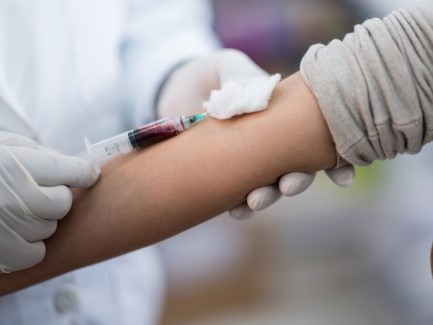
Analyses de sang
La main reasons to know your blood group are if you need to have a blood transfusion or if you are pregnant. You cannot request a blood test just to know your blood group on the NHS. What is blood made up of. Blood cells These can be seen under a microscope and make up about 40% of the blood's volume. Blood cells are made in the bone marrow by.

Patient information leaflet
Maladie de Wilson
Maladie de Wilson is a genetic disorder in which copper builds up in the body, mainly in the liver and brain. Without any treatment, the build-up of copper can cause serious symptoms. Treatment is with medication to remove the excess copper and/or to prevent a further build-up of copper. What is Wilson's disease. Wilson's disease is a condition.
Lectures complémentaires et références
- prickle planar cell polarity protein 1; MedlinePlus, National Library of Medicine.
- Bassuk AG, Wallace RH, Buhr A, Buller AR, Afawi Z, Shimojo M, Miyata S, Chen S, Gonzalez-Alegre P, Griesbach HL, Wu S, Nashelsky M, Vladar EK, Antic D, Ferguson PJ, Cirak S, Voit T, Scott MP, Axelrod JD, Gurnett C, Daoud AS, Kivity S, Neufeld MY, Mazarib A, Straussberg R, Walid S, Korczyn AD, Slusarski DC, Berkovic SF, El-Shanti HI. A homozygous mutation in human PRICKLE1 causes an autosomal-recessive progressive myoclonus epilepsy-ataxia syndrome. Am J Hum Genet. 2008 Nov;83(5):572-81. doi: 10.1016/j.ajhg.2008.10.003. Epub 2008 Oct 30.
- Katoh M, Katoh M. Identification and characterization of human PRICKLE1 and PRICKLE2 genes as well as mouse Prickle1 and Prickle2 genes homologous to Drosophila tissue polarity gene prickle. Int J Mol Med. 2003 Feb;11(2):249-56.
- Shimojo M, Hersh LB. Characterization of the REST/NRSF-interacting LIM domain protein (RILP): localization and interaction with REST/NRSF. J Neurochem. 2006 Feb;96(4):1130-8. doi: 10.1111/j.1471-4159.2005.03608.x. Epub 2006 Jan 17.
- Shimojo M, Hersh LB. REST/NRSF-interacting LIM domain protein, a putative nuclear translocation receptor. Mol Cell Biol. 2003 Dec;23(24):9025-31. doi: 10.1128/MCB.23.24.9025-9031.2003.
- Tao H, Manak JR, Sowers L, Mei X, Kiyonari H, Abe T, Dahdaleh NS, Yang T, Wu S, Chen S, Fox MH, Gurnett C, Montine T, Bird T, Shaffer LG, Rosenfeld JA, McConnell J, Madan-Khetarpal S, Berry-Kravis E, Griesbach H, Saneto RP, Scott MP, Antic D, Reed J, Boland R, Ehaideb SN, El-Shanti H, Mahajan VB, Ferguson PJ, Axelrod JD, Lehesjoki AE, Fritzsch B, Slusarski DC, Wemmie J, Ueno N, Bassuk AG. Mutations in prickle orthologs cause seizures in flies, mice, and humans. Am J Hum Genet. 2011 Feb 11;88(2):138-49. doi: 10.1016/j.ajhg.2010.12.012. Epub 2011 Feb 3.
Partagez vos pensées ou expériences avec les autres dans notre communautés de patients.
Accès simple à des traitements fiables et à des services de santé en ligne.
Common conditions
Get help with common conditions through the NHS, without a GP appointment.





Inscrivez-vous à la newsletter Patient
Votre dose hebdomadaire de conseils de santé clairs et fiables - rédigés pour vous aider à vous sentir informé, confiant et maître de la situation.
En vous abonnant, vous acceptez notre Politique de confidentialité. Vous pouvez vous désabonner à tout moment. Nous ne vendons jamais vos données.